


Best Artificial Turf for Daycare Play Areas
Best Artificial Turf for Daycare Play Areas
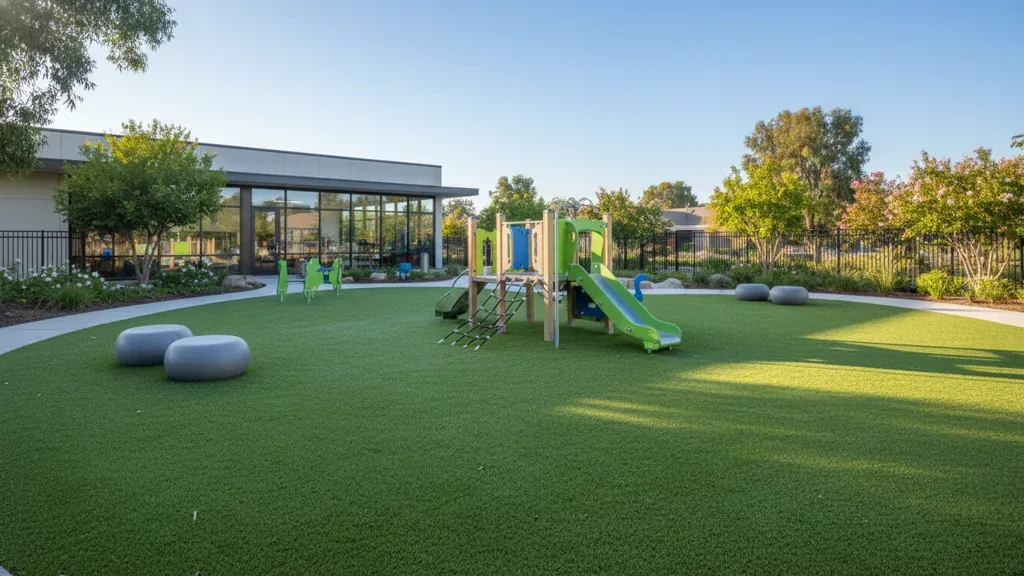
Choosing artificial turf for daycare spaces is different from choosing grass for a backyard. Childcare owners, facility managers, and contractors need a surface that supports active play, recovers after rain, stays easier to clean, and works with the safety goals of the play area. The best choice is not simply the softest turf sample. It is a complete surface system selected for the way children, staff, weather, and daily maintenance interact with the site.
Need product guidance for a childcare play area? Contact Go Green Synthetic Turf to discuss traffic, drainage, and project requirements before selecting a system.
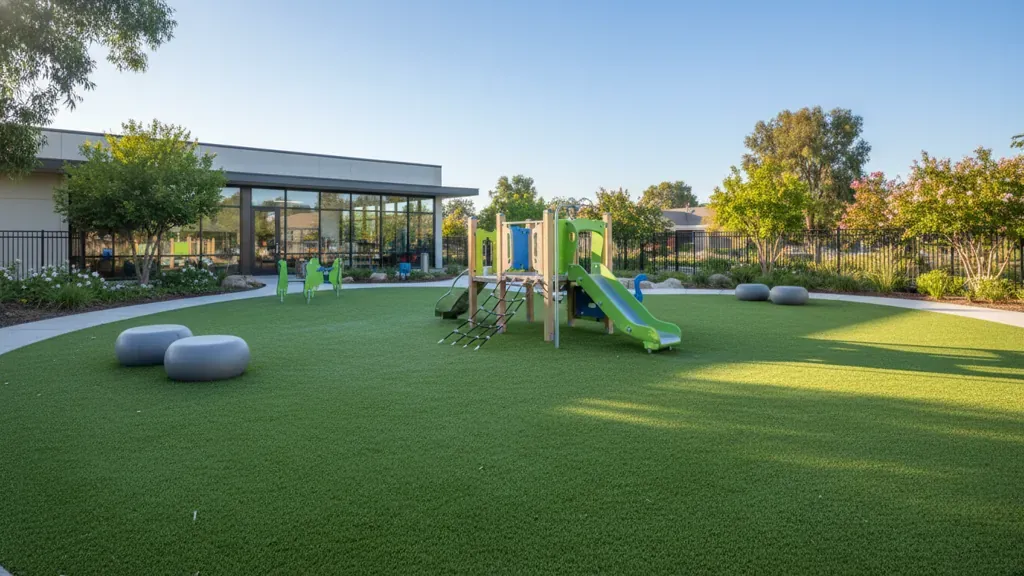
A daycare yard can see repeated foot traffic in the same routes, snack spills, shoes carrying in soil, and short turnaround times between groups. If water sits after a storm or the surface is hard to maintain, the yard becomes less useful to staff. A well-planned turf system helps operators think through safety documentation, drainage, cleanliness, resilience, and maintenance before installation begins.
What should artificial turf for daycare spaces do well?
Daycare play areas sit between residential lawns and institutional playgrounds. They need a welcoming look, but appearance is only one buying factor. A childcare surface should be evaluated as a working part of the facility.
- Support safer surfacing decisions: Turf, shock pad, base, infill, and equipment fall heights should be considered together where fall zones are involved.
- Drain efficiently: Faster surface recovery after rain can help reduce muddy closures and standing water concerns.
- Stay easier to clean: Daycare staff need a practical plan for leaf litter, spills, and routine rinse-downs.
- Handle repeated traffic: Entry points, paths between equipment, and high-use activity areas require durability.
- Fit the maintenance reality: The surface should have a care routine staff or service partners can actually follow.
These needs explain why daycare turf decisions should not be reduced to color or face weight alone. The right surface depends on daily use, drainage expectations, play equipment, and how the facility plans to maintain the area.
Start with playground surfacing considerations
If the daycare play yard includes climbing equipment, slides, or other elevated play components, ask surfacing questions early. Turf by itself does not establish impact performance. Buyers should discuss the tested system, including any shock pad, base preparation, and infill requirements, with the installer or product specialist.
Go Green’s guide on how to evaluate playground turf for safety explains why fall height, impact attenuation, accessibility, and documentation deserve attention. Childcare operators may not need to become testing experts, but they should know what to request before approving a playground surface proposal.
Questions to ask before comparing turf samples
- What equipment fall zones need to be considered?
- Will the proposal include shock pad or impact layer recommendations where appropriate?
- What documentation applies to the specific installed system, not just the turf roll?
- How will transitions, edges, and accessible routes be handled?
- What maintenance steps help the finished surface perform consistently?
For larger institutional comparisons, Go Green’s artificial turf playground buying guide provides a broader look at surface systems for schools, parks, churches, and childcare spaces.
Why drainage matters at a daycare
Drainage affects more than rain-day scheduling. A poorly planned play yard can hold moisture in low spots, create longer cleanup windows, and make staff more hesitant to reopen the space quickly. Artificial turf for daycare environments should be evaluated with the full drainage path in mind: turf backing, infill choice, base construction, slope, and where water goes after it leaves the surface.
Permeable turf is only one part of that equation. The base below it still needs to move water effectively. Contractors should inspect grading, existing soil behavior, and drainage outlets before making product promises. Childcare operators should ask how the finished system will handle routine storms and frequent rinse-downs.
| Drainage question | Why it matters for daycare sites |
|---|---|
| How quickly can the selected turf move water? | Helps match the product to rain exposure and rinse-cleaning expectations. |
| How is the base prepared? | A weak base can undermine even a highly permeable turf product. |
| Where will runoff go? | Water needs a planned exit, not a new puddle at the edge of the yard. |
| Are low spots or shade present? | These areas can stay damp longer and deserve extra planning. |
Planning a daycare installation? Get connected with an installer through Go Green so product selection and base preparation are reviewed together.
Can pet-style drainage ideas help childcare spaces?
Some daycare projects benefit from evaluating the same performance ideas buyers look for in pet turf: fast drainage, easier rinse-through, and odor-conscious system planning. This does not mean every childcare yard should use a pet-specific product. It means facilities with heavy use, frequent spills, or a strong cleanup priority may want to discuss antimicrobial and drainage-focused options as part of the product recommendation process.
Go Green’s PETMAXX products are built around pet-area priorities such as drainage and odor control. For example, PETMAXX 75 is positioned as a balance of drainage, comfort, and aesthetics for pet applications. A Go Green product specialist can explain whether PETMAXX-style benefits, another high-drainage product, or a playground-focused system is the more appropriate starting point for a specific daycare project.
Antimicrobial thinking can also extend to infill conversations where applicable. The key is to avoid one-size-fits-all recommendations. Childcare spaces should be matched to the actual cleaning routine, traffic level, surfacing goals, and local installation plan.
How to compare durability without overbuying
Daycares need durability, but they do not all place the same demands on turf. A compact toddler yard used in short bursts differs from a larger childcare center with multiple age groups rotating outdoors all day. Contractors and facility managers should map the highest-wear areas before choosing a surface.
Pay special attention to these zones
- Entry gates and paths from classroom doors
- Landing areas near slides and climbers
- Open play zones used for repeated running games
- Shaded spots that may stay damp longer
- Edges near concrete, mulch, or landscape transitions
Durability discussions should include blade resilience, tuft bind expectations, traffic level, installation details, and maintenance. A heavier-looking turf is not automatically better if it drains poorly for the site or is mismatched to play equipment needs. Likewise, a lower pile product may be practical in a busy care environment when cleaning access and fiber recovery matter more than a lush lawn appearance.
Maintenance should be part of the buying decision
No outdoor play surface is maintenance-free. Artificial turf usually reduces mowing, mud, and bare patches, but childcare facilities still need a simple upkeep plan. The most useful maintenance schedule is the one that is specific enough to follow.
- Remove leaves, twigs, and loose debris before they build up.
- Rinse or clean areas affected by spills based on the installer’s guidance.
- Brush or groom traffic lanes when recommended for the selected system.
- Inspect seams, edges, and transitions during regular facility checks.
- Address drainage issues early instead of waiting for repeated ponding.
For a wider year-round view, see Go Green’s guide on how to maintain artificial turf. Daycare operators can use that information as a foundation, then ask their installer for surface-specific instructions tied to the final product and layout.
Not sure which turf system fits your daycare? Contact Go Green to request recommendations based on your play yard, traffic level, and cleanup priorities.
Artificial turf for daycare comparison checklist
Use this shortlist before approving a quote or requesting product samples. It helps stakeholders compare systems on operating fit, not just appearance.
- Safety planning: Has the project team reviewed play equipment, fall zones, accessibility, and any needed impact documentation?
- Drainage path: Are backing, base, grade, and runoff plan discussed together?
- Cleanability: Does the turf choice match expected spills, rinse-downs, and debris removal?
- Traffic durability: Are high-use routes and wear zones accounted for?
- Installation quality: Is the installer planning edges, seams, transitions, and base preparation in detail?
- Maintenance plan: Does staff know what routine care will be expected?
- Product guidance: Has a specialist explained why one turf family is a stronger fit than another?
This checklist is especially valuable when a daycare owner, a contractor, and a facilities lead all have input. It gives the group a shared way to compare options and keeps the discussion tied to daily performance.
When should a daycare request product recommendations?
Request recommendations before the design is finalized if the project includes play equipment, unusual drainage conditions, heavy traffic, phased construction, or strict maintenance expectations. Early input can help prevent a surface choice that looks good in a sample but creates compromises after installation.
Go Green supports dealers, installers, and end users with application-specific product conversations. For daycare projects, a useful recommendation request should describe the site’s square footage, age range served, existing surface, play equipment, expected traffic, drainage concerns, and any cleanup priorities. Photos or a site plan can make the guidance more precise when available.
Final takeaways for daycare turf buyers
The best artificial turf for daycare play areas is the system that fits the facility, not the sample that wins on looks alone. Start with surfacing questions where playground equipment is involved. Compare drainage as a full system. Consider cleanliness and odor-conscious options when daily use demands it. Match durability to actual traffic patterns. Then choose a maintenance plan the facility can sustain.
By approaching the decision this way, childcare owners, facility managers, and contractors can move from vague turf shopping to a clearer project brief. That makes it easier to request relevant product recommendations and build a play area designed for daily use.
Leave a Reply