


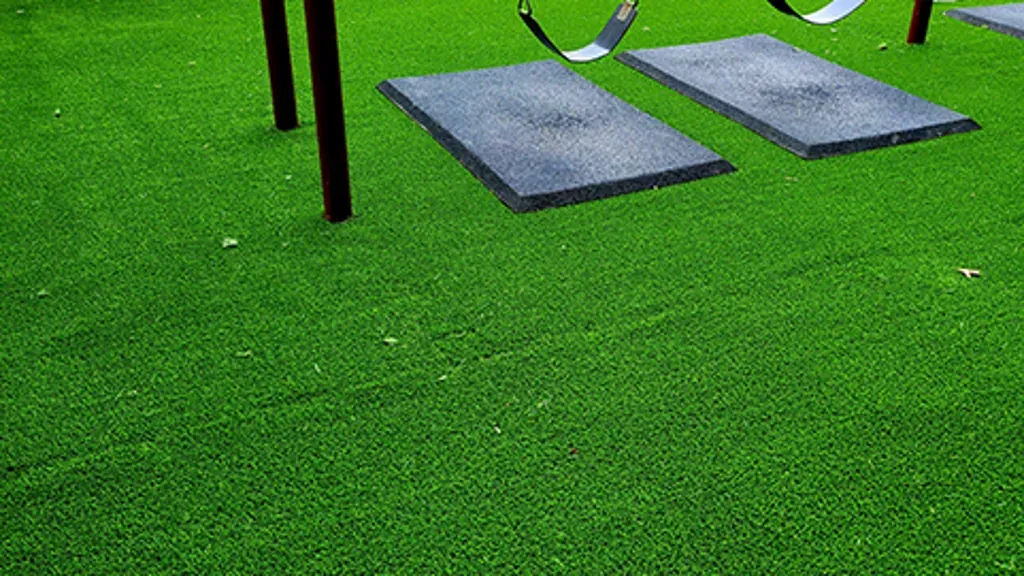
Artificial Turf Playground Buying Guide
Artificial Turf Playground Buying Guide
An artificial turf playground is not just a patch of green synthetic grass under a slide. For schools, parks departments, churches, HOAs, and commercial childcare spaces, it is a full surface system that has to manage falls, drainage, accessibility, heat, wear, and maintenance at the same time.
Planning a playground turf project? Get connected with a Go Green dealer to match the right turf, padding, infill, and installation plan to your site.
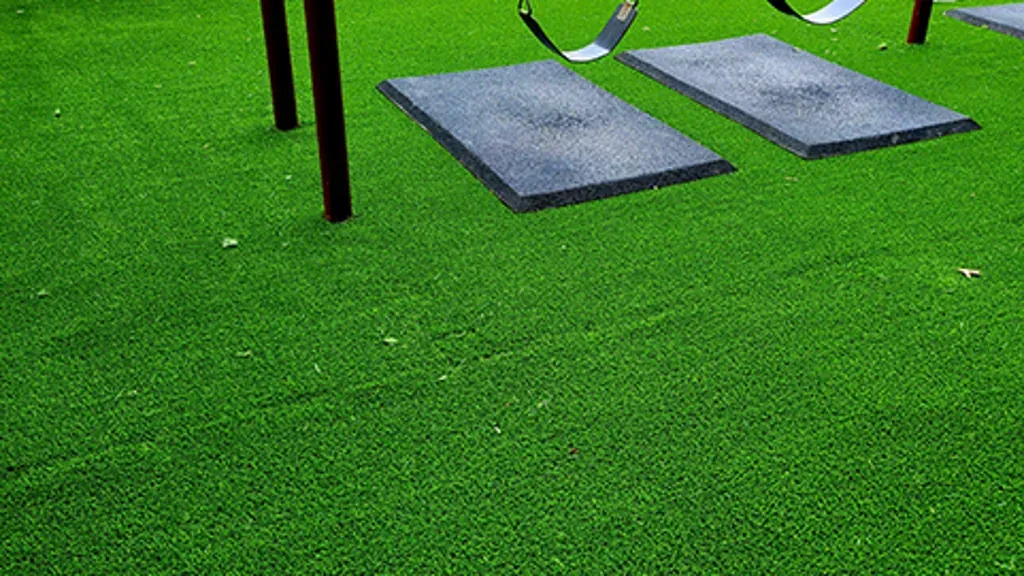
The best playground turf projects start with the same question: what does this surface need to prove? A backyard play area may need comfort and drainage. A public park may need documented fall height performance. A school or municipal project may need ASTM testing, ADA access, lead content documentation, and a maintenance schedule that can survive heavy daily use.
This guide focuses on selection and buying decisions. If you want a deeper safety-first overview, see Go Green’s guide on how to evaluate playground turf for safety. Here, we will walk through what institutional buyers should compare before approving a playground turf system.
What makes playground turf different from regular landscape turf?
Playground turf has a different job than front yard turf or decorative commercial grass. Landscape turf is usually judged by appearance, softness, drainage, and durability. Playground turf is judged by how the entire system performs under children, equipment, weather, wheelchairs, and repeated impact.
A proper playground turf system typically includes:
- A synthetic turf surface selected for traffic, drainage, and fiber performance.
- A shock pad or impact layer designed around the fall heights of the equipment.
- Infill that adds ballast, comfort, and surface stability.
- A compacted base that drains and stays level.
- Seams, edges, and transitions that do not create trip hazards.
- Maintenance practices that keep the surface consistent over time.
That system approach matters because turf alone does not make a playground compliant. A product can be well made and still be the wrong fit if the pad thickness, installation method, or maintenance plan does not match the equipment and use case.
Start with ASTM documentation, not color samples
Color, pile height, and softness are easy to compare. Testing documents are more important. For playground applications, buyers should ask for written performance documentation before choosing a surface.
The most important standard is ASTM F1292, which evaluates impact attenuation for playground surfacing. In plain terms, it helps determine whether a surface system can reduce the severity of injury when a child falls from a specified height. This is where the term fall height comes from.
Go Green’s AQUAMAXX 50 has ASTM F1292 playground impact documentation available, making it a strong product to evaluate for playground projects where impact performance needs to be part of the buying conversation. Buyers should still confirm the exact system being installed, including pad, base, and infill, because fall height ratings apply to tested assemblies, not just a roll of turf by itself.
Other standards may come into play depending on the project. ASTM F2765 addresses lead content in synthetic turf fibers. ASTM F1551 relates to water permeability. ASTM D1335 looks at tuft bind strength. For buyers who want a broader overview of how turf testing works, Go Green also covers ASTM testing standards for artificial turf.
Match the surface to the playground type
A school playground, a municipal park, and a daycare play yard may all use synthetic grass, but they should not be evaluated exactly the same way. The right artificial grass playground system depends on users, equipment, supervision, climate, and expected traffic.
School playgrounds
Schools need a surface that can handle predictable, intense traffic during recess and physical education periods. Drainage matters because a wet field can disrupt the daily schedule. Accessibility matters because students, teachers, and visitors may need smooth routes across the play space. Documentation also matters because school districts often need to keep records for procurement and risk management.
Municipal parks
Public parks usually need the most durable specification. The surface may see unsupervised use, weekend crowding, strollers, wheelchairs, bicycles near the perimeter, and inconsistent maintenance. A municipal buyer should prioritize tested fall height performance, strong seams, vandal-resistant edging, and a maintenance plan that is realistic for the parks crew.
Childcare centers and churches
Childcare and church playgrounds often need a balance of comfort, cleanliness, and cost control. These projects may not have the same procurement process as a city park, but they still need safe transitions, a properly built base, and a system that drains quickly after rain.
HOA and multifamily play areas
For HOAs, apartment communities, and mixed-use properties, the surface has to look good while standing up to repeat use. The buyer may also need to think about pets, shared maintenance responsibility, and how the play area connects to nearby sidewalks, pools, courtyards, or amenity spaces.
Compare fall height ratings before comparing prices
Fall height is one of the most important buying variables for playground turf. It refers to the maximum height from which a child could fall from equipment onto a surface that has been tested to reduce impact risk.
Before requesting pricing, identify the highest accessible play platform on the equipment. That height should guide the shock pad and surface system. A taller structure generally requires more impact absorption. A low toddler play area may not need the same assembly as a tall climbing structure.
Here is the practical buying sequence:
- Measure or confirm the critical fall height of the playground equipment.
- Ask for ASTM F1292 documentation that corresponds to the proposed surface system.
- Confirm whether the test applies to turf alone or turf plus pad and infill.
- Make sure the installer builds the same type of system that was specified.
- Keep the documentation with the project records after installation.
This is one place where the lowest quote can become expensive later. If one proposal includes a tested pad system and another includes turf over a basic base, those are not equivalent bids.
Choose turf fibers for use case, heat, and accessibility
The turf surface has to do more than look realistic. On playgrounds, fibers affect heat, feel, stability, accessibility, and long-term wear.
For high-drainage playground applications, AQUAMAXX 50 is worth evaluating because it combines a shorter 1 inch pile height with drainage performance above 600 inches per hour and playground impact documentation. A shorter, denser profile can make maintenance easier and reduce the chance of the surface feeling too loose underfoot.
For areas where accessibility is a major requirement, Go Green’s HEATMAXX SOFT 65 is documented as ADA wheelchair compliant. It is also part of Go Green’s premium nylon line, which is designed for higher heat resistance than standard polyethylene turf. That can matter on sites exposed to strong sun, rooftops, or reflected heat from Low-E windows.
Not every playground needs the same product. A splash-adjacent play space may put drainage first. A public park with wheelchair routes may put accessibility and stable transitions first. A sunny school courtyard may need heat management to be part of the design from the beginning.
Do not ignore heat management
Artificial turf can get hot in direct sun. That is true for playground turf, landscape turf, poured rubber, concrete, and many other outdoor surfaces. The right question is not whether heat exists. The right question is how the site design will manage it.
Heat management should include:
- Shade planning from trees, sails, structures, or building orientation.
- Surface selection based on climate, traffic, and exposure.
- Infill selection, since some infills retain more heat than others.
- Water access for periodic cooling where appropriate.
- Rules for extreme heat days, especially in school and public park settings.
Buyers in Phoenix, Las Vegas, Dallas, Houston, Southern California, and similar heat-prone markets should also look for nearby Low-E windows. Concentrated window reflection can damage standard polyethylene turf. Go Green’s HEATMAXX SOFT products are made with proprietary nylon technology and are warranted against Low-E window reflective burn damage, which is a major differentiator in heat-sensitive applications.
Compare Go Green product categories before specifying playground turf for a hot or high-traffic site.
Plan drainage before installation day
Drainage is one of the biggest advantages of synthetic turf on playgrounds, but only when the base is built correctly. A turf product with strong water permeability will not solve a poorly graded site, a compacted base that traps water, or clogged perimeter drains.
For playground buyers, drainage affects more than comfort. It affects uptime. Schools, parks, and childcare centers want surfaces that can be used soon after rain. Standing water can create slick areas, accelerate odor problems, and push maintenance crews into constant fixes.
A strong drainage plan should answer these questions:
- Where does water go after it passes through the turf?
- Is the base sloped correctly for the site?
- Will water collect at transitions, borders, or low spots?
- Does the selected turf have enough permeability for the climate?
- How will leaves, soil, and debris be removed so drainage stays open?
AQUAMAXX products are built around drainage, which is why they make sense to review for playgrounds that see heavy rain, irrigation overspray, splash play, or frequent cleaning.
Use infill as a performance choice, not an afterthought
Infill helps stabilize the turf, support fibers, add ballast, and influence the way the surface feels underfoot. For playgrounds, it should be selected for the site, not added as a default line item.
Common infill considerations include:
- Impact feel: How firm or cushioned the surface feels during play.
- Heat: How the infill behaves in direct sun.
- Cleanliness: How easily debris, spills, and organic matter can be managed.
- Odor control: Especially important near pet-friendly HOA or multifamily areas.
- Maintenance: Whether the infill can be groomed and replenished predictably.
Go Green offers Envirofill 30-50 Blend and Envirofill 12-20 Green, both useful options to review when buyers want antimicrobial infill performance and a cleaner long-term surface plan.
Check ADA routes, edges, and transitions
Accessibility is not limited to the turf specification. A surface can use an ADA-compliant turf product and still create access problems if the transitions are raised, the edges are unstable, or the route to the equipment is poorly designed.
For institutional buyers, the best time to discuss accessibility is before the base is built. Ask the installer how the turf will connect to sidewalks, ramps, concrete borders, rubber areas, equipment footings, benches, and gates. Wheelchairs, walkers, strollers, and maintenance carts all reveal weak transitions quickly.
Look closely at these details:
- Flush transitions from hardscape to turf.
- Firm, stable routes across the play area.
- No curled edges, loose seams, or raised borders.
- Accessible paths to major play features where required.
- A maintenance plan that keeps infill level and fibers groomed.
HEATMAXX SOFT 65 is a good product to include in the discussion when ADA compliance is a major decision factor, but the installation details still need to support the accessibility goal.
Artificial turf playground product comparison
The right specification depends on the site. Use this table as a starting point for conversations with a dealer or project consultant.
| Project priority | What to look for | Go Green product to evaluate |
|---|---|---|
| Playground impact documentation | ASTM F1292 system documentation, proper pad, fall height alignment | AQUAMAXX 50 |
| High drainage | Fast water movement, stable base, debris maintenance plan | AQUAMAXX 50, AQUAMAXX 75, AQUAMAXX 90 |
| Accessibility | ADA compliant product, firm routes, smooth transitions | HEATMAXX SOFT 65 |
| Heat-prone or reflective sites | Nylon heat resistance, Low-E window burn warranty, shade planning | HEATMAXX SOFT 47 or HEATMAXX SOFT 65 |
| Shared amenity areas with pets nearby | Drainage, antimicrobial options, odor-conscious maintenance | PETMAXX line with Envirofill options |
What should be in a playground turf quote?
A clear quote should make it easy to compare one system against another. If the proposal only lists square footage and a turf name, ask for more detail.
A complete playground turf quote should include:
- Turf product name and specifications.
- Shock pad type, thickness, and fall height documentation when applicable.
- Infill type and estimated pounds per square foot.
- Base materials, compaction plan, and drainage approach.
- Seam layout, edging method, and transition details.
- Warranty information for the product and installation.
- Maintenance guidance after installation.
- Testing documents or product specification sheets.
This level of detail protects the buyer and the installer. It also helps procurement teams avoid comparing a complete, tested system against a cheaper proposal that leaves out the parts that matter most.
Installers and contractors can become a Go Green dealer to access product support, wholesale pricing, and playground-ready turf options.
Maintenance should be simple, but it cannot be ignored
One reason schools and parks choose artificial grass playground surfaces is to reduce mud, bare spots, mowing, and inconsistent natural grass wear. That does not mean the surface is maintenance-free.
A practical maintenance schedule should include:
- Weekly removal of leaves, trash, sticks, and loose debris.
- Regular inspection of seams, edges, and high-traffic transitions.
- Grooming to redistribute infill and keep fibers upright.
- Rinsing or cleaning after spills, heavy pollen, or pet contamination.
- Drainage checks after storms.
- Annual review of infill levels and wear patterns.
Public and school playgrounds should document inspections. A simple log helps maintenance teams catch small issues before they become surface failures, trip hazards, or warranty disputes.
Key questions to ask before approving playground turf
Before choosing a vendor or product, ask direct questions. The answers will tell you whether you are buying a surface system or just a roll of turf.
- What fall height is required for this playground equipment?
- Does the proposed system have ASTM F1292 documentation?
- Which turf product, pad, and infill are included?
- How will the base drain during heavy rain?
- How will the surface connect to sidewalks, curbs, gates, and equipment?
- Is ADA access required for this site?
- Are there Low-E windows or heat reflection risks nearby?
- Who is responsible for maintenance after installation?
- What warranty applies to the product, and what warranty applies to workmanship?
- Can the supplier provide product testing specifications?
Those questions are especially important for institutional buyers because the lowest initial price is not always the lowest total cost. A well-built playground turf system should reduce downtime, simplify maintenance, and provide clear documentation for the people responsible for the site.
Final recommendation for schools, parks, and commercial buyers
If you are buying artificial turf for a playground, do not start with the prettiest sample. Start with the required performance. Confirm fall height, ASTM documentation, accessibility, drainage, heat exposure, infill, and maintenance before you compare final pricing.
For many playground projects, AQUAMAXX 50 belongs on the shortlist because of its drainage performance and playground impact documentation. For accessibility-focused or heat-prone areas, HEATMAXX SOFT 65 is also worth evaluating because of its ADA compliance and nylon heat resistance. The best choice depends on the site, equipment, users, and climate.
Go Green Synthetic Turf manufactures application-specific turf products in Dalton, Georgia and supports projects through a nationwide dealer network. If you are planning a school playground, park upgrade, HOA amenity area, or commercial play space, the next step is to match your site’s requirements to the right complete turf system.
Contact Go Green to get connected with a dealer and build a playground turf specification that fits your project.
Leave a Reply