


Backyard Putting Green Cost: 2026 Guide
Backyard Putting Green Cost: 2026 Guide
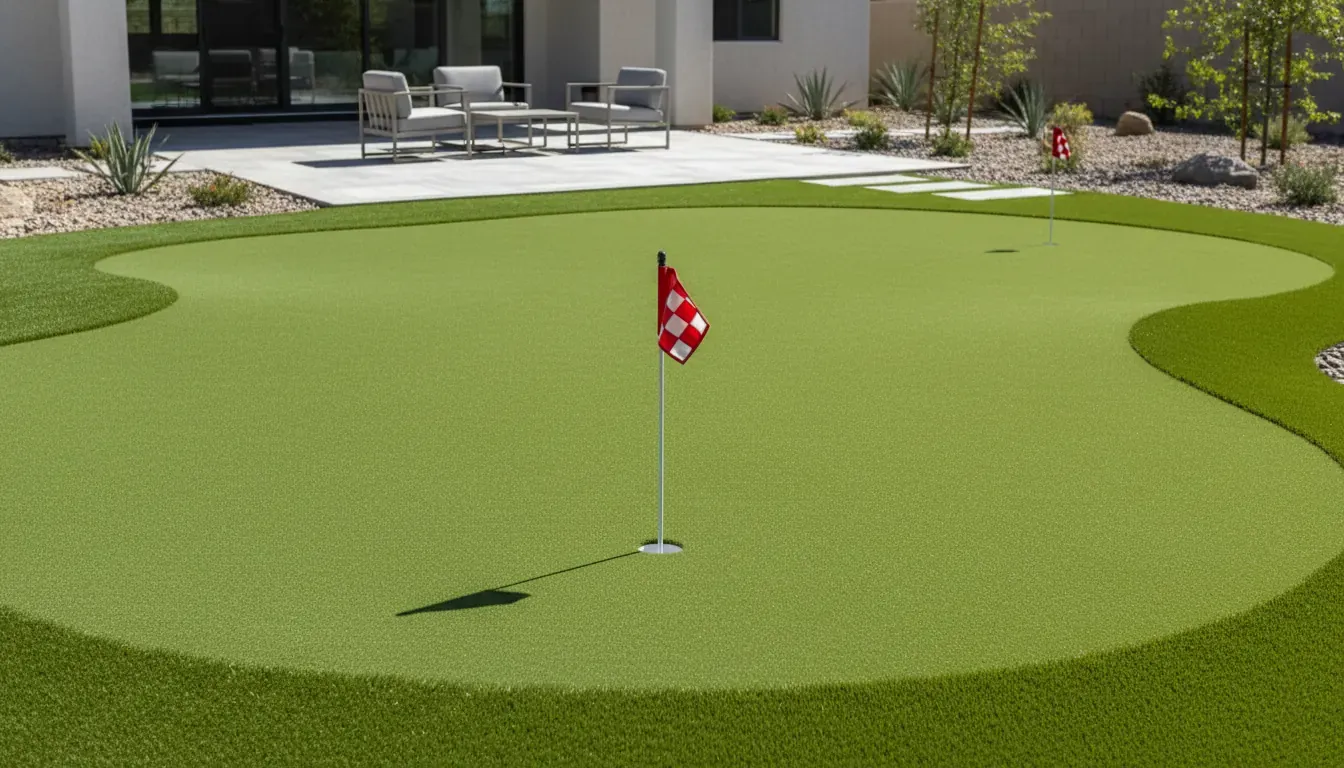
A backyard putting green usually costs more than a standard patch of artificial grass because the surface has to roll true, drain correctly, hold cups cleanly, and stand up to repeated practice. For most homeowners, the total backyard putting green cost comes down to five things: the size of the green, the putting turf selected, the base preparation, the labor required for shaping and installation, and any accessories such as fringe, cups, flags, contouring, and lighting.
Get connected with a Go Green installation partner to plan a backyard putting green with the right turf, base, and finish for your space.
As a planning range, many backyard synthetic putting greens land between $18 and $40 per square foot installed, with simple small greens near the lower end and custom golf spaces with fringe, undulation, multiple cups, and premium turf near the higher end. The putting surface itself is only one line item. A realistic budget should also include excavation, aggregate base, compaction, weed barrier where appropriate, cups, edging, seams, infill, and skilled labor.
This guide breaks down the major cost drivers, shows example budgets for 200, 500, and 1,000 square foot greens, and explains how to choose a surface that performs well after the installation crew leaves.
Backyard Putting Green Cost at a Glance
Use these ranges as a starting point for early budgeting. Actual pricing varies by market, access, site conditions, turf selection, and the complexity of the design.
| Project type | Typical size | Estimated installed cost | Best fit |
|---|---|---|---|
| Compact practice green | 150 to 250 sq ft | $3,000 to $10,000 | Short putts, side yards, patios, small yards |
| Mid-size backyard green | 300 to 600 sq ft | $7,500 to $22,000 | Daily practice, multiple cup locations, small fringe |
| Large custom green | 700 to 1,200+ sq ft | $18,000 to $48,000+ | Serious golfers, chipping area, contouring, premium finish |
Those numbers include the total project, not just the turf. The synthetic putting turf may be $4 to $6 per square foot at retail, but the installed price reflects everything needed to make that turf behave like a real putting surface.
What Is Included in a Backyard Putting Green Estimate?
A professional estimate should separate the visible putting surface from the hidden work underneath it. The base is what keeps the green smooth, stable, and playable after rain, heat, freeze-thaw cycles, and repeated foot traffic.
Common line items include:
- Design and layout: green shape, cup locations, slopes, fringe, and transitions to patios or lawn areas.
- Site preparation: removal of grass, soil, roots, old landscape fabric, or existing hardscape.
- Base aggregate: crushed stone or decomposed granite installed in layers and compacted for stability.
- Drainage work: grading, aggregate depth, and sometimes added drains for tight or low areas.
- Putting turf: the short-pile synthetic surface selected for ball roll and speed.
- Fringe turf: optional taller turf around the putting surface for chipping, aesthetics, and ball containment.
- Cups and flags: usually one to four cups depending on size and design.
- Edging and fastening: nails, stakes, bender board, concrete curbing, or other perimeter restraint.
- Infill and finishing: brush-in material, roll testing, seam grooming, and final cleanup.
If one bid looks much cheaper than the others, compare base depth, aggregate type, turf model, seam plan, cups, and warranty support before choosing it. A putting green that looks affordable on paper can become expensive if it settles, drains poorly, or rolls inconsistently.
Cost by Size: 200, 500, and 1,000 Square Foot Examples
The easiest way to estimate a backyard putting green is to start with size. Larger greens generally cost more overall but may cost less per square foot because mobilization, design, and equipment setup are spread across more area.
| Green size | Simple estimate at $18/sq ft | Mid-range estimate at $28/sq ft | Premium estimate at $40/sq ft |
|---|---|---|---|
| 200 sq ft | $3,600 | $5,600 | $8,000 |
| 500 sq ft | $9,000 | $14,000 | $20,000 |
| 1,000 sq ft | $18,000 | $28,000 | $40,000 |
A 200 square foot green can be enough for focused putting practice, especially if it is shaped well and has two or three cup locations. A 500 square foot green gives most homeowners room for multiple putt lengths and a small fringe. A 1,000 square foot green is usually a custom golf feature, often with chipping zones, contouring, and more detailed landscape integration.
Putting Turf Cost: Why the Surface Matters
The turf is the part you see and play on every day, so it should not be treated as a commodity. Putting green turf needs a short, dense construction that supports a consistent ball roll. Landscape turf is designed to look like grass. Putting turf is designed to perform.
Go Green’s SPORTMAXX line includes several golf and athletic surfaces that can support different project goals:
- SPORTMAXX 36 2CN: a two-color nylon putting surface with natural rubber backing, useful when flexibility and ball roll matter.
- SPORTMAXX 36 2CU: a two-color golf surface with urethane backing for standard putting applications.
- SPORTMAXX 36 3CU: a three-color golf surface with a professional look and dense construction.
- SPORTMAXX 100: a heavier athletic turf used where durability and sports performance are priorities.
For putting greens, the best choice depends on whether the homeowner wants a fast practice surface, a more realistic backyard golf feature, or a green that blends into a larger synthetic turf landscape. The material cost difference may look small on a spreadsheet, but it can change the feel of every putt.
Base Preparation and Grading Costs
The base is often the biggest reason putting green bids vary. A flat, accessible yard with good drainage is simpler. A sloped yard, compacted clay soil, tree roots, poor access, or a design with tiers and contouring takes more time and material.
Base preparation can include excavation, hauling away soil, installing aggregate, compacting in lifts, fine grading, and shaping subtle breaks. Skilled shaping matters because a backyard putting green should challenge the golfer without creating unfair rolls or drainage pockets.
Expect base work to be more expensive when:
- The crew has to move material by hand through a narrow gate.
- The yard needs drainage correction before turf installation.
- The design includes multiple breaks, ridges, or elevated features.
- Existing sod, roots, concrete, or hardscape must be removed.
- The project is tied into patios, retaining walls, pool decks, or landscape borders.
A strong base is not the place to cut corners. It protects the finished surface from low spots, wrinkles, and inconsistent speed.
Labor Cost: Why Putting Greens Require Specialized Installation
Installing a putting green is more exacting than installing a standard artificial lawn. The crew has to manage seams, cups, compaction, grain direction, edge details, and final roll. Small mistakes show up quickly when a golf ball crosses the surface.
Labor cost is influenced by crew experience, project access, layout complexity, number of seams, fringe details, and the amount of hand finishing needed. A simple rectangular practice strip is faster than a kidney-shaped green with three cups, fringe, and a chipping apron. A good installer will also test the surface during finishing instead of simply laying the turf and walking away.
Need help finding the right installer? Go Green connects homeowners with installation partners who understand synthetic turf products and project-specific applications.
Accessories That Affect the Final Price
Accessories can turn a basic putting area into a complete backyard golf space. They can also increase the total project cost, so it is helpful to separate must-haves from nice-to-haves.
| Accessory | How it affects cost | When it is worth it |
|---|---|---|
| Cups and flags | Small material cost, added layout and cutting time | Almost every putting green |
| Fringe turf | Adds material, seams, and labor | For chipping, ball stop, and a finished look |
| Contour shaping | Adds base work and skilled labor | For golfers who want realistic practice |
| Edging | Varies by material and perimeter length | For clean transitions and long-term stability |
| Lighting | Adds electrical planning and fixtures | For evening practice or entertainment spaces |
| Drainage upgrades | Adds materials and excavation | For low spots, heavy rain areas, or compacted soil |
Most homeowners should prioritize the putting surface, base, cups, and edging first. Fringe and contouring are the next best upgrades because they improve both appearance and practice value.
DIY vs. Professional Installation
A DIY backyard putting green can reduce labor cost, but it also shifts risk to the homeowner. The hard parts are not just cutting turf and placing cups. The hard parts are excavation, base compaction, seam placement, drainage, slope control, and final roll performance.
DIY may make sense for a small, temporary, or very simple practice area. Professional installation is usually the better choice when the green is larger, visible from the home, tied into landscaping, or expected to perform like a serious practice surface.
If you compare DIY and professional installation, include tool rental, base material delivery, disposal fees, edging, infill, cups, flags, adhesives, nails, mistakes, and time. A professional quote may look higher at first, but it includes experience and accountability.
How to Lower Putting Green Cost Without Hurting Performance
There are smart ways to manage budget without sacrificing the parts that make the green playable.
- Choose the right size, not the biggest size. A well-designed 300 square foot green can be more useful than a poorly planned 600 square foot green.
- Keep the shape efficient. Complex curves can add cutting, edging, waste, and labor.
- Limit cups to what you will actually use. Two or three thoughtful cup locations may be enough.
- Add fringe strategically. Put fringe where it improves chipping practice or appearance instead of wrapping every edge by default.
- Do drainage correctly the first time. Fixing drainage after installation is almost always more expensive.
- Select turf by use case. Match the surface to the golfer, speed preference, and expected traffic.
The cheapest project is rarely the best value. The goal is to spend where performance depends on it and simplify where it does not.
How Putting Green Cost Compares to Standard Turf
Homeowners often ask why a putting green costs more than a standard synthetic lawn. The answer is precision. Standard turf needs to look good, drain, and hold up. Putting turf needs to do all of that while creating a predictable ball roll across a shaped surface.
Go Green already covers broader artificial grass pricing in its guide to synthetic turf cost per square foot. A putting green can sit above standard turf pricing because of the extra base shaping, cup installation, speed tuning, and specialty materials involved. If the project includes a larger landscape turf area around the green, the total bid may include both standard turf pricing and putting green pricing.
Which Backyard Putting Green Is Right for Your Budget?
For a small budget, focus on a compact green with one or two cups, a clean shape, and a reliable putting surface. For a mid-range budget, add more square footage, multiple cup locations, and limited fringe. For a premium project, invest in contouring, a chipping apron, landscape integration, lighting, and a turf selection tailored to how the green will be used.
If you are comparing turf options, Go Green’s guide to the best artificial turf for putting greens is a helpful next read. If you want a broader overview of putting green turf, the putting green turf 101 guide explains surface selection and basic design considerations.
Explore Go Green’s synthetic turf products or get connected with an installation partner to move from budget planning to a project-specific quote.
FAQ: Backyard Putting Green Cost
How much does a backyard putting green cost in 2026?
Most backyard putting greens cost about $18 to $40 per square foot installed. A simple 200 square foot practice green may cost $3,600 to $8,000, while a larger custom green with fringe and contouring can cost $20,000 to $40,000 or more.
What is the cheapest size for a useful backyard putting green?
A 150 to 250 square foot green is often the smallest useful range for focused putting practice. It can support short putts and one to three cup locations without taking over the yard.
Why does putting green turf cost more than regular artificial grass?
Putting green turf is engineered for ball roll, speed, and surface consistency. The installation also requires more precise base shaping, cup cutting, seam work, and finishing than a standard artificial lawn.
Can I install a backyard putting green myself?
Yes, but DIY is best for small and simple practice areas. Larger greens, contoured surfaces, drainage challenges, and projects tied into landscaping usually benefit from professional installation.
What adds the most cost to a putting green?
The biggest cost drivers are size, base preparation, labor complexity, turf selection, fringe, contouring, drainage upgrades, and the number of cups or accessories.
Final Takeaway
A backyard putting green is part landscape project and part performance surface. The right budget should account for turf, base, labor, accessories, and the skill needed to make the green roll correctly. Start with the size you will actually use, choose a putting surface built for golf performance, and invest in the base work that keeps the green smooth over time.
When those pieces come together, the result is more than a backyard feature. It becomes a practice space you can use every day.
Leave a Reply