


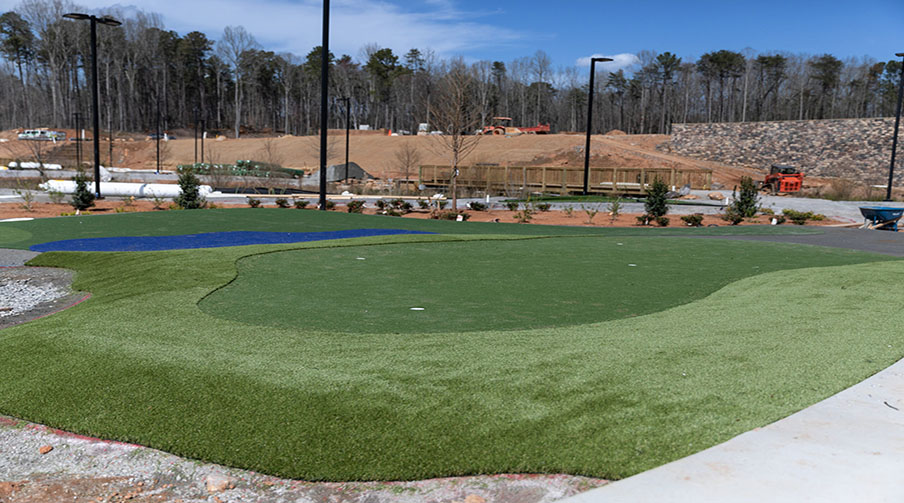
Putting Green Turf 101: The Complete Guide
What separates a perfect putting green from a frustrating one? It’s not just the turf you see on top. You can pick a beautiful grass, but without the right foundation, you’ll never get that smooth, predictable ball roll you’re after. A truly great green is a complete system. Every layer matters—from the compacted sub-base that provides stability to the specific putting green turf and infill that dictate surface speed. I’ll walk you through the critical choices that create a durable, high-performance green you’ll love practicing on for years.
Key Takeaways
- Choose turf designed for performance, not looks: A true ball roll depends on specific features like a low pile height, dense construction, and durable nylon fibers, which are engineered for gameplay and are very different from softer landscape grass.
- A professional installation is non-negotiable: The quality of your green relies on its foundation. A properly prepared base, correct infill application, and secure seams are essential for preventing drainage issues and ensuring a consistent playing surface.
- Think long-term value over upfront cost: An artificial green eliminates the constant expense and effort of maintaining real grass, giving you a durable, year-round practice area that adds lasting value to your property.
What Is Putting Green Turf?
Putting green turf is a specialized artificial grass designed to give you a smooth and consistent surface that perfectly mimics a professional golf green. Unlike the turf you’d find in a backyard lawn, this type is engineered for performance. It’s made from high-quality synthetic materials, usually nylon or polypropylene, chosen for their incredible durability and ability to provide a lifelike gameplay experience. The goal isn’t just to look like a putting green; it’s to play like one.
The entire system is built to ensure a predictable ball roll, so you can practice your short game with confidence. For installers, this means providing clients with a surface they can rely on for true performance. For homeowners, it means getting a realistic practice area that holds up to frequent use and weather without the constant maintenance of a natural grass green. Our SPORTMAXX® series is specifically created to meet these high standards, offering a professional-grade surface for any project. For a two-color professional surface, SPORTMAXX® 36 2CN putting green turf is designed for true ball roll in backyard and commercial greens. It’s the ideal solution for creating a dedicated golf area that delivers consistent results.
How Is Putting Green Turf Crafted?
The secret to a great putting green lies in its construction. High-quality putting green turf features dense, short fibers that are flexible enough to support the ball’s weight evenly. This design is what creates that consistently smooth ball roll and reliable accuracy you need for practice. The fibers are built to resist matting down, ensuring the surface stays true over time.
Just as important is the turf’s backing system. The backing provides essential support and stability for the entire green, preventing shifting or stretching. A solid backing ensures the surface remains flat and uniform, which is critical for any backyard putting green. When you’re looking at different turf products, always check the specifications for both the fibers and the backing to ensure you’re getting a system built for performance.
Putting Green vs. Landscape Turf: What’s the Difference?
While they might look similar at a glance, putting green turf and landscape turf are designed for completely different jobs. Artificial turf for putting greens feels firm and is engineered for high-performance play. In contrast, landscape turf is typically softer and plusher, designed for aesthetic appeal and comfort underfoot in lawns or play areas.
The materials reflect these different purposes. Putting green turf often uses nylon for its exceptional durability and ability to withstand the focused wear and tear of golf. Landscape turf, like our PETMAXX® line, prioritizes a softer feel and resilience for general use. Using landscape turf for a putting green simply won’t provide the firm, true surface needed for a realistic ball roll. While natural grass offers an authentic feel, an artificial putting green gives you tour-quality performance without the daily upkeep.
Why Go with Artificial Turf for Your Putting Green?
If you dream of practicing your short game anytime you want, an artificial turf putting green is the answer. It delivers the performance of a high-end course right in your backyard, without the constant upkeep of natural grass. From a perfect ball roll to year-round playability, synthetic turf offers a practical and high-performing alternative that lets you focus more on your swing and less on your lawn care. Let’s look at the specific advantages that make it a smart choice for both avid golfers and landscape professionals.
Enjoy a Consistent Ball Roll, Every Time
One of the biggest frustrations with a natural grass green is inconsistency. Weather, time of day, and recent maintenance can all change how your ball rolls. Artificial turf eliminates those variables. The surface is engineered to provide a true, predictable ball roll every single time you step out to practice. High-quality putting green turf, especially those made with nylon fibers, offers the ideal combination of durability and softness for realistic gameplay. This means you can build muscle memory and refine your technique on a surface that performs just like a professional course green, giving you a reliable practice area day in and day out.
Play Golf Any Time, All Year Long
A natural grass putting green is often at the mercy of the seasons. It can get muddy after rain, go dormant in the winter, or become stressed during a summer heatwave, limiting your practice time. With an artificial turf green, your short game doesn’t have an off-season. Synthetic turf is designed with excellent drainage, so it’s ready for play shortly after a downpour. It stays green and pristine through every season, from the hottest summer days to the coldest winter mornings. This year-round access means you can work on your putting whenever the mood strikes, making it a more valuable and useful addition to your property.
Less Maintenance Means More Playtime
Maintaining a natural grass putting green to country club standards is practically a full-time job. It requires specialized mowing, precise watering schedules, fertilizing, and pest control. Artificial turf frees you from that demanding routine. The upkeep is minimal: all you need is occasional brushing to keep the fibers upright, rinsing to clear away debris, and checking your infill levels. You can put away the mower and chemicals for good. This low-maintenance approach not only saves you countless hours but also reduces the long-term costs associated with caring for a real grass green. It’s a simple solution for a perfect putt, without the weekend work.
Enjoy a Durable, Water-Wise Green
Beyond saving time, an artificial turf putting green is a responsible choice for your wallet and the environment. It eliminates the need for daily watering, significantly cutting your water bill and conserving a precious resource. But it’s not just about savings; it’s about longevity. Our SPORTMAXX® series is built with tough, resilient fibers like nylon and polyethylene that are engineered to withstand constant foot traffic, UV exposure, and all types of weather without fading or breaking down. This durability ensures your investment looks and performs beautifully for years, giving you a professional-grade putting surface that’s built to last.
Understanding Lifespan and Warranty
When you invest in an artificial putting green, you’re not just buying a product; you’re investing in years of enjoyment and practice. That’s why understanding the turf’s lifespan and warranty is so important. Most high-quality synthetic turfs are built to last, with many manufacturers offering warranties that reflect their confidence in the product’s durability. For example, it’s common in the industry to see warranties ranging from 10 to 16 years, which typically protect against things like UV degradation and excessive fading. A strong warranty is a clear indicator of a quality product, giving you assurance that your green will perform beautifully for years to come. It’s about choosing a system from a supplier you can trust to stand behind their materials.
Trusted by Professionals in Major League Sports
It’s not just homeowners who see the value in a high-performance artificial green. Professional athletes, including top PGA golfers like Jim Furyk and Vijay Singh, trust and endorse high-quality synthetic turf for their own practice. Their careers depend on consistent, reliable performance, and they need a surface that delivers a true ball roll every single time, allowing them to hone their skills without the variables of natural grass. This level of trust comes from turf engineered with durable nylon fibers and a dense construction designed specifically for gameplay. When you choose a professional-grade putting surface, you’re investing in the same technology that the best in the world rely on to stay at the top of their game.
How to Choose the Best Putting Green Turf
Selecting the right turf for a putting green is about more than just looks; it’s about performance. Unlike landscape turf, which prioritizes a lush, natural appearance, putting green turf is engineered for a specific function: providing a consistent and predictable surface for a golf ball. The goal is to replicate the experience of playing on a high-quality, natural green, but without the constant maintenance.
To achieve that perfect roll, you need to look closely at the turf’s specifications. Key factors like the height and density of the fibers, the material they’re made from, and the system’s ability to handle water all play a critical role. A great putting green is a complete system, from the prepared base to the turf on top. Understanding these components will help you choose a product that delivers a true ball roll and stands up to years of practice. Let’s walk through the essential features to evaluate when making your selection.
What’s the Right Pile Height and Density?
When you’re looking at putting green turf, two of the most important specs are pile height and density. Pile height refers to the length of the turf blades, and for a putting green, shorter is always better. A low pile height, typically around half an inch, ensures the ball rolls smoothly across the surface rather than sinking into the fibers. This gives you a true, consistent roll every time.
Density refers to how tightly the turf fibers are stitched together. A denser turf is more durable and resilient, meaning it can handle frequent foot traffic and maintain its structure over time. High-quality putting green turf uses flexible fibers that evenly distribute weight, which is essential for reliable accuracy. Our SPORTMAXX® series is a great example of turf engineered with the right balance of low pile height and high density for peak performance.
Find a Fiber Material That Resists Fading
The type of fiber used in your putting green turf directly impacts its feel, durability, and performance. The two most common materials are nylon and polypropylene. Nylon is widely considered the gold standard for putting greens. It’s incredibly durable, resilient, and has a texture that closely mimics a professional course. It holds its shape well, ensuring a consistent surface for years. Polypropylene is a more budget-friendly option that still offers good performance, though it may not have the same longevity as nylon.
Whichever material you choose, make sure it has excellent UV resistance. The turf will be exposed to direct sunlight, and without proper UV protection, the fibers can fade and become brittle. High-quality turf products have UV inhibitors built into the fibers to keep your green looking and playing great.
Don’t Forget the Base and Drainage System
A high-performance putting green is built on a solid foundation. The turf itself is just the top layer; what’s underneath is just as important for drainage and stability. A properly prepared base is essential to prevent puddles from forming on the green after it rains and to ensure the surface remains smooth and level. Without a good base, you’ll end up with dips and uneven spots that ruin the playing experience.
The turf’s backing also plays a key role in drainage. Look for a permeable backing that allows water to pass through easily and drain into the sub-base below. A well-draining system prevents moisture buildup, which can lead to mold and mildew. Following a proper installation guide for base preparation is non-negotiable for a long-lasting, high-performing green.
How Will the Ball Respond on Your Turf?
Ultimately, the best way to judge a putting green turf is by how the ball responds to the surface. You’re looking for a “true ball roll,” which means the ball moves smoothly and consistently without wobbling or bouncing. The surface should be fast but controllable, allowing you to practice with confidence. The combination of the turf material, pile height, and infill all contribute to the green’s speed and overall playability.
Before making a final decision, it’s always a good idea to get your hands on a few samples. Feel the texture of the fibers and try rolling a golf ball across them. This will give you a much better sense of the surface quality than just looking at pictures. You can also check out a gallery of completed projects to see how the turf looks once it’s installed.
Understanding Stimp Speed
If you’ve ever heard golfers talk about the “speed” of a green, they’re referring to its Stimp rating. This is simply a measurement of how fast and far a ball rolls across the surface. For a synthetic putting green, the speed can be fine-tuned by adding or removing the sand infill. A higher Stimp reading indicates a faster roll, with a good target range typically falling between 9 and 11 for a realistic feel. This measurement is crucial for anyone who wants to accurately replicate the conditions of a professional course, as it directly impacts how the ball behaves on the green. Getting the Stimp speed right ensures your practice translates seamlessly to the course.
Checking the Face Weight
Face weight is a key indicator of your turf’s quality and durability. It refers to the weight of the turf fibers per square yard, not including the backing. A higher face weight, usually between 40 and 60 ounces for a quality putting green, means the turf is denser and more resilient. This density is essential for creating a consistent playing surface that can withstand frequent use without showing signs of wear. For installers, choosing a turf with a substantial face weight means fewer callbacks and more satisfied clients. For homeowners, it’s your assurance that your investment will continue to perform beautifully for years to come when you’re looking at different turf products.
Which Type of Turf Is Right for Your Green?
Once you know the key features to look for, you can narrow down the specific type of turf that will work best for your project. The material of the grass fibers and their length are two of the most important factors that determine how your putting green will play and how long it will last.
Nylon vs. Polyethylene vs. Polypropylene: Which Is Best?
When you’re looking at turf materials, you’ll mainly see three options: nylon, polyethylene, and polypropylene. For a putting green that delivers on performance, nylon is widely considered the best choice. It’s incredibly durable, holds its shape under heavy use, and offers a soft feel with an excellent ball roll that many pro golfers prefer. While polyethylene and polypropylene are solid materials often used in landscape turf, they don’t quite match the resilience and true-to-life gameplay of nylon. Choosing the right material is a critical step in building a green that you’ll be happy with for years to come.
Why Short Pile Turf Is a Must
Pile height refers to the length of the turf’s blades, and for a putting green, shorter is always better. A short pile creates a firm, smooth surface that allows the golf ball to roll true and consistently, just like it would on a well-maintained natural green. This gives you better control over your putts and a more realistic practice experience. The shorter fibers, combined with a quality backing system, also provide the stability needed for a high-performance putting green. Longer blades can cause the ball to wobble or slow down unpredictably, so always opt for a dense, low-profile turf.
Alternative Options: Mats and Tiles
If a full-scale putting green installation feels like more than you need, you’re not out of options. Putting green mats and interlocking tiles offer a simpler, more portable way to practice your short game. These are fantastic solutions for smaller spaces like patios, basements, or even offices. They don’t require the extensive base preparation of a permanent green, making them a great choice for renters or anyone looking for a less permanent setup. You can roll them out for practice and store them away when you’re done, giving you flexibility without a major commitment.
The main trade-off comes down to performance. While mats and tiles are excellent for casual practice, they can’t fully replicate the feel of a professionally installed green. A custom green is a complete system, built from the ground up with a proper base to ensure a true, consistent ball roll. Mats are placed on an existing surface, so the ball’s path is only as smooth as the floor underneath. Our range of sports mats and training aids are designed for convenient practice, but for the most realistic experience that mimics a real course, a dedicated turf system is the way to go.
A Look at Our Top Pick: The SPORTMAXX® Series
If you’re looking for a turf that checks all the boxes for performance and durability, our SPORTMAXX® Series is engineered specifically for the demands of the game. We designed this series to provide the consistent playability and realistic feel that serious golfers expect. The turf is built to withstand constant foot traffic and practice sessions while maintaining a surface that delivers a true ball roll every time. For a backyard putting green that performs like it belongs on a professional course, the SPORTMAXX® Series offers a reliable, top-tier solution that you can count on.
What’s the Real Cost of a Putting Green?
A backyard putting green is an investment, and it’s helpful to know what goes into the final price tag. The total cost isn’t just about the turf itself; it’s a combination of high-quality materials, the complexity of the installation, and the long-term value you get from a low-maintenance, high-performance surface. Thinking about these factors will help you set a realistic budget and choose a solution that provides years of enjoyment. Let’s break down the key components that influence the cost of your project.
First Up: The Cost of Materials
The artificial turf is the most significant material expense. On average, putting green turf can range from about $3 to $5 per square foot, with premium options costing more. The price reflects the quality of the fibers, the density of the turf, and its overall durability. For example, nylon turf is often preferred for its resilience and ability to produce a true ball roll, making it a worthwhile investment for serious golfers. Beyond the turf, you’ll also need to budget for other essential infill and accessories, including seam tape, adhesive, cups, and flags, which are all part of creating a professional-grade green.
Adding Up Installation and Infill Costs
Professional installation is a major part of the total cost, typically ranging from $15 to $40 per square foot. This price covers everything from site preparation and base construction to laying the turf and applying the infill. While it might be tempting to cut corners here, proper installation is what guarantees your green will perform correctly and last for years. Infill is another critical element affecting both cost and playability. Using more sand, for instance, can increase the speed of the green, allowing you to customize the surface to match your practice needs. The type and amount of infill you choose will directly impact the final project cost.
Breaking Down Costs by Size and Installation Type
The final price tag for your putting green really comes down to two key factors: its overall size and whether you hire a professional or decide to build it yourself. Naturally, a larger green will require more materials and labor, increasing the total cost. However, the most significant variable in your budget will be the installation method you choose. Deciding between a full-service professional installation and a hands-on DIY project will determine not just the upfront expense but also the complexity and final quality of your green. Let’s look at how these two paths compare on a per-square-foot basis.
Cost Per Square Foot: Pro vs. DIY
Opting for a professional installation is the most straightforward, all-inclusive route. You can expect the cost to range from $15 to $40 per square foot. This price typically covers everything: the turf, base materials, infill, and all the labor for site preparation, base compaction, and final grooming. While it’s the more expensive option upfront, you’re paying for expertise. A professional installation ensures every layer is built correctly, from the compacted base to the perfectly seamed turf, giving you a durable, high-performance green that’s ready for play without any of the guesswork.
If you’re comfortable with a hands-on project, a DIY installation can lower your costs. The turf itself generally runs between $3 to $5 per square foot for a quality product. However, that price doesn’t include the other necessary materials. You’ll still need to purchase the sub-base aggregate, sand infill, seam tape, adhesive, cups, and flags. Factoring in these essential infill and accessories, plus any tool rental fees, is crucial for an accurate budget. While you save on labor, the trade-off is a significant investment of your own time and effort.
Is a Putting Green a Smart Investment?
While the upfront cost is important, the real value of an artificial putting green becomes clear over time. Unlike a natural grass green, a synthetic surface requires no watering, mowing, or fertilizing, which adds up to significant savings on water bills and maintenance expenses. This makes it a smart, sustainable choice that lets you spend more time playing and less time working on your lawn. A well-built green using quality materials, like our SPORTMAXX® series, is a durable asset that adds value to your property. It’s an investment in your home and your golf game that pays for itself through lower upkeep and lasting performance.
Avoid These Common Putting Green Turf Mistakes
A high-performance putting green is a system where every component works together. Choosing the right turf is a great start, but a few common missteps can undermine the entire project. Focusing on the details from the beginning helps ensure a smooth installation, a happy client, and a green that plays true for years. By avoiding these frequent mistakes, you can deliver a final product that performs as well as it looks, preventing frustrating callbacks and ensuring long-term satisfaction.
Matching Your Turf Material to Your Climate
The local climate plays a huge role in how your turf will perform and age. A putting green in sunny Arizona faces different challenges than one in rainy Washington. High-quality putting green turf is typically made from durable materials like nylon or polypropylene, but they have different strengths. Nylon is exceptionally resilient and heat-resistant, making it a top choice for realistic gameplay in demanding environments. Polypropylene offers a great putting surface but may be less durable under intense UV exposure. Choosing a material that can’t handle the local weather can lead to premature fading, fiber degradation, and poor performance. Always consider the environment when you select your products.
The Critical Role of the Right Infill
Infill is much more than just a filler; it’s the heart of your putting green’s performance. This is what gives the green its firmness, speed, and ball-roll consistency. Artificial putting greens are often filled with specialized infill materials, like rounded silica sand, which provides weight to stabilize the turf and creates a smooth, predictable surface. Skimping on infill or using a low-quality substitute can result in a green that’s too fast, too slow, or develops wrinkles over time. The right infill selection is critical for achieving the specific playing characteristics your client wants, so it’s a detail that deserves careful attention during the planning phase.
Why a Pro Installation Makes All the Difference
You can have the best turf and infill on the market, but if the installation is flawed, the green will never perform correctly. A professional-grade putting green depends on a perfectly prepared base. This means proper excavation, grading for drainage, and thorough compaction to create a stable foundation that won’t shift or settle. Seams must be invisible and secure, and the infill must be applied evenly to guarantee a consistent ball roll across the entire surface. A poor installation can lead to drainage issues, uneven surfaces, and visible seams, all of which ruin the playing experience. Quality craftsmanship is what brings all the materials together into a cohesive, high-performing system.
Why Proper Installation Is Crucial for Performance
You can choose the highest-quality putting green turf on the market, but its performance will fall flat without a proper installation. The process of building your green is just as important as the materials you use. From the ground up, every step affects the final outcome, influencing everything from ball roll and drainage to the green’s overall lifespan. A shortcut in the installation process can lead to wrinkles, puddles, and an unpredictable playing surface, creating headaches for homeowners and costly callbacks for installers. Let’s walk through the critical components of an installation that delivers consistent performance.
Building a Solid Foundation: Base Prep and Drainage
The foundation of your putting green is everything. Before any turf is rolled out, you need to prepare a solid, stable base. This involves excavating the area and building up a sub-base of compacted aggregate that is perfectly graded for drainage. A poorly prepared base can shift or settle over time, creating low spots and an uneven surface that ruins the consistency of your ball roll. More importantly, proper grading ensures that water flows away from the surface, preventing puddles that can lead to mold, soft spots, and premature wear. A well-built base is the key to a green that performs correctly for years. For a detailed look at the process, our installation guide covers the essential steps.
Professional Install vs. DIY: What to Consider
Deciding whether to hire a professional or tackle the installation yourself depends on your goals and experience. While a DIY project can seem like a great way to save money, installing a putting green requires a high level of precision. Cutting turf, creating clean seams, and ensuring a perfectly smooth surface are skills that take practice. For homeowners, if you’re aiming for a professional-grade green that mimics the feel of a real course, working with an experienced installer is your best bet. For contractors, this is where your expertise shines, delivering a flawless result that a weekend project can’t match. A professional installation is an investment in quality and guarantees your green is built to last. You can always find a partner installer to ensure the job is done right.
Key Steps for a DIY Installation
If you’re tackling a DIY installation, precision is your best friend. The success of your green hinges on getting the foundation right. The first and most critical step is proper base preparation. This involves excavating the site to the correct depth and building a sub-base with compacted aggregate. A poorly prepared base will settle and shift, creating an uneven surface that ruins ball roll. Following a detailed installation guide is non-negotiable here, as it ensures your green has the stable, well-draining foundation it needs to perform for years. Once the base is perfect, you can move on to carefully cutting and seaming the turf, ensuring the edges are tight and invisible. The final step is to apply the infill evenly across the surface, which will determine the speed and feel of your green.
Getting Your Infill Application Just Right
Infill is the granular material brushed into the turf fibers, and it plays a huge role in your putting green’s performance. It’s not just filler; it provides ballast to hold the turf down, helps the fibers stand upright, and directly impacts how your ball rolls. The type and amount of infill you use will determine the speed of your green, often measured by a stimp meter. Rounded silica sand is a popular choice for its consistency. The application process is just as critical as the material itself. You need to spread the infill and accessories evenly across the entire surface and use a power broom to work it down into the base of the turf. Any inconsistencies will create a bumpy, unpredictable putting experience.
Your Guide to Putting Green Turf Maintenance
One of the best things about an artificial turf putting green is how little work it takes to keep it ready for play. While you can say goodbye to mowing, watering, and fertilizing, “low-maintenance” doesn’t mean “no-maintenance.” A little bit of routine care will protect your investment, ensure a true ball roll, and keep your green looking pristine for years. Think of it less as a chore and more as a simple way to guarantee top-tier performance every time you step out to practice your short game.
The three key areas for upkeep are straightforward: keeping the surface clean, making sure the infill is in good shape, and managing seasonal debris. By creating a simple routine, you can easily handle these tasks and prevent small issues from turning into bigger problems. Whether you’re an installer advising a new client or a homeowner caring for your own backyard oasis, these simple steps will help you maintain a professional-quality putting surface. A well-maintained green not only plays better but also adds lasting value and enjoyment to your property.
Simple Brushing and Cleaning Tips
A consistent cleaning schedule is the easiest way to preserve your putting green’s performance and appearance. Regular cleaning, like using a leaf blower to remove leaves and rinsing off light dust, goes a long way. For a deeper clean, you can use a mild soap and water solution once a month, but be sure to rinse it thoroughly to remove any residue. Most importantly, get in the habit of brushing the turf fibers frequently with a stiff, non-metal brush. This keeps the blades standing upright, which is essential for maintaining a smooth, consistent putting surface and a true ball roll.
How to Keep Your Infill in Great Condition
Infill is the secret to your putting green’s performance, providing stability to the turf fibers and helping create the ideal surface for ball response. Over time, foot traffic and weather can cause the infill to compact or shift, especially in high-use areas. It’s a good idea to regularly check these spots and replenish the infill material to ensure optimal performance. Keeping the infill at the right level supports the turf blades and is crucial for the longevity of your green. Using the right infill and accessories from the start makes this process simple and effective.
Creating a Simple Maintenance Schedule
To keep your putting green in peak condition, a simple maintenance schedule is all you need. On a weekly basis, use a leaf blower to clear away any leaves, twigs, or other debris, and give the surface a quick rinse with a hose to wash away dust and pollen. About once a month, take a few minutes to brush the turf with a stiff, non-metal brush. This helps the fibers stand upright, which is essential for ensuring a smooth and true ball roll. While you’re at it, keep an eye on high-traffic areas to make sure the surface remains even. This proactive approach protects your investment and ensures all your turf products perform beautifully for years.
How to Adjust Your Green’s Speed
The speed of your putting green is fully customizable, and the secret lies in the infill. The type and amount of sand used as infill directly control how fast the ball rolls. A greater volume of sand creates a firmer, faster surface, while less infill will result in a slower, softer green. This allows you to tailor the playing experience to your exact preference, whether you want to mimic the lightning-fast greens of a championship course or prefer a more casual pace. Over time, you can add or redistribute infill with a power broom to fine-tune the speed and keep the performance consistent across the entire surface.
Handling Debris and Seasonal Changes
Beyond regular brushing, pay attention to the edges of your putting green, as they can collect debris. It’s best to remove spills, pet waste, or stains quickly to prevent them from setting in. You should also avoid placing heavy objects like patio furniture or large planters on the green for extended periods, as their weight can compress the turf and infill, affecting ball roll. A little preventative care each season helps ensure your SPORTMAXX® putting green remains a high-performance surface that’s always ready for a game.
Related Articles
- What’s the Real Artificial Turf for Backyard Cost?
- Best Quality Artificial Turf: A Buyer’s Guide
- Top 8 Artificial Turf Manufacturers USA (Buyer’s Guide)
Frequently Asked Questions
Can I use regular landscape turf for a putting green? While it might seem like a good way to save money, landscape turf just isn’t built for the job. It has longer, softer blades designed for looks and comfort, which will make a golf ball bounce and wobble. Putting green turf has short, dense fibers that create the firm, smooth surface you need for a predictable and true ball roll. Using the wrong type of turf will lead to a frustrating playing experience.
What’s more important: the turf itself or the installation? That’s a great question, but it’s a bit like asking if the engine or the wheels are more important for a car. The truth is, they are both essential parts of a single system. You can have the best turf in the world, but without a properly prepared base and professional installation, it will never perform correctly. A solid foundation, correct infill, and quality turf all work together to give you a green that plays well and lasts for years.
How do I control the speed of my putting green? The speed of your green is determined almost entirely by the infill, which is the sand-like material brushed in between the turf fibers. Using more infill, or a specific type of rounded sand, will create a faster surface. A professional installer can work with you to adjust the amount and type of infill to achieve the exact speed you want, whether you prefer a slower, more casual green or one that plays like a championship course.
Is nylon turf really worth the extra cost? For a putting green that needs to stand up to serious practice, nylon is an excellent investment. It’s known for being incredibly resilient, meaning the fibers spring back into place after every shot and every footstep. This resilience is what provides a consistently true ball roll over many years. While other materials work well, nylon offers superior durability and a professional feel that serious golfers find is well worth the initial cost.
How much maintenance does a putting green actually need? An artificial putting green is definitely low-maintenance, but not zero-maintenance. Your main tasks will be to keep it clean from leaves and debris with a blower and to occasionally brush the fibers with a stiff broom. This keeps the surface smooth and ready for play. You should also check your infill levels every so often, especially in high-traffic spots, to make sure the surface remains firm and consistent. It’s a very small amount of work for a perfect green year-round.
Leave a Reply