


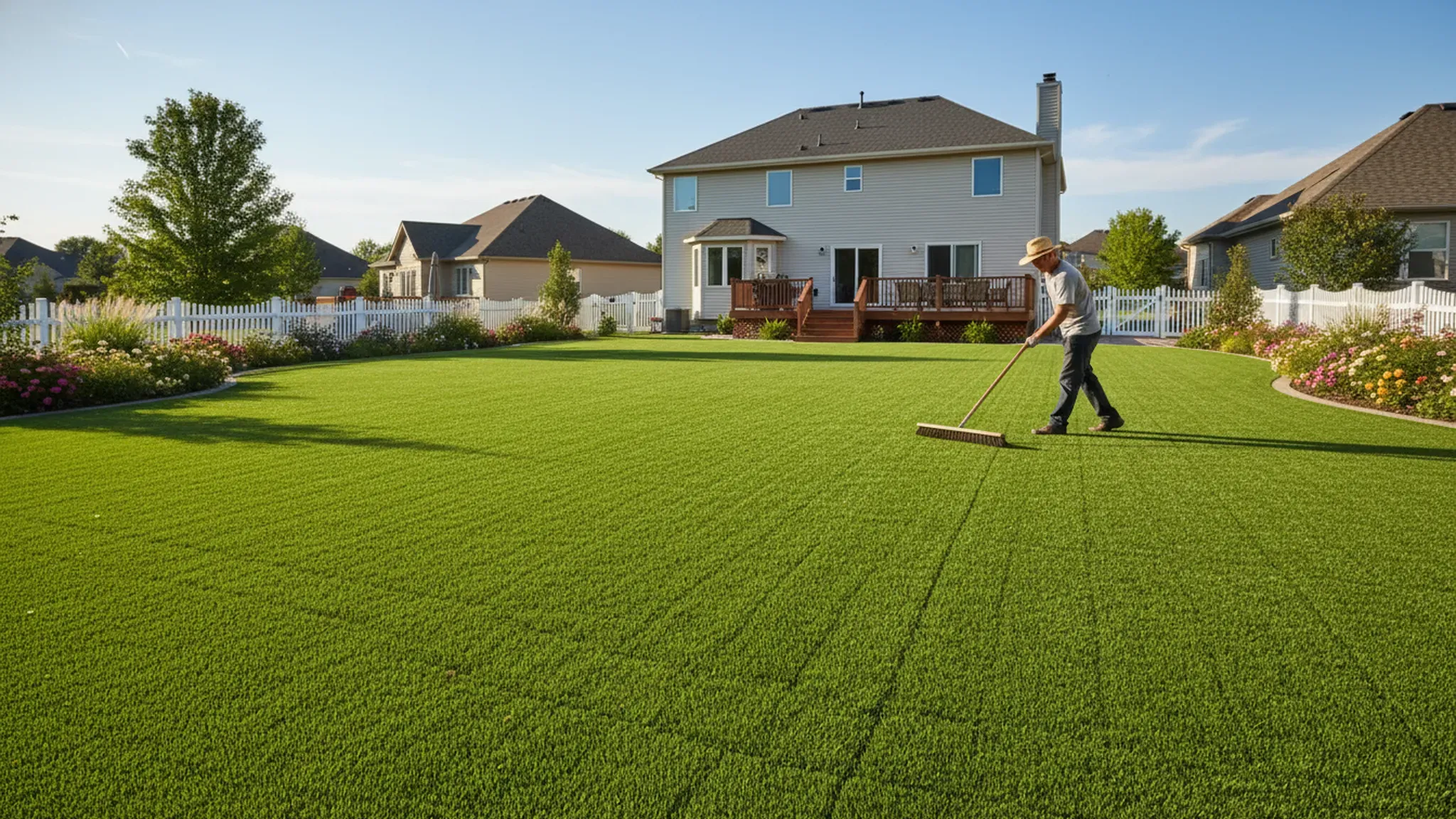
How to Maintain Artificial Turf: The Year-Round Guide
Artificial turf was designed to make your outdoor space easier to enjoy — but “low-maintenance” does not mean “no-maintenance.” A consistent care routine keeps blades upright, prevents odor buildup, and protects the investment behind every square foot you installed. This guide breaks down the four core maintenance pillars — brushing, rinsing, deodorizing, and seasonal inspection — so your turf stays looking sharp every month of the year.
Ready to upgrade your turf before you start your new maintenance routine? Browse Go Green Synthetic Turf’s full product line to find the right turf for your application.
Why Artificial Turf Maintenance Actually Matters
The biggest misconception about synthetic grass is that it is completely maintenance-free. In reality, turf fibers face daily traffic, UV exposure, pet waste, pollen, dust, and the relentless pull of gravity on infill material. Without a routine, you can expect:
- Matted, flattened blades that make the lawn look worn and unnatural
- Odor buildup from pet waste, bacteria, and organic debris
- Compacted or shifted infill that reduces drainage performance and cushioning
- Debris and weed seed accumulation in seams and edges
- Premature fiber breakdown from abrasion and heat stress
A proper maintenance routine takes less than 30 minutes per month for most residential lawns — and it can add years to the lifespan of your turf.
Pillar 1: Regular Brushing to Keep Fibers Upright
Brushing is the single most important maintenance task for synthetic grass. Foot traffic and pet activity push individual blades flat over time. Left unbrushed, turf begins to look obviously artificial and the infill compacts unevenly, reducing both aesthetics and performance.
How Often Should You Brush?
For most residential lawns, brushing every two to four weeks is sufficient. High-traffic areas — dog runs, play zones, entryways — benefit from weekly brushing. Commercial turf in public spaces or event venues should be brushed weekly or after every major event.
The Right Tools for the Job
- Power broom: The gold standard for larger lawns. Counter-rotating brushes lift fibers quickly and redistribute infill evenly. Attach a nylon-bristle head — never metal or steel, which can damage fiber tips.
- Stiff-bristle push broom: Works well for smaller areas. Use a synthetic-bristle broom rated for turf. Brush against the grain (opposite to the natural lay of the blade) to lift fibers back to their upright position.
- Leaf blower: Use first to clear loose debris, then follow with a brush. Blowers alone cannot lift matted fibers.
Brushing Technique
Work in rows, brushing in the opposite direction of the blade lay. Pay extra attention to heavy-traffic corridors (the path from the back door to the fence, for example) and any shaded areas where moisture slows recovery. Distribute any displaced infill back toward the center of the area using the broom.
Pillar 2: Rinsing to Remove Dust, Debris, and Pet Waste
Synthetic grass cannot photosynthesize or self-clean. Dust, pollen, bird droppings, and pet waste accumulate on the surface and, if left too long, bond to the fiber and backing. A regular rinse cycle prevents buildup from becoming a larger problem.
Basic Rinse Schedule
- Weekly (pet households): Rinse pet areas with a standard garden hose after picking up solid waste. This dilutes urine and flushes it through the drainage layer.
- Bi-weekly (standard lawn): Full surface rinse to clear dust and light debris.
- After heavy rainfall: No action typically needed — rain is an excellent natural rinse. Check that drainage is flowing freely.
- After storms or debris events: Remove leaves and organic matter with a leaf blower or rake before rinsing. Organic debris left wet on turf creates a composting environment that accelerates odor and can damage the backing.
Removing Specific Debris
| Debris Type | Removal Method |
|---|---|
| Leaves and twigs | Leaf blower or plastic rake (never metal tines) |
| Sand and dust | Rinse with garden hose, brush to redistribute infill |
| Pet solid waste | Remove promptly, rinse area with water, follow with enzyme cleaner |
| Mud or clay | Let dry completely, then break apart and rinse away |
| Spilled food or drinks | Blot with cloth, rinse with cool water, use mild soap if needed |
| Paint or chemicals | Contact your installer immediately — some solvents can damage fiber |
Households with dogs or multiple pets should consider a high-drainage pet turf specifically engineered for accelerated waste drainage and antimicrobial odor protection. The PETMAXX line from Go Green drains at 500 to 1,000-plus inches per hour and includes Microban antimicrobial technology built directly into the fiber.
Pillar 3: Deodorizing with Enzyme-Based Cleaners
Odor is the number-one complaint from artificial turf owners who skip this maintenance step. Urine, organic matter, and bacteria accumulate in the infill and backing layer over time — and plain water does not remove them. Enzyme-based cleaners are the only effective solution.
How Enzyme Cleaners Work
Enzyme-based turf cleaners contain active biological cultures that break down the ammonia compounds responsible for urine odor at the molecular level. Unlike masking sprays or bleach-based cleaners, enzyme treatments actually eliminate the odor source. They are non-toxic, pet-safe, and safe for the turf backing and infill when used as directed.
Application Protocol
- Pick up and rinse first. Remove all solid waste and give the area a quick hose rinse before applying enzyme cleaner. Applying over heavy waste reduces the cleaner’s effectiveness.
- Apply enzyme cleaner generously. Saturate the turf surface, not just the fiber tips. The cleaner needs to reach the infill and backing where bacteria live.
- Dwell time matters. Follow the manufacturer’s dwell time (typically 10 to 20 minutes). Do not rinse off immediately — the enzymes need time to break down compounds.
- Final rinse (optional). For large applications, a light rinse after dwell time helps flush broken-down compounds through the drainage layer.
- Repeat monthly for pet areas; every 60 to 90 days for low-traffic zones.
Avoid these common deodorizing mistakes:
- Bleach: Damages fiber and backing, fades color, kills beneficial drainage organisms
- Ammonia-based cleaners: Attract pets to re-mark the same area
- Vinegar: Temporarily masks odor but does not break down the source and can affect infill
- High-pressure power washing: Displaces infill and can damage seams at high PSI
If your turf came with a manufacturer odor warranty — Go Green’s PETMAXX line carries a 16-year odor warranty backed by Microban antimicrobial fiber technology — read the warranty terms before choosing a cleaner to ensure your product is approved.
Have questions about the right pet-friendly turf for your yard? Contact the Go Green team for a product recommendation tailored to your situation.
Pillar 4: Seasonal Inspections for Seam and Infill Integrity
Monthly cleaning handles surface issues. Seasonal inspections — four times per year, aligned with each season change — catch structural problems before they become expensive repairs.
What to Inspect Each Season
Spring Inspection (March/April)
- Check seams after winter freeze-thaw cycles, which can cause shifting
- Inspect edges and perimeter where soil movement is most common
- Top-dress infill in any area that feels thin or compacted
- Check drainage flow by running a hose at full pressure and watching the runoff pattern
Summer Inspection (June/July)
- Inspect for heat stress indicators: unusually stiff fibers, discoloration near reflective surfaces
- Check infill levels — heat accelerates infill settling
- Look for areas where foot traffic has created permanent lay patterns despite brushing
- Inspect any areas near Low-E energy-efficient windows for signs of reflective burn damage (a risk for standard polyethylene turf)
Fall Inspection (September/October)
- Clear heavy leaf accumulation before the rainy season — wet leaves on turf create mold conditions
- Check drainage again before the wet season begins
- Inspect seams for lifting, especially in high-traffic corridors
- Apply a thorough enzyme treatment before cooler temperatures slow biological activity
Winter Inspection (December/January)
- Remove snow with a plastic shovel — do not use metal blades or salt-based ice melt
- Inspect for any seam damage from freeze-thaw cycles after each cold snap
- Check perimeter securing (nails, bender board, or adhesive edges)
- Note any areas of concern to address in spring
How to Identify Seam Problems Early
Seam failures are the most common structural issue with aging artificial turf. Signs of seam problems include:
- A visible gap or ridge line that was not there previously
- Fibers pulling away from the seam edge
- Infill migrating heavily in one direction near a seam
- Soft or spongy feeling underfoot near a seam (indicates sub-base movement)
Minor seam lifting can often be re-glued by an experienced installer. If you see significant gaps, contact a professional immediately — a small fix ignored becomes a full seam replacement.
If your turf was professionally installed, the Go Green installation network can inspect and service your existing turf, regardless of where you purchased it.
Monthly Maintenance Checklist
Bookmark this checklist and run through it at the start of each month. Total time for a standard residential lawn: 20 to 30 minutes.
| Task | Frequency | Notes |
|---|---|---|
| Remove solid pet waste | Daily (pet households) | Do not let waste sit longer than 24 hours |
| Quick hose rinse (pet areas) | 2-3x per week | Dilute and flush urine through drainage |
| Blow or rake debris | Weekly | Plastic rake only; avoid metal tines |
| Full surface rinse | Bi-weekly | Full hose rinse, check drainage flow |
| Brush against grain | Every 2-4 weeks | Lift fibers, redistribute infill |
| Enzyme cleaner application | Monthly (pet areas); every 60-90 days (low-traffic) | Saturate fully; allow dwell time |
| Infill level check | Monthly | Top-dress if any area feels thin |
| Seam and edge inspection | Quarterly | Check for lifting, gaps, or migration |
| Drainage flow test | Quarterly | Run hose at full pressure; watch runoff pattern |
Special Situations: Commercial Turf Maintenance
Commercial applications — retail entrances, office courtyards, HOA common areas, event venues — face higher traffic volumes and different debris profiles than residential lawns. Key differences in your maintenance approach:
- Brush weekly or after every high-traffic event. Commercial turf mats faster than residential turf due to foot volume.
- Use a power broom for large commercial surfaces. Manual brushing at scale is impractical and inconsistent.
- Document your maintenance log. Many commercial warranty claims require evidence of routine maintenance. Keep a written record of cleaning dates, products used, and inspector notes.
- Plan for after-event cleaning. Events involving food, beverages, or heavy foot traffic require an immediate full cleaning cycle, not just a rinse.
- Inspect seams more frequently — quarterly for light commercial, monthly for heavy-traffic venues.
Go Green’s commercial product lines are engineered for high-durability applications with reinforced backing systems designed to withstand the demands of commercial environments. View commercial turf options to find the right specification for your project.
Common Maintenance Mistakes to Avoid
Most premature turf failures trace back to one of these avoidable errors:
- Using metal rakes or wire brushes: These tear fiber tips and accelerate visible wear. Use only plastic or synthetic-bristle tools.
- Ignoring the drainage layer: If water pools after rain, the drainage layer may be blocked. Do not wait for seam damage to investigate — a clogged drainage layer causes problems from below.
- Applying harsh chemicals: Bleach, solvents, and acid-based cleaners void most warranties and cause irreversible fiber damage.
- Power washing at high PSI: Anything above 1,200 PSI risks displacing infill and stressing seam adhesive. A standard garden hose is safe; a pressure washer is not.
- Letting organic debris decompose on the surface: Wet leaves left for weeks create conditions for weed seeds and mold. Clear debris within 48 to 72 hours after a storm.
- Skipping seasonal inspections: Small seam lifts caught early cost $50 to $100 to repair. Ignored for a season, the same seam may require full replacement at $500 or more.
Frequently Asked Questions About Artificial Turf Maintenance
How often should I rinse artificial turf?
For standard residential lawns without pets, a bi-weekly rinse is sufficient. Pet households should rinse pet areas two to three times per week and follow with a monthly enzyme cleaner treatment. More frequent rinsing is always safe — it only risks displacing infill if you use high-pressure equipment.
What is the best cleaner for artificial turf odor?
Enzyme-based cleaners are the most effective for odor control because they break down ammonia compounds at the molecular level rather than just masking the smell. Avoid bleach, ammonia, and vinegar-based products, which either damage turf components or fail to address the root cause of odor.
How do I know if my infill needs to be topped off?
Walk across your turf and pay attention to feel. Areas that feel noticeably firmer or that show fibers laying flat despite brushing may have insufficient infill depth. You can also use a ruler to measure infill depth against the fiber height — infill should sit roughly two-thirds to three-quarters of the way up the fiber blade.
Can I use a leaf blower on artificial turf?
Yes. A leaf blower is ideal for clearing light debris, leaves, and organic matter from turf surfaces without displacing infill. Use a standard blower — not a high-powered commercial backpack unit at full throttle — and keep the nozzle moving to avoid concentrating airflow in one spot.
Does artificial turf need maintenance in winter?
Yes, but the schedule is lighter. Focus on clearing heavy debris, removing snow with a plastic shovel (never metal), and avoiding salt-based ice melt products. Do a full inspection after any freeze-thaw cycle to check for seam movement. In mild winter climates, continue your normal monthly routine.
How long does artificial turf last with proper maintenance?
Well-maintained artificial turf from a quality manufacturer typically lasts 15 to 20 years. Go Green products carry 15-year prorated warranties, and the PETMAXX pet turf line includes a 16-year odor warranty — reflecting the company’s confidence in the durability of its product when properly cared for.
Want turf that’s engineered to handle the demands of year-round use? Shop Go Green Synthetic Turf and find the right product for your specific application.
Leave a Reply