


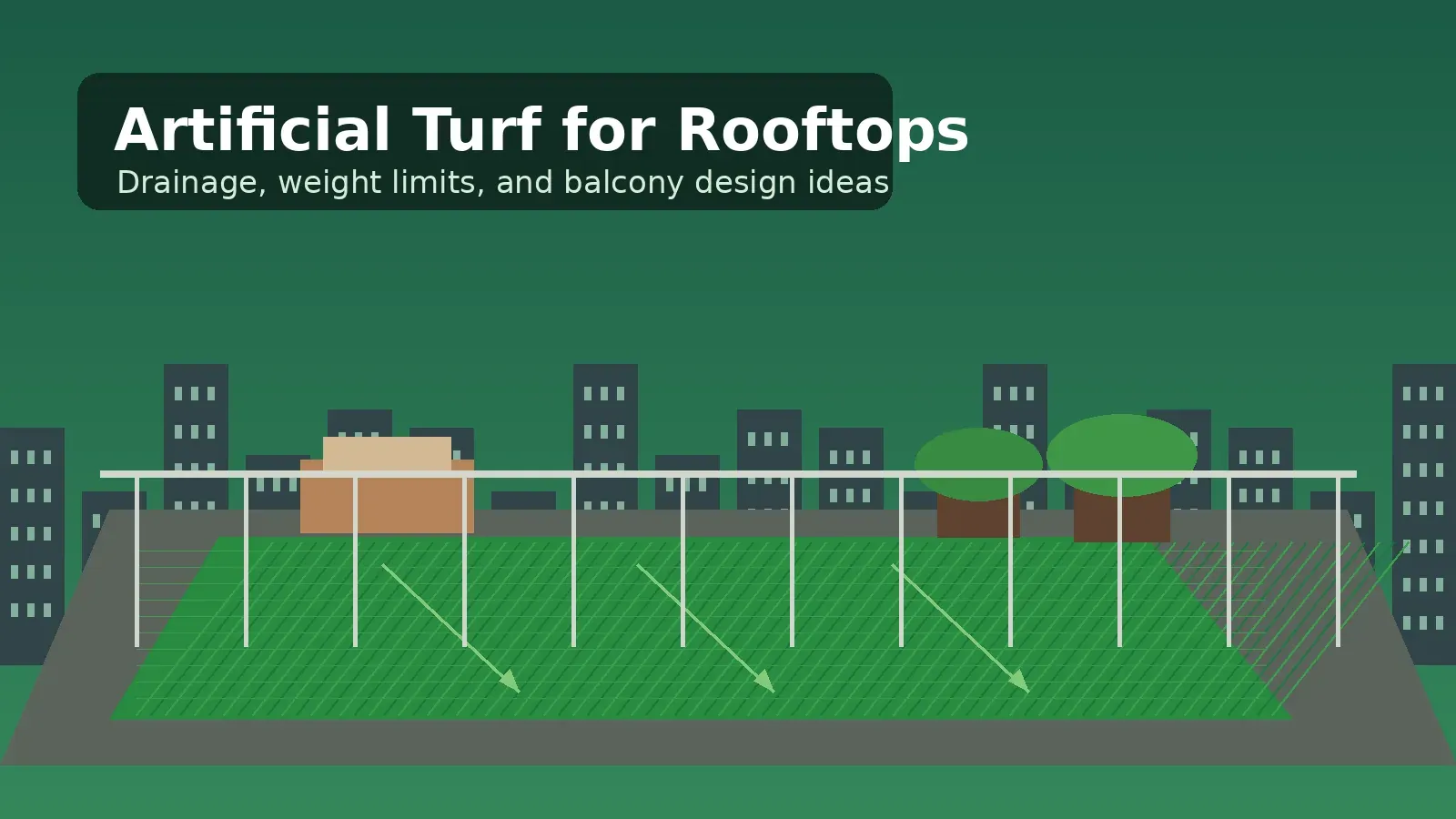
Artificial Turf for Rooftops and Balconies
Artificial Turf for Rooftops and Balconies
Artificial turf for rooftops and balconies can turn unused square footage into a comfortable lounge, pet area, garden border, or commercial amenity. The key is treating the project like a lightweight surface system, not a basic lawn installation. Rooftops and balconies need the right turf, a clear drainage path, protected waterproofing, and a weight plan that respects the structure underneath.
Planning an elevated turf project? Get connected with Go Green Synthetic Turf to match your rooftop, balcony, or custom surface needs with the right product and installation approach.
This guide explains the practical decisions that matter before turf ever reaches the roof: how to think about load limits, when to choose turf tiles or rolled turf, which product features matter most, how drainage should work, and how to design a space that performs well in daily use.
Why Synthetic Turf Works Well on Rooftops and Balconies
Natural grass sounds appealing, but elevated spaces make real grass difficult. Soil becomes heavy when wet. Irrigation increases water risk. Mowing and fertilizing are awkward in tight areas. A living lawn also needs depth, sunlight, and maintenance access that many rooftops and balconies cannot support.
Synthetic turf solves many of those problems. It creates a green, comfortable surface without soil, mowing, or irrigation. It can be installed over concrete, pavers, pedestal systems, rooftop pads, or other stable surfaces when the assembly is designed correctly. For property owners, it can make a hard surface feel more like a usable outdoor room. For commercial buildings, it can turn a plain deck into an amenity that tenants actually use.
Elevated turf is especially useful when the goal is comfort. Compared with bare concrete or composite decking, turf feels softer underfoot, reduces glare, and helps define zones for seating, pets, play, or planters. The best results come from choosing a product and drainage layer that match the way the space will be used.
How Much Weight Does Rooftop Turf Add?
Every rooftop or balcony turf project should begin with one question: how much load can the structure safely carry? Turf is usually much lighter than a natural grass system, but the total assembly still matters. The structure must support the turf, any pad or drainage mat, adhesive or edging, infill if used, furniture, planters, people, pets, and stormwater during heavy rain.
Think in terms of pounds per square foot. A product listed in ounces per square yard describes a turf specification, not the entire installed system. For example, Go Green offers products such as HEATMAXX SOFT 47 and HEATMAXX SOFT 65, but the final load also depends on backing, pad, drainage layer, infill decisions, seams, and site conditions.
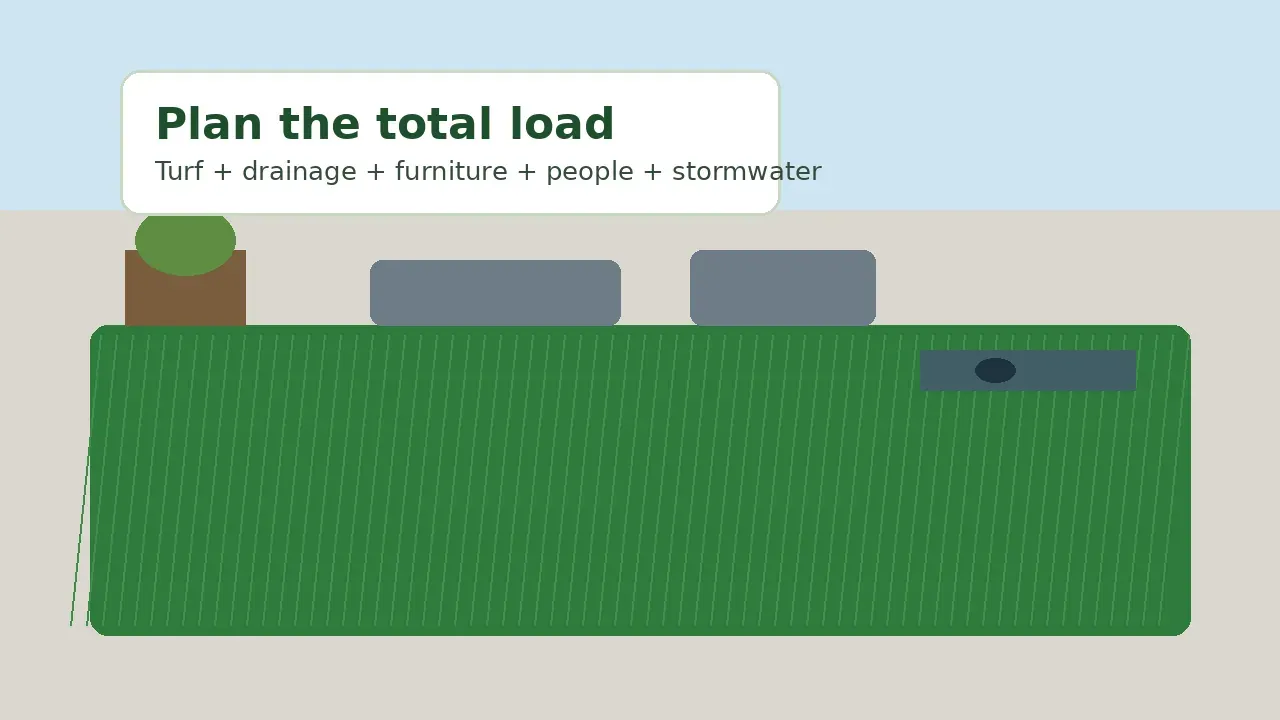
Use this planning framework before installation:
- Confirm the structural rating. For rooftops, balconies, and elevated decks, ask the building owner, architect, engineer, or qualified contractor for the allowable load. Do not guess.
- Estimate the turf assembly. Include turf, underlayment, drainage mat, shock pad, adhesives, edge restraint, and infill if the design uses it.
- Add live use. Furniture, grills, planters, people, and pets can outweigh the turf itself.
- Plan for water. Good drainage keeps the surface from holding unnecessary weight after rain.
- Avoid heavy base systems unless approved. Crushed stone, deep leveling layers, and soil-like assemblies can add more load than an elevated surface should carry.
The safest path is to use a lightweight system and verify it against the building requirements. If the project involves a commercial roof, multifamily balcony, or large amenity deck, a structural review is not optional. It protects the building, the installer, and the end user.
How Do You Drain Artificial Turf on a Rooftop?
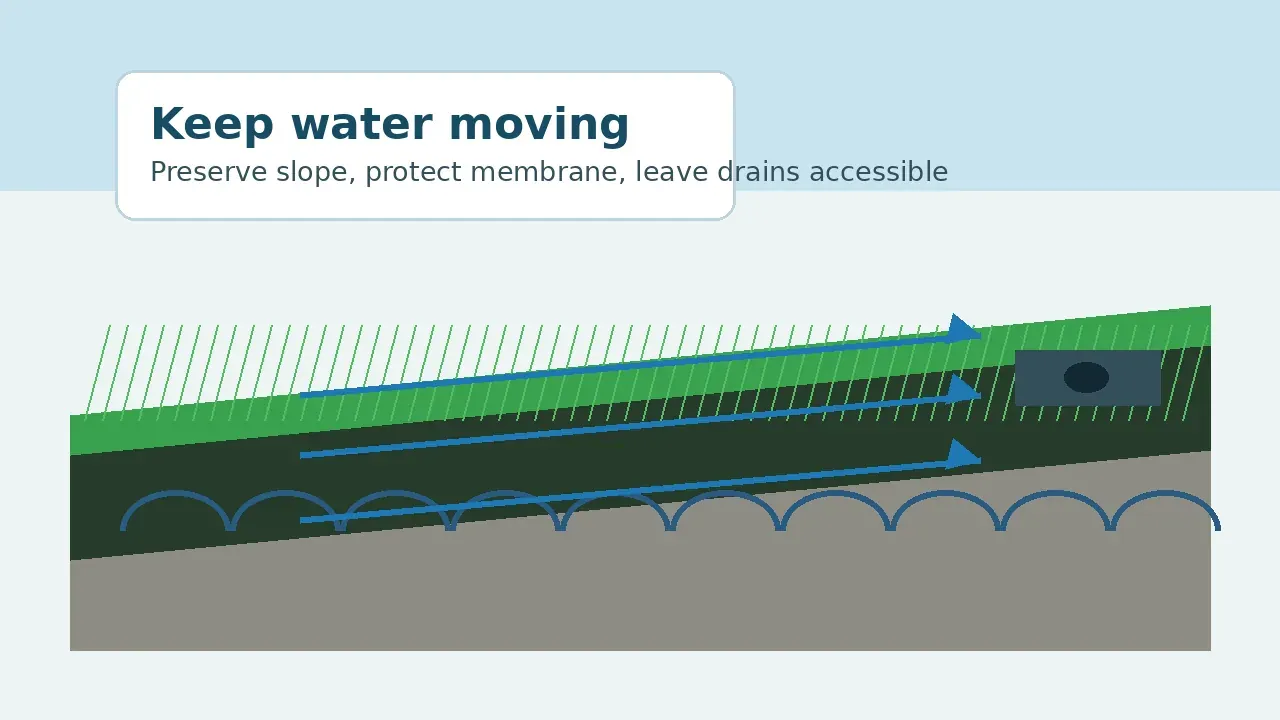
Drainage is the most important performance detail for artificial turf on elevated surfaces. Water has to move through the turf, across the underlayment, and toward an existing drain, scupper, gutter, or drainage channel without being trapped against the roof membrane. If water sits under turf, it can create odor, shorten material life, and increase risk to the surface below.
A good rooftop or balcony turf system usually includes four drainage decisions:
- Use the existing slope. Most rooftops and balconies are already pitched slightly toward drains. The turf system should preserve that slope, not flatten or block it.
- Protect the waterproofing layer. Do not fasten through a roof membrane unless the roofing professional approves the method. Use compatible pads, drainage layers, or perimeter details instead.
- Keep drain access open. Drains, cleanouts, and scuppers need to remain visible or accessible for maintenance.
- Select turf with the right backing and flow rate. High-drainage products reduce standing water and support better performance in wet conditions.
Go Green’s drainage-focused product lines are built for projects where water movement matters. AQUAMAXX 50, for example, is designed for fast drainage and can be a strong fit where a rooftop, balcony, pool deck, or compact outdoor area sees frequent water exposure. For more background on how turf systems move water, see Go Green’s guide to artificial turf drainage.
Need a product that balances drainage, comfort, and project requirements? Explore Go Green Synthetic Turf products or ask about the best fit for an elevated surface.
Turf Tiles vs. Rolled Turf: Which Is Better?
Rooftop and balcony projects often come down to two formats: modular turf tiles or rolled turf. Both can work, but they solve different problems.
| Option | Best For | Tradeoffs |
|---|---|---|
| Turf tiles | Small balconies, rental spaces, access-limited roofs, temporary layouts, maintenance-friendly areas | More seams, less seamless appearance, tile system quality varies |
| Rolled turf | Larger rooftops, amenity decks, commercial lounges, pet runs, permanent installations | Requires more access planning, seam layout, cutting, and professional installation detail |
Turf tiles are useful when access is tight or the space may need to be changed later. They are easier to carry through elevators and stairwells, and individual pieces can be removed for cleaning or drain access. The downside is appearance. Tiles can show seams, shift if not secured correctly, and may not offer the same product range as rolled turf.
Rolled turf is often the better choice when the finished look matters. It can create a more natural surface, reduce visible seams, and support a more customized installation. Rolled turf also gives property owners and installers more control over product selection, pile height, drainage performance, and edge details. The tradeoff is logistics. Rolls can be heavy and awkward, so rooftop access, elevators, cranes, staging areas, and weather protection need to be planned before delivery.
For a small balcony, turf tiles may be enough. For a rooftop lounge, pet area, or commercial amenity deck, rolled turf is usually worth the extra planning.
What Turf Features Matter Most on Elevated Surfaces?
The right turf for a rooftop is not always the same turf used in a backyard. Elevated areas see full sun, wind exposure, heat buildup, reflective surfaces, foot traffic, furniture, and limited maintenance access. Product selection should match those conditions.
Prioritize these features:
- UV resistance. Rooftops and balconies often receive long periods of direct sunlight. UV-stable materials help the surface keep its appearance over time.
- Heat performance. Elevated hardscapes can get hot. Nylon options such as Go Green’s HEATMAXX SOFT line are engineered for demanding heat-prone settings and reflective conditions.
- Drainage capacity. The turf backing and underlayment need to move water quickly toward the roof drainage system.
- Appropriate pile height. Taller turf can feel plush, but shorter or moderate pile heights may be easier to clean in compact or pet-heavy spaces.
- Fire and code considerations. Multifamily, commercial, and indoor-outdoor projects may need product documentation, fire ratings, or approval from building management.
- Low infill or no infill design. Infill can add weight and maintenance needs. On elevated spaces, every pound and every maintenance step matters.
Go Green’s HEATMAXX SOFT 65 is especially relevant for high-use, heat-prone, and rooftop applications where durability and comfort both matter. For projects with unusual dimensions, unique performance requirements, or specialized commercial needs, the make-to-order turf program can help align the product with the project instead of forcing the project to fit a standard surface.
Installation Best Practices for Rooftops and Balconies
A rooftop turf installation should protect the building first and create a clean finished surface second. That order matters. The turf cannot interfere with roof drains, damage waterproofing, trap moisture, or create trip hazards around edges.
Use these best practices as a planning checklist:
- Inspect the substrate. Concrete, membrane, pavers, or deck panels should be stable, clean, and ready for the selected installation method.
- Confirm compatibility. Adhesives, tapes, pads, and drainage mats must be compatible with the roof membrane or surface below.
- Maintain drainage paths. Do not cover drains permanently. Avoid blocking water with furniture, planters, turf edges, or seam details.
- Use perimeter restraint carefully. Wind can lift loose edges on elevated sites. Secure the perimeter without puncturing protected surfaces unless the building team approves the fastening method.
- Plan seams away from water flow and heavy traffic when possible. Good seam placement improves appearance and reduces wear.
- Protect access points. Keep roof hatches, cleanouts, drains, and maintenance paths usable.
- Test a small area if needed. On sensitive waterproofing systems, confirm material compatibility before committing to the full install.
If the surface is concrete rather than a membrane roof, many of the same ideas apply. The installation still needs drainage, edge control, and a stable surface. Go Green’s article on installing artificial grass on concrete is a helpful companion for patios, balconies, and hardscape-style applications.
Rooftop and Balcony Design Ideas
Once the technical details are in place, turf can make a rooftop or balcony feel intentional instead of leftover. The strongest designs use turf as a zone-defining material, not just a green rectangle.
1. Rooftop Lounge Area
Create a soft central area for outdoor seating, low tables, shade structures, and evening gathering. Turf can make a concrete roof feel warmer and more comfortable, especially when paired with planters, lighting, and perimeter seating. For commercial properties, this approach can turn a simple deck into a tenant amenity.
2. Container Garden Border
Use turf between raised planters or around container gardens to create the feel of a green courtyard without adding soil across the entire surface. This approach works well for balconies because the planting weight stays concentrated in containers that can be placed according to structural guidance.
3. Pet Relief Run
A narrow turf strip can serve as a pet relief area when drainage, cleaning access, and odor control are planned correctly. Choose a turf system that drains quickly, avoid trapping urine below the surface, and make sure the area can be rinsed and maintained. For pet-heavy use, a dedicated pet turf product may be more appropriate than a landscape-only product.
4. Hospitality or Office Breakout Space
For restaurants, offices, multifamily properties, and hotels, turf can define outdoor gathering areas without a full landscape buildout. It can soften the look of furniture zones, help guide foot traffic, and make the space more inviting for events, breaks, and tenant use.
For rooftop lounges, balcony upgrades, pet areas, and custom commercial surfaces, contact Go Green Synthetic Turf to get connected with the right product and project support.
Maintenance Tips for Elevated Turf
Artificial turf is low maintenance, not no maintenance. Rooftops and balconies collect dust, leaves, pollen, spills, pet debris, and windblown material. A simple maintenance plan keeps the space looking fresh and protects drainage.
- Brush high-traffic areas to keep fibers upright.
- Remove leaves and debris before they block drainage paths.
- Rinse pet areas regularly and use turf-safe cleaners when needed.
- Check drains after storms.
- Inspect edges and seams after high wind events.
- Move heavy furniture occasionally to prevent long-term fiber compression.
For commercial properties, assign maintenance responsibility before the space opens. A rooftop amenity may look simple, but someone still needs to check drains, clean spills, and keep furniture from damaging the surface.
FAQ About Artificial Turf for Rooftops and Balconies
Can you put artificial turf on a balcony?
How much does rooftop turf weigh?
How does rooftop turf drain?
Are turf tiles or rolled turf better for rooftops?
Does rooftop artificial turf need infill?
What is the best artificial turf for hot rooftop areas?
The Best Rooftop Turf Projects Are Planned as Systems
A successful rooftop or balcony turf project is not just about choosing a green surface. It is a system that has to respect weight limits, move water, protect the building, handle sun exposure, and fit the way people will use the space. The product, underlayment, drainage path, access plan, and design layout all work together.
For a small balcony, that may mean modular turf tiles, removable sections, and a simple seating area. For a commercial rooftop, it may mean rolled turf, drainage mats, structural review, product documentation, and a professional installation plan. Either way, the best projects are decided before the first cut is made.
Go Green Synthetic Turf manufactures engineered turf products for demanding applications, including heat-prone, drainage-sensitive, pet-friendly, and custom projects. If you are planning artificial turf for a rooftop, balcony, deck, or elevated amenity space, start with the performance requirements and build the surface around them.
Leave a Reply