


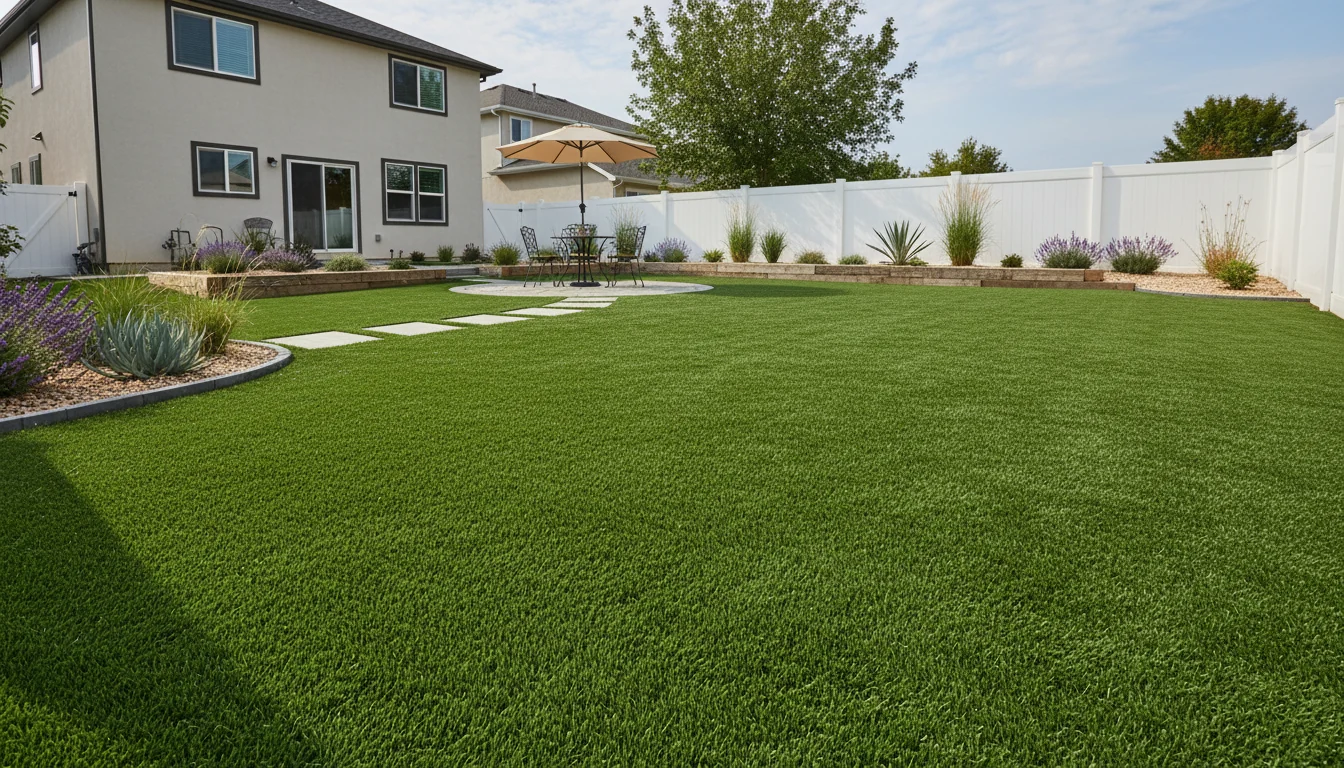
Artificial Turf Landscaping Ideas for Every Budget
Artificial turf landscaping ideas work best when they solve a real yard problem, not when turf is treated like a roll-out carpet. The right design can turn a patchy front lawn, muddy dog run, narrow side yard, shaded corner, or sun-baked patio edge into a cleaner and more usable space. The key is matching the idea to the budget, drainage needs, traffic level, and heat exposure of the project.
Planning a turf project? Get connected with a qualified installer who can help match your yard, budget, and product needs.
Below are practical artificial grass landscaping ideas for homeowners, designers, and installers. Some are simple upgrades that keep costs down. Others are premium designs that combine synthetic grass with pavers, borders, patios, pet spaces, and specialty turf products. Use them as a starting point, then adjust the layout based on how the space will actually be used.
Start With the Problem Your Yard Needs to Solve
Before choosing a design, identify what is failing in the current landscape. A yard that stays muddy after rain needs a different turf system than a rooftop lounge. A front yard with Low-E window reflection needs a different product conversation than a shaded side yard. A dog area needs drainage and odor control before it needs decorative edging.
For most residential projects, the problem falls into one of five categories:
- High maintenance: mowing, watering, fertilizing, reseeding, and patch repair are taking too much time.
- Poor growing conditions: shade, slope, foot traffic, or compacted soil make natural grass unreliable.
- Water and mud: rain, irrigation runoff, pool splash, or pet use keeps the surface wet or messy.
- Heat exposure: direct sun, reflected heat, and Low-E windows create higher product demands.
- Design consistency: the homeowner wants a clean green surface that ties patios, walkways, and planting beds together.
Good artificial grass landscaping starts with those constraints. Once the job is clear, the design becomes much easier to price and build.
Budget-Friendly Artificial Turf Landscaping Ideas
You do not need to replace an entire yard to make turf useful. Many of the best budget projects focus on small, high-impact zones where natural grass struggles the most.
1. Refresh a Small Front Yard Panel
A compact front yard is one of the simplest places to use fake grass for yard curb appeal. Instead of paying for constant mowing, watering, and patch repair, a homeowner can create a clean year-round lawn panel bordered by mulch, river rock, shrubs, or concrete edging.
This works especially well for townhomes, small suburban lots, and drought-prone areas where the front lawn is more visual than functional. Keep the shape simple. Rectangles, soft curves, and framed lawn panels usually look more natural than complicated cutouts.
2. Fix a Narrow Side Yard
Side yards often fail because they receive too little sun and too much foot traffic. Natural grass thins out, then the area turns into dirt, mud, or weeds. Artificial turf can make the space usable again without turning it into a full outdoor room.
A practical side yard design uses turf as the walking surface, stepping stones for rhythm, and gravel or low plantings along the fence line. For more detail on this application, Go Green’s guide to artificial grass for side yards and narrow spaces covers layout and installation considerations.
3. Add Turf Between Pavers
Artificial grass strips between concrete pavers create a modern look without the watering and trimming required by real grass. This is a common choice for patios, walkways, courtyards, and driveway accents.
The budget stays manageable because the turf coverage area is small. The installation still needs precision, though. Paver gaps must be consistent, edges should be clean, and the base needs enough stability to prevent uneven seams or lifting.
4. Create a Low-Maintenance Backyard Play Patch
For families, a small turf play zone can be more useful than a full lawn replacement. The space can sit near a patio, under a play structure, or beside a seating area. It gives children a cleaner surface for everyday use and helps reduce mud tracked into the house.
If the area will see heavy activity, product selection matters. Shorter, denser turf may perform better than a tall decorative product. If fall protection is needed under play equipment, the system should be designed for that purpose instead of using landscape turf alone.
Mid-Range Ideas That Make the Yard More Usable
Mid-range turf projects usually combine landscape design with function. They often cover more square footage, require better base preparation, and include transitions into patios, planting beds, pools, or pet areas.
5. Build a Patio-to-Lawn Transition Zone
Many backyards have a hard edge where a concrete patio ends and a patchy lawn begins. Artificial turf can soften that transition and make the entire outdoor area feel more intentional. A clean turf zone beside the patio gives kids, pets, and guests a comfortable surface without extending concrete across the whole yard.
For the best look, align the turf with the patio shape, then use edging or planting beds to avoid awkward leftover slivers. This keeps the project from looking like a leftover remnant and makes the landscape feel planned.
6. Use Turf Around Pool Areas
Artificial grass landscaping can work well around pools because it reduces mud and grass clippings near the water. The product and base must be selected for drainage, splash, and barefoot comfort. Around wet areas, drainage is not a nice-to-have feature. It is the performance requirement.
Go Green’s AQUAMAXX 50 is designed for high-drainage applications and is listed at more than 600 inches per hour. That kind of product detail matters around pools, rain-prone areas, and other spaces where water needs to move quickly through the system.
7. Design a Dog-Friendly Turf Area
Pet spaces are one of the most common reasons homeowners consider artificial grass landscaping. A well-built dog area can reduce mud, digging, worn trails, and dead spots from urine. But pet turf has to be designed differently than a decorative lawn.
Look for strong drainage, odor control, durable backing, and a maintenance plan that includes rinsing and debris removal. Go Green’s PETMAXX 75 is built for pet areas where comfort, drainage, and durability all matter. For multi-dog homes or heavier use, the product choice and base design become even more important.
8. Frame Garden Beds With Turf
Artificial turf can act like a clean green frame around raised beds, planter boxes, or ornamental landscaping. This is useful when homeowners want the color of a lawn but not the maintenance between planting areas.
The trick is balance. Too much turf can make the garden feel flat. Too many plantings can make maintenance creep back in. A strong design uses turf as the simple surface and lets the plants provide texture, height, and seasonal interest.
Not sure which turf fits the space? Compare Go Green’s turf product categories by use case, including landscape, pet, drainage, sports, and heat-resistant options.
Premium Artificial Grass Landscaping Ideas
Premium projects are less about covering ground and more about building an outdoor experience. These designs often combine turf with hardscape, lighting, seating, shade, custom cuts, and specialty products.
9. Combine Turf, Pavers, and Outdoor Living Areas
One of the strongest premium designs is a mixed hardscape layout. Turf provides softness and color. Pavers create structure. Seating areas, fire features, outdoor kitchens, and planters make the space feel finished.
This type of design works in backyards, courtyards, rooftop patios, and poolside spaces. It also photographs well, which is one reason it appears so often in inspiration galleries. Go Green’s project gallery is a useful reference when planning how turf can fit with stone, concrete, planting beds, and outdoor furniture.
10. Add a Backyard Putting or Multi-Sport Zone
A putting green or compact multi-sport surface can turn unused yard space into a daily-use feature. This is not the same as installing general landscape turf. Golf, training, and sport applications need the right surface speed, density, and base construction.
For homeowners, the best premium design often combines a small putting surface with fringe turf, seating, and lighting. For dealers and installers, this is also a way to increase project value without making the entire yard more complicated.
11. Upgrade Rooftops, Balconies, and Courtyards
Artificial grass can make hard urban spaces feel more comfortable. Rooftops, balconies, and enclosed courtyards benefit from a softer surface, especially when paired with planters, lounge furniture, and shade.
These projects need careful planning. Weight, drainage, wind exposure, fire rating, and building rules can all affect the product and installation method. Premium does not mean guessing. It means engineering the system for the conditions.
12. Plan for Heat and Low-E Window Reflection
Sun-exposed yards need a product conversation, not just a design conversation. Standard polyethylene turf can be vulnerable to concentrated heat from Low-E window reflection. This issue can show up in front yards, courtyards, side yards, and backyards where reflective glass focuses sunlight onto the turf.
Go Green’s HEATMAXX SOFT 47 uses proprietary nylon yarn and is warranted against Low-E window reflective burns. It is a strong consideration for sun-exposed landscaping where heat risk could otherwise turn a beautiful project into an expensive repair.
How to Choose the Right Turf for Each Landscaping Idea
The same artificial turf should not be used for every landscaping idea. A product that looks great in a low-traffic front yard may not be the right choice for a dog run, pool surround, or sun-exposed courtyard.
| Landscaping idea | Primary concern | Product factor to prioritize |
|---|---|---|
| Front yard lawn panel | Curb appeal and heat exposure | Realistic appearance, durability, heat resistance if windows reflect onto the area |
| Side yard walkway | Shade, traffic, and drainage | Stable base, clean edging, moderate pile height |
| Pool surround | Water movement and barefoot use | Fast drainage and comfortable surface feel |
| Dog area | Odor, urine, and wear | Pet-specific drainage, antimicrobial technology, durability |
| Rooftop or patio | Drainage, weight, and fire considerations | Application-appropriate system and professional installation |
When in doubt, start with the use case. Drainage products belong in wet areas. Pet products belong where dogs will use the yard every day. Heat-resistant nylon belongs where reflection or extreme sun exposure creates risk. Aesthetic preferences matter, but performance should lead the decision.
What Does Artificial Turf Landscaping Cost?
The cost of artificial grass landscaping depends on the product, square footage, base preparation, access, edging, drainage needs, and local installation rates. A simple turf strip between pavers is very different from a full backyard renovation with grading, pet drainage, and hardscape transitions.
Product pricing also varies by performance category. Go Green publishes product pricing across its turf lines, with landscape and specialty products priced according to weight, construction, and application. For example, AQUAMAXX 50 is listed at $3.09 per square foot, PETMAXX 75 at $3.59 per square foot, and HEATMAXX SOFT 47 at $5.35 per square foot.
For budget planning, separate the project into three levels:
- Budget: small lawn panels, paver strips, side yard refreshes, and simple decorative zones.
- Mid-range: larger yard sections, pet spaces, pool borders, patio transitions, and upgraded edging.
- Premium: full outdoor living designs, rooftops, putting greens, heat-risk areas, and custom multi-zone layouts.
The cheapest product is not always the lowest-risk choice. If the space has pets, drainage demands, or heat exposure, paying for the right turf system can prevent avoidable performance problems later.
Design Tips That Make Artificial Grass Landscaping Look Natural
The most convincing artificial grass landscaping designs have one thing in common: turf is integrated into the landscape instead of dropped on top of it. These design tips help the finished space look intentional.
- Use borders: concrete, steel edging, stone, mulch, and planting beds help define the turf area.
- Avoid odd slivers: narrow leftover strips can make turf look like an afterthought.
- Mix materials: turf pairs well with pavers, gravel, planters, decking, and natural stone.
- Match pile height to use: taller grass is not always better, especially in pet and high-traffic areas.
- Plan the grain direction: turf fibers have a visual direction, and inconsistent layout can make seams more visible.
- Design for drainage first: a beautiful layout will fail if water has nowhere to go.
- Check heat exposure: look at windows, reflective surfaces, and afternoon sun before choosing the turf.
These details may not be obvious in inspiration photos, but they make the difference between a project that looks good on day one and a project that keeps performing years later.
Should You DIY Artificial Turf Landscaping or Hire a Pro?
Small decorative projects may be realistic for experienced DIY homeowners. Examples include a narrow strip, a small balcony surface, or a simple low-traffic accent. Larger projects are different. Base preparation, compaction, drainage, seam work, edging, and product selection all affect the final result.
Professional installation is usually the safer choice when the project includes pets, pools, drainage issues, slopes, large square footage, Low-E window reflection, rooftops, or premium hardscape integration. A qualified installer can also help avoid mistakes that are hard to fix after the turf is cut and secured.
Go Green manufactures turf in Dalton, Georgia and supports a nationwide dealer and installer network. Homeowners can use the installation inquiry process to get connected with the right local professional for their project.
Artificial Turf Landscaping FAQ
What is the best use of artificial turf in landscaping?
The best use of artificial turf is in areas where natural grass is difficult to maintain, such as side yards, pet areas, pool surrounds, small front yards, patios, rooftops, and high-traffic backyard zones. The right product depends on drainage, heat, traffic, and pet use.
How do you make artificial grass landscaping look natural?
Use clean borders, mix turf with pavers or planting beds, avoid awkward narrow strips, choose a realistic pile height, and plan the turf grain direction before installation. Natural-looking projects usually combine turf with other materials instead of using it as one large flat surface.
Is artificial grass good for dogs?
Artificial grass can work very well for dogs when the system is designed for pet use. Prioritize drainage, odor control, durable backing, and regular rinsing. Pet-specific products such as PETMAXX are better suited to daily dog use than purely decorative landscape turf.
Can artificial turf be used around pools?
Yes, artificial turf can be used around pools when drainage and surface comfort are planned correctly. A drainage-focused product helps water move through the surface instead of sitting near the pool deck.
What artificial turf is best for hot yards?
For yards exposed to strong sun or Low-E window reflection, heat-resistant turf should be considered. Go Green’s HEATMAXX SOFT line uses proprietary nylon yarn and is warranted against Low-E window reflective burns, making it a strong fit for heat-risk landscaping areas.
Bring the Right Artificial Turf Landscaping Idea to Life
Artificial grass landscaping can be simple, premium, or somewhere in between. The best idea is the one that fits the yard’s real conditions: traffic, drainage, pets, sun exposure, budget, and how the homeowner wants to use the space.
Ready to move from ideas to a real plan? Get connected with a Go Green installer or browse the gallery for more artificial turf landscaping inspiration.
Leave a Reply