


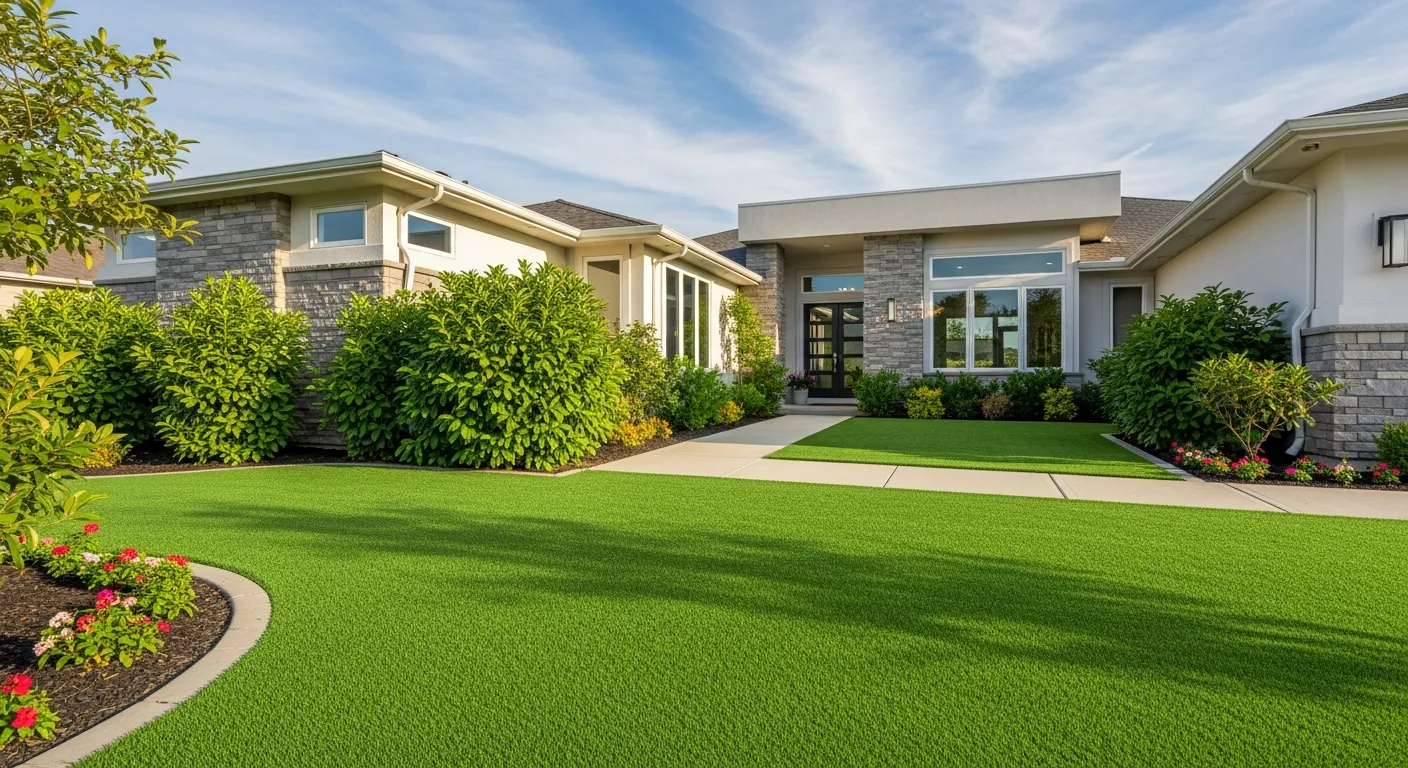
Artificial Grass for Front Yards: Transform Your Curb Appeal
Your front yard is the first thing visitors, neighbors, and potential buyers notice about your home. If your natural lawn is patchy, brown, or constantly fighting weeds, artificial grass might be the upgrade you have been waiting for. A synthetic turf front yard stays green 365 days a year, requires zero mowing, and can save thousands of gallons of water annually.
Explore Go Green’s premium artificial turf products to find the right fit for your front yard project.
But not every artificial turf product is created equal. While most articles recommend generic synthetic grass and call it a day, there is a critical factor that could cost you thousands of dollars in damage if you ignore it. In this guide, we will cover real design ideas, break down the costs, and explain the one hidden risk that 70% of turf products on the market cannot protect against.
Why Homeowners Are Switching to Artificial Grass Front Yards
The shift toward synthetic turf front yards has picked up speed over the past five years, and the reasons are practical. Here are the biggest benefits homeowners report after making the switch:
- Water savings: The average American lawn uses roughly 55 gallons of water per square foot each year. A 1,000-square-foot front yard switch to artificial turf could save 55,000 gallons annually, a real advantage in drought-prone regions across the Southwest and Southern California.
- Zero mowing, edging, or fertilizing: Lawn maintenance costs American homeowners an average of $1,200 to $2,000 per year for mowing, fertilizing, and weed control. Artificial grass eliminates all of that.
- Year-round curb appeal: Whether it is July heat or January frost, synthetic turf stays uniformly green. No dormant brown patches, no mud tracks after rain.
- Property value: A well-maintained front yard directly affects first impressions. Homes with strong curb appeal sell for 5% to 11% more than comparable properties with neglected exteriors. A permanently green lawn supports that premium. Learn more about how synthetic turf increases home value.
- Durability: Quality artificial turf products backed by 15-year warranties can handle foot traffic, pet activity, and weather without the bare spots that natural grass develops over time. Curious about lifespan? Check out our guide on how long synthetic turf lasts.
Front Yard Design Ideas That Look Natural and Modern
One of the biggest concerns homeowners have about artificial grass is whether it will look fake. With premium nylon and polyethylene turf products available now, the “plastic lawn” look from 20 years ago is gone. Here are design approaches that create a polished, natural appearance:
Turf and Paver Pathways
Pairing artificial grass with stone or concrete pavers creates depth and visual interest. A curved paver walkway through a turf front yard adds a high-end landscaping feel while breaking up large green spaces. This approach works especially well for smaller yards where solid turf might look too uniform.
Turf with Native Plant Borders
Combine your synthetic lawn with drought-tolerant native plants, ornamental grasses, or flowering shrubs along the borders. The contrast between the crisp green turf and textured plants creates a natural, layered look. This is popular in Phoenix, Las Vegas, and Southern California where water restrictions make natural lawns difficult to maintain.
Minimalist Modern Lawns
Clean edges, geometric shapes, and a solid turf area paired with gravel or decomposed granite give a contemporary look. This style suits modern architecture and is popular in HOA communities that approve synthetic turf because the clean lines match neighborhood aesthetics.
Small Front Yard Solutions
For yards under 500 square feet, artificial turf eliminates the hassle of mowing a tiny lawn that always looks scraggly. Pair it with a single ornamental tree and some low ground cover plants for a yard that punches well above its weight. Browse our project gallery for visual inspiration.
The Hidden Danger: Low-E Window Reflection and Turf Melting
Here is the risk that almost nobody talks about. If your home has energy-efficient Low-E windows (and most homes built or remodeled since 2000 do), those windows can act like magnifying glasses. They concentrate reflected sunlight into beams that reach temperatures above 200 degrees Fahrenheit. Standard polyethylene turf melts at roughly 165 degrees Fahrenheit.
The result? Warped, melted patches of synthetic grass in your brand-new front yard. It is not a rare occurrence. The problem affects an estimated 70% of the artificial turf market because most products use polyethylene fibers that simply cannot withstand concentrated heat from window reflection.
This is where material choice becomes critical. Go Green Synthetic Turf’s HEATMAXX SOFT 47 and HEATMAXX SOFT 65 use proprietary nylon yarn technology that withstands temperatures up to 428 degrees Fahrenheit. That is more than double the threshold where polyethylene fails.
Even more important: Go Green is the only manufacturer in the industry that offers a warranty against Low-E window reflective burn damage. If your front yard faces south or west and your home has Low-E windows, this warranty is not a luxury. It is protection against a $10,000+ replacement bill.
Connect with a Go Green installer to discuss window burn protection for your front yard.
Nylon vs. Polyethylene: Which Turf Fiber Is Right for Your Front Yard?
When you start shopping for artificial grass, you will encounter two main fiber types. Understanding the difference saves you from expensive mistakes.
| Feature | Nylon (HEATMAXX SOFT) | Polyethylene (Standard) |
|---|---|---|
| Heat resistance | Up to 428 degrees F | Melts at ~165 degrees F |
| Low-E window burn warranty | Yes (Go Green exclusive) | No |
| Softness | Soft as polyethylene, strong as nylon | Soft and flexible |
| Durability under foot traffic | Superior fiber memory and bounce-back | Good for moderate traffic |
| Fire rating | Class A (ASTM E648) | Varies by product |
| Typical warranty | 15 years (prorated) | 8 to 15 years |
| Best for | Sun-exposed front yards, homes with Low-E windows | Shaded areas, covered patios |
Bottom line: If your front yard gets direct sunlight or your home has energy-efficient windows, nylon turf is the safer investment. Go Green’s HEATMAXX SOFT line delivers the soft feel homeowners want with the heat protection that polyethylene cannot provide.
Wondering which turf fits your local weather conditions? Our guide on choosing the right turf for your climate breaks down the details by region.
How Much Does Artificial Grass Cost for a Front Yard?
Upfront cost is the most common concern homeowners raise, and it is a fair question. Here is what to expect:
Material Costs
Artificial turf typically ranges from $2.20 to $7.58 per square foot depending on fiber type, pile height, and face weight. A 1,000-square-foot front yard would run between $2,200 and $7,580 for materials alone. Premium nylon products like HEATMAXX SOFT sit at the higher end of this range, while polyethylene options start lower. For a detailed breakdown, see our synthetic turf cost per square foot guide.
Installation Costs
Professional installation adds $4 to $8 per square foot for site preparation, grading, base material, turf laying, and infill. A full front yard project with professional installation generally lands between $6,200 and $15,580 for a 1,000-square-foot area.
Long-Term ROI
Compare that to the ongoing cost of maintaining a natural lawn. At $1,200 to $2,000 per year in mowing, watering, fertilizing, and weed control, a natural grass front yard costs $12,000 to $20,000 over ten years. An artificial turf installation that lasts 15 or more years pays for itself within 5 to 8 years while eliminating weekend yard work completely.
Contact Go Green for a free project estimate and see how much you could save.
Installation Tips and HOA Approval for Front Yard Turf
Installing artificial grass in a front yard involves a few considerations that differ from backyard projects. Get these right and your turf will look great and drain properly for years.
Front Yard Installation Basics
- Grading and drainage: Front yards need to drain toward the street or storm system, not toward your home’s foundation. Proper grading during base preparation is critical. Quality artificial turf products drain at 30 inches per hour or more through permeable backing. Learn more about how artificial turf drainage works.
- Sprinkler capping: Existing irrigation heads need to be capped or removed before installing turf. Your installer should also cap the backflow preventer to prevent accidental flooding under the turf.
- Edge borders: Clean borders along driveways, sidewalks, and garden beds keep the turf from shifting. Aluminum or steel edging is standard.
- Utility awareness: Call 811 before any digging. Front yards often have water, gas, and cable lines running just below the surface.
Getting HOA Approval
Many homeowner associations have updated their rules to allow artificial turf, but you may still need to submit a proposal. Tips for a smooth approval process:
- Request a physical sample from the manufacturer so the HOA board can see and feel the product.
- Include the product specification sheet showing pile height, face weight, and fire rating. HEATMAXX SOFT’s Class A fire rating (ASTM E648) is a strong selling point with HOA boards.
- Reference any water conservation mandates in your municipality, as these often override older HOA restrictions on synthetic lawns.
- Provide photos of completed front yard installations to demonstrate realistic appearance.
Go Green Synthetic Turf manufactures every product at its facility in Dalton, Georgia, the synthetic turf capital of the world. That means consistent quality control, faster fulfillment, and a real company standing behind the warranty. When you present a Made in USA product with a burn warranty and Class A fire rating, HOA approvals go more smoothly.
Caring for Your Artificial Grass Front Yard
One of the best things about synthetic turf is the minimal upkeep compared to natural grass. Still, a few simple maintenance habits keep your front yard looking its best:
- Brush the fibers: Use a stiff bristle broom or power broom every few weeks to keep the blades standing upright, especially in high-traffic areas near the front door.
- Rinse occasionally: A quick rinse with a garden hose removes dust, pollen, and light debris. In dusty or arid climates, a monthly rinse is usually enough.
- Remove leaves and debris: A leaf blower on a low setting works well for clearing leaves without disturbing the infill.
- Treat pet areas: If pets use the front yard, rinse those spots more frequently. Go Green’s pet-specific turf lines include Microban antimicrobial technology and 16-year odor warranties.
For a complete walkthrough, read our synthetic turf cleaning and maintenance guide.
Frequently Asked Questions
Can you put artificial grass in your front yard?
Yes. Artificial grass is a popular front yard option across the country. Many municipalities and HOAs now permit synthetic turf, especially in drought-prone areas where water conservation is a priority. Check your local HOA rules and request a sample from the manufacturer before starting your project.
What is the downside to artificial turf?
The biggest concern is heat. Standard polyethylene turf absorbs sunlight and can feel hot underfoot on summer afternoons. More seriously, Low-E window reflections can melt polyethylene turf entirely. Nylon turf like Go Green’s HEATMAXX SOFT resists temperatures up to 428 degrees Fahrenheit, solving both the comfort and melting problems.
How much does 1,000 square feet of artificial grass cost?
Materials alone range from $2,200 to $7,580 depending on the product you choose. With professional installation, expect a total project cost of $6,200 to $15,580. Premium nylon products cost more upfront but eliminate the risk of heat damage and last 15 or more years.
What is the most realistic looking artificial grass?
Look for turf with a mix of blade colors (not just one shade of green), a brown or tan thatch layer at the base, and a pile height between 1-3/8 and 1-7/8 inches. Go Green’s HEATMAXX SOFT 47 combines a natural color blend with a soft texture that looks and feels like well-maintained natural grass.
Why are some homeowners removing their artificial grass?
The most common reason is heat damage from Low-E window reflection, which melts standard polyethylene turf and leaves warped, discolored patches. This problem is preventable with nylon turf products that carry a burn warranty. Choosing the right product from the start avoids the replacement cycle.
Ready to transform your front yard? Browse Go Green’s full product line or request a free quote from our team in Dalton, Georgia.
Leave a Reply