


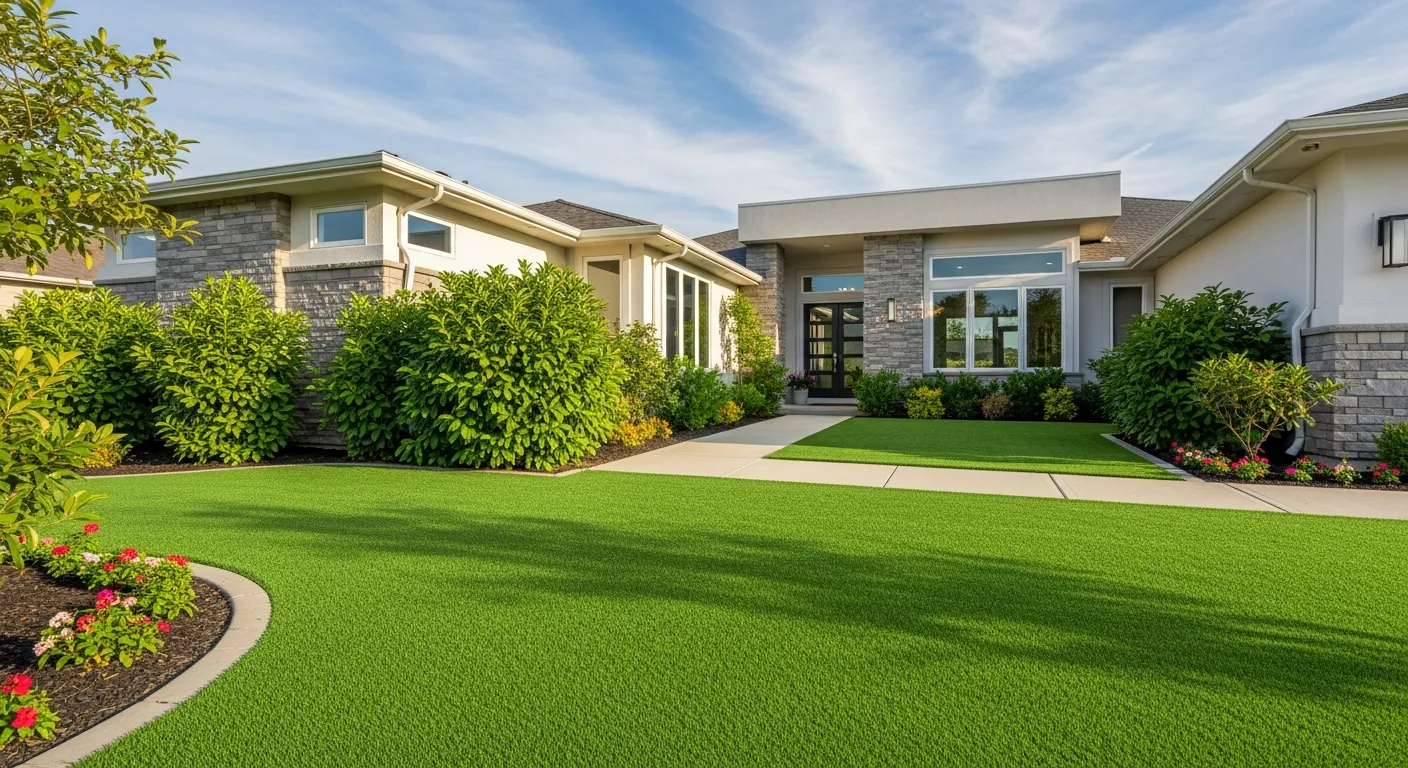
Artificial Grass for Front Yards: The 2025 Guide
Is your front yard working against you? A patchy, brown lawn can feel like a constant, losing battle against weeds and weather. It’s the first thing people see, and it’s draining your time and money. Switching to artificial grass for front yards is more than just an upgrade; it’s a permanent solution. A synthetic turf front yard stays lush and green 365 days a year, requires zero mowing, and can save you thousands of gallons of water annually. It’s time to stop fighting your lawn and start enjoying a beautiful, hassle-free curb appeal.
Explore Go Green’s premium artificial turf products to find the right fit for your front yard project.
But not every artificial turf product is created equal. While most articles recommend generic synthetic grass and call it a day, there is a critical factor that could cost you thousands of dollars in damage if you ignore it. In this guide, we will cover real design ideas, break down the costs, and explain the one hidden risk that 70% of turf products on the market cannot protect against.
The Real Reasons Your Neighbors Love Their Artificial Grass
The shift toward synthetic turf front yards has picked up speed over the past five years, and the reasons are practical. Here are the biggest benefits homeowners report after making the switch:
- Water savings: The average American lawn uses roughly 55 gallons of water per square foot each year. A 1,000-square-foot front yard switch to artificial turf could save 55,000 gallons annually, a real advantage in drought-prone regions across the Southwest and Southern California.
- Zero mowing, edging, or fertilizing: Lawn maintenance costs American homeowners an average of $1,200 to $2,000 per year for mowing, fertilizing, and weed control. Artificial grass eliminates all of that.
- Year-round curb appeal: Whether it is July heat or January frost, synthetic turf stays uniformly green. No dormant brown patches, no mud tracks after rain.
- Property value: A well-maintained front yard directly affects first impressions. Homes with strong curb appeal sell for 5% to 11% more than comparable properties with neglected exteriors. A permanently green lawn supports that premium. Learn more about how synthetic turf increases home value.
- Durability: Quality artificial turf products backed by 15-year warranties can handle foot traffic, pet activity, and weather without the bare spots that natural grass develops over time. Curious about lifespan? Check out our guide on how long synthetic turf lasts.
Is Artificial Grass the Right Choice for You?
While the benefits are compelling, it’s smart to weigh the trade-offs before committing to a synthetic lawn. Let’s be direct about the common concerns: the upfront cost, surface heat, and environmental impact. The initial investment for professional-grade turf is higher than seeding a natural lawn, with some homeowners reporting quotes of several thousand dollars for even small spaces. There are also valid questions about how artificial grass affects local ecosystems and whether it gets too hot for kids and pets to play on during sunny days. These are important considerations, and the honest answer is that a cheap, low-quality turf product can absolutely create these problems. But that’s not the whole story.
The key is understanding that modern turf systems are specifically engineered to solve these challenges. Worried about heat? High-performance turf like our HEATMAXX® SOFT series incorporates advanced cooling technology to keep surfaces more comfortable, even in direct sunlight. Concerned about drainage and water runoff? Products with a fully permeable backing, such as our AQUAMAXX® line, allow water to pass directly through the turf and into the sub-base, preventing pooling and helping manage stormwater. When you choose a quality product and ensure a proper installation, you’re not just buying a green lawn; you’re investing in a long-term solution designed for performance, safety, and durability.
Design Ideas for a Stunning Artificial Grass Front Yard
One of the biggest concerns homeowners have about artificial grass is whether it will look fake. With premium nylon and polyethylene turf products available now, the “plastic lawn” look from 20 years ago is gone. Here are design approaches that create a polished, natural appearance:
Mix Turf and Pavers for a High-End Look
Pairing artificial grass with stone or concrete pavers creates depth and visual interest. A curved paver walkway through a turf front yard adds a high-end landscaping feel while breaking up large green spaces. This approach works especially well for smaller yards where solid turf might look too uniform.
Frame Your Turf with Native Plants
Combine your synthetic lawn with drought-tolerant native plants, ornamental grasses, or flowering shrubs along the borders. The contrast between the crisp green turf and textured plants creates a natural, layered look. This is popular in Phoenix, Las Vegas, and Southern California where water restrictions make natural lawns difficult to maintain.
Design a Sleek, Modern Lawn with Turf
Clean edges, geometric shapes, and a solid turf area paired with gravel or decomposed granite give a contemporary look. This style suits modern architecture and is popular in HOA communities that approve synthetic turf because the clean lines match neighborhood aesthetics.
Big Ideas for Small Front Yards
For yards under 500 square feet, artificial turf eliminates the hassle of mowing a tiny lawn that always looks scraggly. Pair it with a single ornamental tree and some low ground cover plants for a yard that punches well above its weight. Browse our project gallery for visual inspiration.
Could Your Windows Melt Your New Lawn?
Here is the risk that almost nobody talks about. If your home has energy-efficient Low-E windows (and most homes built or remodeled since 2000 do), those windows can act like magnifying glasses. They concentrate reflected sunlight into beams that reach temperatures above 200 degrees Fahrenheit. Standard polyethylene turf melts at roughly 165 degrees Fahrenheit.
The result? Warped, melted patches of synthetic grass in your brand-new front yard. It is not a rare occurrence. The problem affects an estimated 70% of the artificial turf market because most products use polyethylene fibers that simply cannot withstand concentrated heat from window reflection.
This is where material choice becomes critical. Go Green Synthetic Turf’s HEATMAXX SOFT 47 and HEATMAXX SOFT 65 use proprietary nylon yarn technology that withstands temperatures up to 428 degrees Fahrenheit. That is more than double the threshold where polyethylene fails.
Even more important: Go Green is the only manufacturer in the industry that offers a warranty against Low-E window reflective burn damage. If your front yard faces south or west and your home has Low-E windows, this warranty is not a luxury. It is protection against a $10,000+ replacement bill.
Connect with a Go Green installer to discuss window burn protection for your front yard.
Addressing Common Concerns About Turf
Switching to artificial grass is a big decision, and it’s smart to have questions. Many homeowners wonder about safety for their families, how hot the surface gets, and its environmental footprint. These are all valid concerns, and the answers often depend on the quality of the turf you choose. The cheap, plastic-looking turf of the past has been replaced by advanced systems designed to address these very issues. Let’s walk through the most common questions so you can feel confident about your front yard investment. We’ll cover everything from pet safety and heat management to fire resistance and drainage, giving you the clear, straightforward information you need.
Is Artificial Grass Safe for Kids and Pets?
Absolutely. In fact, high-quality artificial grass is often a safer choice for both kids and pets than a natural lawn. One of the biggest advantages is that it eliminates the need for harmful chemicals. You can say goodbye to pesticides, herbicides, and fertilizers that can leave toxic residues where your children and pets play. This also means fewer pests like ticks and fleas are attracted to your yard. For families with allergy sufferers, synthetic turf provides a welcome relief from grass pollen. At Go Green, our turf products are non-toxic and lead-free, creating a clean and consistent surface for playtime. Our PETMAXX® line is even specifically engineered with pets in mind, offering enhanced durability and drainage to handle daily activity with ease.
Managing Heat on Sunny Days
It’s true that synthetic turf can get warmer than natural grass in direct sunlight. The fibers and infill absorb solar heat, which can make the surface feel hot on peak summer days. However, modern turf technology offers effective solutions. The type of material and infill you choose makes a huge difference. Lighter-colored turf and specialized infill products can significantly reduce heat absorption. For maximum heat resistance, our proprietary HEATMAXX® SOFT turf is engineered with advanced nylon fibers that stay cooler than standard polyethylene turf and can withstand extreme temperatures without melting—a crucial feature we discussed for preventing window burn. On the hottest days, a quick spray with a garden hose can also cool the surface down instantly, making it comfortable for bare feet and paws.
Understanding Fire Safety
The thought of a lawn catching fire during a summer BBQ is alarming, but professional-grade artificial turf is designed with fire safety as a priority. Unlike dry, brown grass which can be a serious fire hazard, high-quality synthetic turf does not sustain a flame. Our products are manufactured to meet strict fire safety standards. If a hot coal from a grill or a stray firework ember lands on the turf, it will melt at the point of contact but will not ignite and spread the fire. The fibers are self-extinguishing. This built-in safety feature provides peace of mind, ensuring your beautiful front yard doesn’t become a liability during your next neighborhood cookout. Choosing a reputable product is key to guaranteeing this level of safety.
The Environmental Impact of Artificial Grass
The conversation around the environmental impact of artificial grass is a nuanced one. On one hand, it’s a manufactured product made from plastics, which raises valid questions about production and disposal. On the other hand, its long-term benefits, particularly in water conservation, present a strong environmental advantage. It’s not a simple “good” or “bad” issue; it’s about weighing the trade-offs for your specific situation and location. Let’s break down the two biggest factors: water savings versus plastic production, and how modern turf systems handle drainage and runoff.
Water Conservation vs. Plastic Production
While it’s important to acknowledge that artificial turf is a plastic-based product, its environmental benefits are significant. The most impactful is water conservation. In drought-prone regions, a natural lawn consumes thousands of gallons of water each year just to stay alive. By switching to turf, you eliminate that consumption entirely. Furthermore, you stop using gas-powered mowers, which reduces carbon emissions, and you no longer introduce chemical fertilizers and pesticides into the local ecosystem. The key is to view turf as a long-term infrastructure investment. A durable, high-quality product from a trusted supplier like Go Green Synthetic Turf is designed to last for 15 years or more, minimizing the cycle of replacement and waste.
Drainage and Runoff Solutions
A common misconception is that artificial grass creates a waterproof barrier over your soil. In reality, modern turf systems are engineered to be fully permeable. The backing of the turf is perforated with drainage holes that allow rainwater and pet urine to pass directly through into the sub-base below. When installed correctly by a professional, this system manages water just as effectively as a natural lawn, preventing pooling and runoff. For areas with heavy rainfall or drainage challenges, specialized products like our AQUAMAXX® line offer maximum flow-through rates. This ensures that water returns to the ground, replenishing the water table instead of running off into storm drains.
Choosing Your Turf: Nylon vs. Polyethylene
When you start shopping for artificial grass, you will encounter two main fiber types. Understanding the difference saves you from expensive mistakes.
| Feature | Nylon (HEATMAXX SOFT) | Polyethylene (Standard) |
|---|---|---|
| Heat resistance | Up to 428 degrees F | Melts at ~165 degrees F |
| Low-E window burn warranty | Yes (Go Green exclusive) | No |
| Softness | Soft as polyethylene, strong as nylon | Soft and flexible |
| Durability under foot traffic | Superior fiber memory and bounce-back | Good for moderate traffic |
| Fire rating | Class A (ASTM E648) | Varies by product |
| Typical warranty | 15 years (prorated) | 8 to 15 years |
| Best for | Sun-exposed front yards, homes with Low-E windows | Shaded areas, covered patios |
Bottom line: If your front yard gets direct sunlight or your home has energy-efficient windows, nylon turf is the safer investment. Go Green’s HEATMAXX SOFT line delivers the soft feel homeowners want with the heat protection that polyethylene cannot provide.
Wondering which turf fits your local weather conditions? Our guide on choosing the right turf for your climate breaks down the details by region.
How Much Does Artificial Grass Cost for a Front Yard?
Upfront cost is the most common concern homeowners raise, and it is a fair question. Here is what to expect:
Breaking Down the Cost of Turf Materials
Artificial turf typically ranges from $2.20 to $7.58 per square foot depending on fiber type, pile height, and face weight. A 1,000-square-foot front yard would run between $2,200 and $7,580 for materials alone. Premium nylon products like HEATMAXX SOFT sit at the higher end of this range, while polyethylene options start lower. For a detailed breakdown, see our synthetic turf cost per square foot guide.
Don’t Forget Infill, Seam Kits, and Other Accessories
When you’re mapping out your budget, it’s easy to focus only on the price of the turf itself. But the materials that go underneath and between the fibers are just as important for a lawn that looks and feels great for years. Think of infill—the tiny granules spread between the grass blades—as the foundation for your turf’s performance. It adds weight for stability, provides a soft cushion underfoot, and helps the blades bounce back after foot traffic. Then there are seam kits, which are non-negotiable for creating a single, flawless surface. They securely bond turf panels together, preventing ugly gaps from forming over time. Planning for these essential installation accessories from the beginning ensures your budget is realistic and your final result is something you’ll be proud of.
Factoring in Professional Installation
Professional installation adds $4 to $8 per square foot for site preparation, grading, base material, turf laying, and infill. A full front yard project with professional installation generally lands between $6,200 and $15,580 for a 1,000-square-foot area.
How Your New Lawn Pays for Itself
Compare that to the ongoing cost of maintaining a natural lawn. At $1,200 to $2,000 per year in mowing, watering, fertilizing, and weed control, a natural grass front yard costs $12,000 to $20,000 over ten years. An artificial turf installation that lasts 15 or more years pays for itself within 5 to 8 years while eliminating weekend yard work completely.
Contact Go Green for a free project estimate and see how much you could save.
Will Artificial Grass Affect My Home’s Value?
Absolutely. A beautiful front yard has a direct impact on your home’s perceived value. Real estate studies show that homes with excellent curb appeal can sell for 5% to 11% more than similar homes with neglected landscaping. An artificial grass front yard delivers that pristine, always-green look that buyers love, without the maintenance commitment of a natural lawn. For many potential buyers, a low-maintenance, picture-perfect yard is a significant selling point that makes your property stand out. It signals a well-cared-for home and removes a major chore from their future to-do list, which can translate directly to a higher offer.
Try Before You Buy: The Importance of Samples
You wouldn’t pick a paint color without testing a swatch on your wall, and choosing turf is no different. Photos and videos can’t capture the true color, texture, and feel of an artificial grass product. Getting samples is the single most important step to ensure you love your new lawn. It allows you to place the turf in your front yard to see how it looks in the morning sun versus the afternoon shade. You can feel the difference between a soft polyethylene and a resilient nylon like HEATMAXX SOFT. It’s a small step that prevents a big, expensive mistake. Reach out to our team to get samples of your top choices sent directly to you.
Your Guide to Installation and HOA Rules
Installing artificial grass in a front yard involves a few considerations that differ from backyard projects. Get these right and your turf will look great and drain properly for years.
The Key Steps for a Flawless Install
- Grading and drainage: Front yards need to drain toward the street or storm system, not toward your home’s foundation. Proper grading during base preparation is critical. Quality artificial turf products drain at 30 inches per hour or more through permeable backing. Learn more about how artificial turf drainage works.
- Sprinkler capping: Existing irrigation heads need to be capped or removed before installing turf. Your installer should also cap the backflow preventer to prevent accidental flooding under the turf.
- Edge borders: Clean borders along driveways, sidewalks, and garden beds keep the turf from shifting. Aluminum or steel edging is standard.
- Utility awareness: Call 811 before any digging. Front yards often have water, gas, and cable lines running just below the surface.
How to Get Your HOA to Say “Yes”
Many homeowner associations have updated their rules to allow artificial turf, but you may still need to submit a proposal. Tips for a smooth approval process:
- Request a physical sample from the manufacturer so the HOA board can see and feel the product.
- Include the product specification sheet showing pile height, face weight, and fire rating. HEATMAXX SOFT’s Class A fire rating (ASTM E648) is a strong selling point with HOA boards.
- Reference any water conservation mandates in your municipality, as these often override older HOA restrictions on synthetic lawns.
- Provide photos of completed front yard installations to demonstrate realistic appearance.
Go Green Synthetic Turf manufactures every product at its facility in Dalton, Georgia, the synthetic turf capital of the world. That means consistent quality control, faster fulfillment, and a real company standing behind the warranty. When you present a Made in USA product with a burn warranty and Class A fire rating, HOA approvals go more smoothly.
How to Keep Your Artificial Grass Looking New
One of the best things about synthetic turf is the minimal upkeep compared to natural grass. Still, a few simple maintenance habits keep your front yard looking its best:
- Brush the fibers: Use a stiff bristle broom or power broom every few weeks to keep the blades standing upright, especially in high-traffic areas near the front door.
- Rinse occasionally: A quick rinse with a garden hose removes dust, pollen, and light debris. In dusty or arid climates, a monthly rinse is usually enough.
- Remove leaves and debris: A leaf blower on a low setting works well for clearing leaves without disturbing the infill.
- Treat pet areas: If pets use the front yard, rinse those spots more frequently. Go Green’s pet-specific turf lines include Microban antimicrobial technology and 16-year odor warranties.
For a complete walkthrough, read our synthetic turf cleaning and maintenance guide.
Cleaning Up After Pets
If your furry family members will be using the front yard, you’ll be happy to know that cleanup is simple. Solid waste can be picked up just as you would on a natural lawn. For liquid waste, a quick rinse with a garden hose is enough to wash it through the turf’s permeable backing and into the sub-base below. We recommend rinsing pet areas a bit more frequently to keep things fresh and prevent any odors from building up over time. For homeowners with pets, choosing the right turf from the start makes all the difference. Our pet-specific turf systems are designed with proprietary technology that includes Microban antimicrobial protection built directly into the blades, which helps fight bacteria and odors for the life of the product.
Removing Weeds and Debris
While artificial grass eliminates mowing, you’ll still want to clear away natural debris to keep your lawn looking pristine. A leaf blower on a low setting or a stiff-bristled broom easily removes fallen leaves, twigs, and dust. A proper installation includes a weed barrier that stops weeds from growing up through your turf, but occasionally, an airborne seed might sprout along an edge. These are typically easy to pull by hand. In dry, dusty climates, a monthly rinse with a garden hose washes away pollen and dirt, keeping your lawn’s color vibrant and preventing buildup in the infill. This small amount of upkeep is a tiny fraction of the work a natural lawn demands, giving you back your weekends.
Frequently Asked Questions
Is Artificial Grass Allowed in Front Yards?
Yes. Artificial grass is a popular front yard option across the country. Many municipalities and HOAs now permit synthetic turf, especially in drought-prone areas where water conservation is a priority. Check your local HOA rules and request a sample from the manufacturer before starting your project.
An Honest Look at the Cons of Turf
The biggest concern is heat. Standard polyethylene turf absorbs sunlight and can feel hot underfoot on summer afternoons. More seriously, Low-E window reflections can melt polyethylene turf entirely. Nylon turf like Go Green’s HEATMAXX SOFT resists temperatures up to 428 degrees Fahrenheit, solving both the comfort and melting problems.
It Gets Hotter Than Natural Grass
Let’s be direct: yes, artificial grass can get warmer than natural grass in direct sunlight. As one homeowner noted, “Artificial grass can get very hot in the sun, which might not be good for pets or kids playing on it.” This is true for most standard turf products made from polyethylene, which absorb and hold heat. However, this is another area where the specific material you choose makes all the difference. Advanced turf technology directly addresses this problem. For example, our HEATMAXX® SOFT line uses a proprietary nylon fiber that stays significantly cooler and can withstand extreme temperatures without damage, making it a much more comfortable and safer choice for families and pets on hot summer days.
It’s Not Completely Maintenance-Free
While artificial turf eliminates mowing and watering, it’s a myth that it’s completely maintenance-free. As one person shared, “Weeds can still grow in or under the turf and are very noticeable.” This is why a professional installation with a proper sub-base and weed barrier is so important—it prevents most of these issues from the start. The reality is that you’ll still want to rinse it occasionally to clear away dust and pollen, and use a stiff broom or leaf blower to remove leaves and keep the fibers standing tall. It’s best to think of it as a low-maintenance lawn, not a no-maintenance one. You’re trading hours of weekly yard work for a few minutes of simple upkeep each month.
A Sample Budget: The Cost for 1,000 sq. ft.
Materials alone range from $2,200 to $7,580 depending on the product you choose. With professional installation, expect a total project cost of $6,200 to $15,580. Premium nylon products cost more upfront but eliminate the risk of heat damage and last 15 or more years.
Finding Turf That Looks Like the Real Deal
Look for turf with a mix of blade colors (not just one shade of green), a brown or tan thatch layer at the base, and a pile height between 1-3/8 and 1-7/8 inches. Go Green’s HEATMAXX SOFT 47 combines a natural color blend with a soft texture that looks and feels like well-maintained natural grass.
Avoiding Buyer’s Remorse: Why Turf Gets Removed
The most common reason is heat damage from Low-E window reflection, which melts standard polyethylene turf and leaves warped, discolored patches. This problem is preventable with nylon turf products that carry a burn warranty. Choosing the right product from the start avoids the replacement cycle.
Ready to transform your front yard? Browse Go Green’s full product line or request a free quote from our team in Dalton, Georgia.
Choosing Low-Quality Turf
When you start shopping for artificial grass, you will encounter two main fiber types. Understanding the difference saves you from expensive mistakes. Most low-cost turf uses polyethylene fibers, which feel soft but simply can’t handle the heat from direct sun or window reflections, leading to the melting and warping we covered earlier. Beyond the fibers, cheap turf often has a flimsy backing that compromises drainage and breaks down prematurely. Choosing a premium nylon product like our HEATMAXX SOFT line ensures you get superior durability and heat resistance, giving you a beautiful lawn that performs as promised and prevents costly buyer’s remorse down the road.
Mistakes During Installation
Even the best turf will fail if it’s not installed correctly. A common and costly error is improper site preparation. Front yards need to drain toward the street or storm system, not toward your home’s foundation, so proper grading during base preparation is critical to prevent water damage. Another frequent mistake is failing to manage the old irrigation system. Existing irrigation heads need to be capped or removed before installing turf, and your installer should also cap the backflow preventer to prevent accidental flooding under the surface. These are non-negotiable steps a professional installer will handle to ensure a long-lasting, problem-free lawn. You can learn more by reviewing our professional installation guidelines.
Underestimating Maintenance Needs
One of the best things about synthetic turf is the minimal upkeep compared to natural grass. Still, a few simple maintenance habits keep your front yard looking its best. “Low-maintenance” doesn’t mean “no-maintenance.” You’ll want to occasionally rinse away dust and pollen, use a stiff broom to fluff up the fibers in high-traffic areas, and clear away leaves with a leaf blower. If pets use the front yard, rinse those spots more frequently to manage odors and keep things fresh. For homes with furry family members, a specialized system like our PETMAXX line, which includes antimicrobial technology and an odor warranty, offers extra peace of mind.
Key Takeaways
- Guard Against Hidden Heat Damage: Your home’s energy-efficient windows can act like magnifying glasses, concentrating sunlight and melting most standard turf products. Choosing a heat-resistant material is essential to prevent costly damage.
- Prioritize the Right Turf Fiber: The material your turf is made from matters more than anything else. Nylon offers superior heat resistance and durability for sunny front yards, while polyethylene is a softer option best suited for shaded, low-traffic spaces.
- Focus on the Long-Term Value: While the initial installation cost is a significant investment, an artificial lawn pays for itself over time. You eliminate recurring expenses for water, fertilizer, and mowing, saving thousands of dollars and countless hours over the life of the turf.


Leave a Reply