


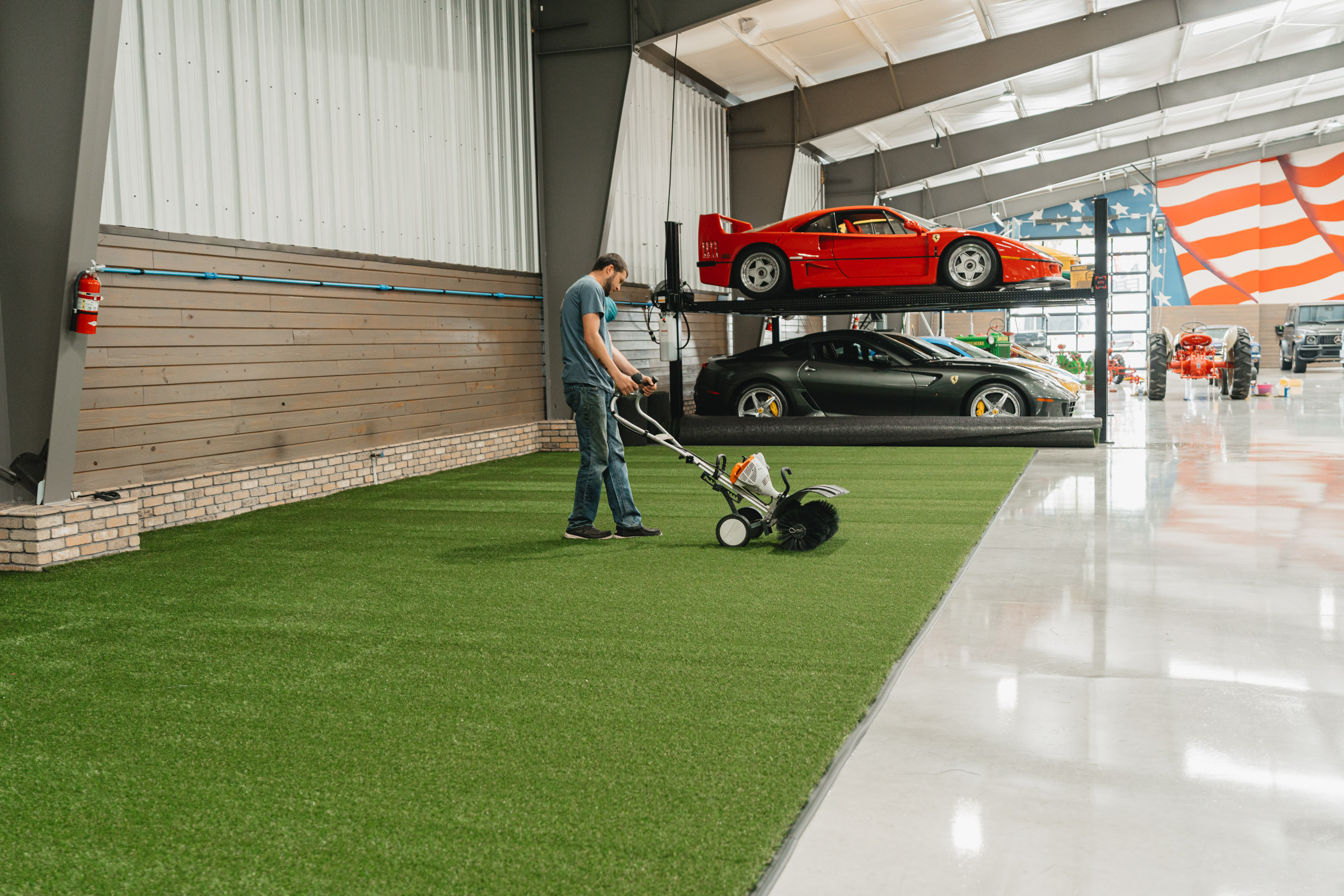
How to Fluff Turf: A Step-by-Step Guide
As an installer, your reputation is built on lawns that look great long after you’ve packed up your tools. One of the most common client concerns is turf matting in high-traffic areas. Teaching your clients how to properly fluff turf is a simple value-add that prevents callbacks and empowers them to maintain their investment. This routine care keeps the grass blades upright, ensures the infill provides proper support, and maintains optimal drainage. In this guide, we’ll cover the techniques and tools you need to know, so you can deliver a perfect finish and provide clients with straightforward maintenance advice that protects the integrity of your work.
If your backyard is a hub for kids, pets, and parties, you’ve probably noticed some areas of your turf look a little more loved than others. Walkways and play zones can start to look flat as the grass fibers get pushed down. This doesn’t mean your turf is wearing out; it just means it’s time for a quick refresh. Using an artificial grass fluffer is the easiest way to combat this. This simple tool revives matted areas, helps clean out hidden debris, and keeps your lawn’s drainage system working efficiently. It’s a straightforward solution for maintaining a resilient and beautiful lawn.
Key Takeaways
- Fluffing is about turf health, not just looks: Brushing your turf regularly does more than restore its appearance; it improves drainage, prevents fibers from matting, and helps redistribute the infill that supports the entire system.
- Use the right tool and wait for dry weather: A power broom is ideal for large jobs, while a manual turf rake gives you precision in smaller areas. Always fluff your turf when it’s completely dry to avoid clumping the infill and ensure an even finish.
- Know when to call a professional: While routine fluffing is a simple task, issues like ripples, stubborn creases, or low infill levels often point to a deeper problem. Calling an expert can prevent further damage and is the best way to protect your investment.
So, What Exactly Is a Turf Fluffer?Turf Fluffer, Anyway?
Think of a turf fluffer as a specialized brush designed to keep your artificial grass looking its best. Over time, foot traffic, weather, and outdoor furniture can press the synthetic grass blades down, making them look flat and worn. A turf fluffer is the tool you use to lift those fibers back up, restoring the lawn’s lush, natural appearance.
But it does more than just improve aesthetics. Regular fluffing helps clean out dust, leaves, and other debris that can get trapped deep within the turf. It also redistributes the infill, which is essential for keeping the blades upright, providing cushioning, and ensuring proper drainage. For both installers and property owners, using a turf fluffer is a simple but critical step in protecting the investment and prolonging the life of any synthetic turf system. It’s the key to maintaining that “just installed” look for years to come.
How a Turf Fluffer Brings Your Lawn Back to Life
Turf fluffers work by using stiff yet non-abrasive bristles to comb through the synthetic grass fibers. As the tool moves across the lawn, its bristles gently lift and separate each blade, pulling them into an upright position. This simple mechanical action breaks up any matted sections and revives flattened areas. At the same time, the brushing motion helps agitate and resettle the infill material that sits at the base of the turf. This process is vital for maintaining the stability and resilience of the entire turf system, ensuring the blades have the support they need to stand tall.
Your Guide to the Different Types of Turf Fluffers
You’ll generally find two main types of turf fluffers: manual and powered. Manual fluffers are typically stiff-bristled push brooms or rakes designed specifically for synthetic turf. They are great for smaller areas, detailed edge work, and situations where you need more control. Powered versions, often called power brooms or turf sweepers, use a rotating brush driven by an electric or gas motor. These tools are far more efficient for large lawns, sports fields, or heavily matted areas, as they do the hard work of lifting the fibers for you. Choosing the right one depends on the size of your project and the condition of the turf.
What Makes Quality Turf “Fluffy”?
That “fluffy” quality isn’t just about aesthetics; it’s a direct result of a well-designed and properly installed turf system. The lush, full appearance comes from a combination of the turf’s construction—like blade height and density—and the crucial support provided by the infill. When high-quality turf is paired with the right amount of infill, the blades are encouraged to stand upright, creating that soft, resilient surface everyone loves. This structure not only feels great underfoot but also helps the turf withstand foot traffic and bounce back easily. For installers, understanding these components is key to delivering a final product that looks and performs exceptionally well from day one.
Understanding Turf Specifications
When you’re evaluating turf, two key specifications to look for are pile height and density. Pile height refers to the length of the grass blades, and turf with longer blades—often 1.38 inches or more—tends to have a more luxurious, fluffy feel. However, height alone isn’t enough. Density, which measures how closely the fibers are stitched together, is just as important. Densely packed fibers provide better support for each other, preventing them from lying flat and contributing to a fuller look. When you browse different turf products, you’ll see how these specifications work together to create systems suited for everything from low-traffic decorative lawns to durable, high-use play areas.
The Real Benefits of Fluffing Your Artificial Grass
Think of fluffing your artificial grass like combing your hair or vacuuming a high-pile rug. It’s a simple maintenance step that keeps everything looking fresh, feeling great, and performing its best. Over time, foot traffic, patio furniture, and even heavy rain can cause turf blades to lie down and look a little flat. Regular fluffing, also known as blooming or brushing, lifts those fibers right back up, restoring the lush, upright appearance of a brand-new lawn.
But this isn’t just about looks. Fluffing is a critical part of protecting your investment and ensuring your turf lasts for years. It helps redistribute the infill, which is essential for proper drainage, blade support, and overall system performance. When the infill is evenly spread and the blades are standing tall, your turf can handle everything from backyard parties to daily pet playtime without showing signs of wear. For installers, teaching clients about this simple task can prevent callbacks related to matting or poor drainage. For property owners, it’s the easiest way to maintain that day-one quality and get the most out of your turf. A few minutes of brushing can make a world of difference, keeping your lawn resilient, clean, and ready for anything.
Restore That Upright, Fluffy Look
The most immediate benefit of fluffing your turf is visual. When grass fibers get pressed down, the lawn can look worn and tired. Brushing the turf against the grain lifts each blade, making the entire surface look fuller and more natural. This simple action restores the intended texture and pile height of your grass, which is especially important in high-traffic areas like walkways or play spaces. To get the job done right, you’ll want a sturdy brush with long synthetic bristles that can reach down and lift the fibers without causing damage. This quick refresh is all it takes to maintain great curb appeal.
Help Water Drain and Air Circulate
Proper drainage is one of the biggest advantages of synthetic turf, but it relies on the infill layer staying loose and evenly distributed. When turf gets compacted, water can drain more slowly. Fluffing with a power broom or rake breaks up compacted infill, clears out trapped debris like leaves and dirt, and allows water to flow freely through the system. This is especially important for pet-friendly turf systems like PETMAXX®, where efficient drainage is key to keeping the area clean and odor-free. Better airflow through the fibers also helps the turf dry faster after rain.
Stop Matting to Protect Your Investment
Matting occurs when turf blades get tangled and stuck in a flat position, which can lead to premature wear and tear. Regular fluffing is your best defense against this. By lifting the fibers, you prevent them from becoming permanently creased or crushed. This process also helps the infill do its job: supporting the base of each turf blade and protecting it from the force of foot traffic. A well-maintained lawn with upright fibers is more resilient and durable, ensuring your installation stands the test of time and continues to perform as expected.
Extend the Lifespan of Your Turf
Regular fluffing is one of the simplest and most effective ways to extend the life of your artificial grass. When turf fibers are standing tall, they are better protected from the daily grind of foot traffic. The process of brushing redistributes the infill, ensuring it continues to support the base of each blade. This support system is what gives your turf its resilience, allowing it to bounce back from everything from backyard games to patio furniture. Without this routine care, fibers can become matted and permanently creased, leading to uneven wear and a shorter lifespan for your lawn. By taking a few minutes to fluff your turf, you’re not just tidying up; you’re actively maintaining the structural integrity of your turf system and ensuring it performs beautifully for years to come.
How Often Do You Really Need to Fluff Your Turf?
One of the best things about artificial grass is its low-maintenance appeal, and thankfully, that extends to fluffing. You don’t need to add this to your weekly chore list. The right frequency depends entirely on how you use your space. A decorative side yard that sees little action will need far less attention than a backyard that doubles as a playground for kids and pets. High-traffic areas, spots under heavy patio furniture, and well-loved play zones will naturally show signs of flattening sooner. This happens because repeated pressure compresses the infill base and causes the individual blades to bend over time.
Think of fluffing as a periodic refresh rather than a constant task. It’s about keeping your turf looking its best and performing well over the long haul. Regular care helps your artificial lawn last longer and look great by keeping the fibers upright, ensuring proper drainage, and preventing debris from settling deep into the base. This simple action not only restores the lush, upright look of your lawn but also helps redistribute the infill, which is crucial for blade support. It’s less about a strict schedule and more about responding to your turf’s needs to keep your investment in top shape for years to come.
A Simple Schedule for Fluffing Your Turf
As a general rule, plan on giving your turf a good fluffing every few months. For many homeowners, a seasonal refresh is the perfect schedule to keep things looking pristine. However, if you have a high-traffic lawn, you might want to do a quick pass more often, perhaps once a month in the areas that get the most use. This proactive approach prevents minor matting from becoming a bigger issue. Consistent installation and care are the keys to ensuring your turf looks as good as it did on day one. A little bit of regular upkeep goes a long way in preserving its resilience and appearance.
Recommended Maintenance Schedule
For most residential lawns, a seasonal fluffing is a great rule of thumb. Think of it as a quarterly check-in to keep everything looking sharp. However, if your yard is the neighborhood hotspot for kids, pets, or parties, you’ll want to address high-traffic areas more frequently. A quick five-minute brush-up once a month on the main pathways or play zones can prevent matting before it starts. The goal isn’t to follow a rigid schedule but to simply give your turf a lift whenever it starts to look a little tired. This proactive approach is the easiest way to maintain your lawn’s resilience and beauty.
Deep Cleaning and “Defibrillation”
Think of a deep fluffing session as a “defibrillation” for your lawn—it shocks the entire system back to life. This process does more than just lift the grass blades; it’s a full reset. As you brush the turf, you’re also clearing out the dust, pollen, and small debris that inevitably settles near the base. More importantly, you’re redistributing the infill, which is the essential foundation that provides cushioning, supports the blades, and allows for proper drainage. An even layer of infill is critical for the turf’s performance and longevity, ensuring it can handle foot traffic and drain water efficiently for years to come.
Signs Your Artificial Grass Is Asking for a Fluff
Instead of marking your calendar, learn to read the signs from your turf itself. Your lawn will let you know when it needs a refresh. Look for areas where the grass blades look flat, matted, or are all leaning in the same direction. This is especially common in walkways or where your pets love to run and play. If you notice the infill looks compacted or the fibers don’t spring back after being walked on, it’s time to grab your brush or power broom. Products designed for heavy use, like our PETMAXX® turf, are incredibly durable but will still benefit from a fluff to restore their upright appearance.
Choosing the Right Tool to Fluff Your Turf
Choosing the right tool for fluffing your artificial grass can make all the difference between a quick touch-up and a time-consuming chore. The best option for you will depend on the size of your lawn, the type of turf you have, and how much foot traffic it gets. Whether you’re a professional installer looking for efficiency or a homeowner wanting to keep your yard looking pristine, there’s a tool that fits your needs. Using the correct equipment not only revives your turf’s appearance but also helps protect your investment by preventing damage to the fibers and backing. Let’s walk through the most common and effective tools, from heavy-duty machines to simple handheld brushes.
Power Brooms: For Fast, Powerful Results
If you’re dealing with a large area or turf that’s heavily matted down, a power broom is your best friend. These motorized brushes are the go-to for professionals because they work quickly and deliver impressive results. A power broom uses a rotating drum with stiff bristles to lift flattened turf blades, redistribute the infill material, and clear away embedded debris in a single pass. This process is incredibly effective for rejuvenating high-traffic areas and restoring the turf’s plush, upright appearance. The force from the broom also helps settle the infill, which can improve drainage and overall performance. For installers, it’s an essential tool for finishing a job and for performing high-value maintenance services.
Manual Brushes: For Detail and Control
For routine maintenance and smaller spaces, you don’t always need a machine. A good manual turf rake or a stiff-bristled push broom (with synthetic, not metal, bristles) offers excellent control and precision. Regular brushing is one of the easiest ways to keep your turf fibers standing tall and prevent them from getting matted over time. These tools are perfect for fluffing up the edges of a lawn, working around landscape features, or giving your pet-friendly turf a quick refresh. Just be sure to avoid metal rakes, as their sharp tines can tear the turf fibers or damage the backing system. A quality turf rake is an affordable and effective tool every homeowner should have.
Turf Groomers: The Gentle, Deep-Cleaning Option
Electric turf groomers offer a great middle ground between the raw power of a power broom and the manual effort of a rake. These lightweight machines are designed to gently lift, clean, and fluff artificial grass with minimal effort from you. Many models are cordless and easy to handle, making them a popular choice for homeowners who want a well-maintained lawn without the hassle. A turf groomer is particularly useful for decorative turf areas or patios where you want to maintain a perfect look. They provide a gentle but effective way to keep your grass looking its best week after week, collecting debris in an attached bag while lifting the fibers.
How to Fluff Your Turf the Right Way
Using the right tool is only half the battle. Your technique is what truly protects your turf and delivers that fresh, upright look. Whether you’re a seasoned installer teaching a client about maintenance or a homeowner tackling this for the first time, a gentle and methodical approach is key. Rushing the job or using too much force can cause the exact kind of wear you’re trying to prevent. By following a few simple rules, you can fluff your artificial grass effectively, extend its life, and keep it looking fantastic without causing any harm to the fibers or backing.
The “Against the Grain” Brushing Technique
If you look closely at your artificial grass, you’ll notice the blades all lean slightly in one direction. This is the “grain.” The secret to successful fluffing is to always work against it. Think of it like brushing a suede jacket; you brush against the natural direction of the fibers to lift them up.
Always move your power broom or rake against the way the turf blades naturally lean. This motion gets underneath the matted fibers and pulls them upright, restoring the volume and texture of your lawn. Pushing your tool with the grain will only flatten the blades further, defeating the purpose of the task. Taking a moment to identify the grain before you start makes all the difference.
How Much Pressure Should You Use?
When it comes to fluffing your turf, especially with a power broom, let the machine do the work. It’s tempting to apply extra force, thinking it will speed things up or work better, but this can do more harm than good. Pressing down too hard can abrade, bend, or even break the synthetic fibers, leading to permanent damage and a shorter lifespan for your lawn.
The weight of the power broom or the stiffness of a good turf rake is designed to be sufficient for the job. Guide the tool across the surface with a light but steady hand. You’ll find that a gentle, consistent pass is far more effective at lifting the blades than aggressive scrubbing. This protects the integrity of your turf system and ensures it stays resilient for years.
Quick Prep Steps for a Perfect Finish
A little preparation goes a long way in preventing accidental damage. Before you even turn on your power broom, take a few minutes to walk the area and get it ready. First, do a quick inspection. Check your turf for any loose seams, lifted edges, or damaged spots. It’s important to fix these areas before brooming to avoid making them worse.
Next, clear the surface of any large items like sticks, rocks, or toys that could get caught in your tool and tear the turf. Finally, for safety, make sure kids and pets are inside or in another part of the yard while you work. These simple steps ensure a smooth, safe, and effective fluffing session every time.
Tips for New Turf Installations
After a new turf installation, the grass blades might look a bit flat from being rolled up for shipping. The first fluffing, often called “blooming,” is one of the most important steps to take. This initial brushing helps the fibers stand upright and allows the infill to settle evenly into the base of the system. For installers, this is the perfect finishing touch to present a flawless lawn to your client and a great opportunity to teach them about simple, ongoing care. For homeowners, this first brush-up sets the stage for long-term performance. By starting this routine early, you help your new lawn look its best from day one and protect your investment by preventing matting before it can even start. A little care right after the installation goes a long way in keeping your turf resilient and beautiful.
Common Turf Fluffing Mistakes to Avoid
Fluffing your turf seems straightforward, but a few common missteps can do more harm than good. It’s easy to get overzealous and accidentally damage the very lawn you’re trying to maintain. The good news is that these mistakes are completely avoidable once you know what to look for. Let’s walk through what not to do, so you can keep your grass looking pristine without causing any wear and tear. By steering clear of these simple errors, you’ll protect your investment and make your maintenance routine much more effective.
Going Too Hard: The Over-Brushing Mistake
When you see a flat, matted patch of turf, your first instinct might be to apply some serious elbow grease. But pushing down hard on your rake or power broom is one of the fastest ways to damage your turf. The synthetic fibers can bend, fray, or even break under excessive pressure. Remember, your tools are designed to do the heavy lifting for you.
Instead of scrubbing the turf, guide your tool across the surface. Let the weight of the power broom or the tines of the rake lift the fibers. A light, consistent motion is all you need to revive the blades and redistribute the infill. Think of it as a gentle combing, not a deep cleaning. This approach protects the integrity of each blade and ensures your lawn stays resilient for years.
Using the Wrong Tool for Your Type of Turf
Not all brushes and rakes are created equal, and using the wrong one can cause real problems. A garden rake with sharp metal tines, for example, can easily snag and tear the turf’s backing material, leading to costly repairs. Similarly, a brush with bristles that are too stiff can abrade the turf fibers, while one that’s too soft won’t be effective at lifting them.
For the best results, stick with tools designed specifically for artificial grass. Look for a turf rake or brush with long, sturdy synthetic bristles. These are tough enough to fluff the blades without being so harsh that they cause damage. Using the right infill and accessories not only makes the job easier but also protects the structure of your turf system.
Specific Tools to Never Use
It can be tempting to just grab whatever rake or broom you have on hand, but this is a shortcut you’ll want to avoid. The biggest offender is the standard metal garden rake. Its sharp tines are designed to dig into soil, and they will do the same to your turf’s backing, causing snags, tears, and potentially ruining the entire installation. Similarly, wire brushes are far too abrasive and will shred the delicate grass fibers, leaving you with a frayed, unnatural-looking lawn. On the other end of the spectrum, a soft-bristled household broom won’t have the stiffness needed to lift matted fibers, making your efforts ineffective. Sticking to tools designed for synthetic turf is the only way to protect your investment and ensure all your turf products perform as they should.
Ignoring the Weather: Why Timing Matters
Timing is everything, especially when it comes to turf maintenance. The biggest mistake here is trying to fluff your grass when it’s wet. Brushing damp turf is counterproductive because the moisture causes the infill particles, like sand or rubber, to clump together. Instead of evenly redistributing the infill, you’ll just be pushing around heavy, wet clumps, which can lead to uneven spots and poor drainage.
Always plan to fluff your turf on a dry day. Make sure it hasn’t rained recently and that the morning dew has completely evaporated. Working with dry turf allows the infill to move freely, ensuring it settles evenly between the blades to provide proper support. A warm, dry afternoon is the perfect time to give your lawn a quick refresh.
Forgetting About Environmental Hazards
While artificial turf is incredibly resilient, it’s not invincible. A successful, long-lasting installation depends on understanding how the turf will interact with its specific environment. Overlooking factors like intense sun reflection or extreme surface heat can lead to preventable damage and unhappy clients. Thinking ahead about these potential hazards is a crucial part of the planning process for both installers and homeowners. It ensures you choose the right product for the job and take simple precautions to protect your investment from day one, preventing headaches down the road.
The Danger of Reflected Sunlight
One of the most overlooked but destructive hazards for artificial turf is reflected sunlight, especially from energy-efficient windows. These windows are designed to reflect solar rays, but that concentrated beam of light can act like a magnifying glass, creating hot spots on your lawn. This intense heat can easily cause artificial grass fibers to melt, leaving shiny, matted patches that can’t be fluffed back to life. Before any installation, it’s critical to assess the property for reflective surfaces. If you identify a risk, solutions like installing window film or planting strategic shrubbery can diffuse the reflection and protect the turf from damage.
Prohibited Uses for Artificial Turf
It’s important to acknowledge that synthetic turf gets hotter than natural grass. On a scorching summer day, the surface can become uncomfortably warm for bare feet and paws. Because of this, some communities and HOAs have rules about where turf can be installed, particularly in large, unshaded play areas. While advanced products like our HEATMAXX® SOFT series are engineered with technology to reduce surface temperatures, installers should always set clear expectations with clients about heat performance. Being mindful of these factors and choosing the right turf system for the climate and application ensures a safe and enjoyable space for everyone.
Adjusting Your Technique for Different Turf
Not all artificial grass is the same, so your care routine shouldn’t be either. The best fluffing technique really depends on how you use your space. A backyard dog run has different needs than a commercial putting green or a busy walkway. Understanding these differences is key to keeping your turf performing its best for years. By adjusting your tools and techniques, you can give every type of turf the specific care it needs to thrive, from pet-friendly lawns to high-performance athletic fields.
How to Fluff Turf in Pet-Friendly Yards
When pets are part of the family, your turf routine needs to focus on cleanliness as much as appearance. Pet-friendly turf, like our PETMAXX® series, is built tough, but regular fluffing is essential for hygiene. Brushing the fibers upright helps dislodge trapped pet hair and other debris, making it much easier to rinse away messes completely. An electric turf sweeper is perfect for this, as it efficiently lifts the blades and clears the way for a deep clean. This simple step keeps your lawn looking fresh and ensures it remains a sanitary, odor-free space for everyone to enjoy.
Specialized Cleaning for Pet Odors
Even with the best pet turf, odors can become a concern if the area isn’t maintained properly. When pet urine dries, ammonia crystals can get trapped at the base of the turf fibers. If the grass is matted down, these crystals are harder to rinse away, and the lack of airflow allows odor-causing bacteria to thrive. Regularly brushing the fibers upright is a critical first step in any cleaning routine. It opens up the turf, breaking apart trapped hair and debris and exposing the base so you can rinse it thoroughly. This simple action ensures that water and cleaning solutions can reach the source of the odor, washing it away completely instead of just masking it.
Fluffing also plays a vital role in maintaining your turf’s drainage system, which is your best defense against lingering smells. By breaking up compacted infill, you ensure liquids can flow freely through the turf and away from the surface. This is especially important for specialized systems like our PETMAXX® turf, which are designed for maximum permeability. After fluffing and rinsing with a hose, using an enzyme-based turf cleaner can neutralize any remaining ammonia crystals. This combination of mechanical cleaning (fluffing) and specialized cleaning products keeps your pet-friendly lawn fresh and hygienic for everyone.
Bringing High-Traffic Areas Back to Life
It’s completely normal for turf in high-use areas, like walkways or kids’ play zones, to become flattened over time. The solution is a good power brooming session. This technique does more than just make the turf stand up again; it revitalizes the entire system. By lifting the fibers, you help the turf drain water more effectively and prevent matting that can damage the blades. It also redistributes the infill, which is crucial for cushioning and protecting the turf’s backing from wear and tear. Regular fluffing helps all our turf products last longer and keeps them looking full and inviting.
Tips for Sports Fields and Specialty Turf
For athletic fields and specialty applications, turf maintenance is all about performance and safety. The goal isn’t just aesthetics but ensuring the surface plays consistently and safely. Products in our SPORTMAXX® line are designed for peak athletic performance, and proper fluffing is a key part of that upkeep. Using a power broom on these surfaces keeps the turf fibers upright and the infill evenly distributed. This is critical for proper shock absorption, consistent ball roll, and secure player footing. Regular grooming ensures the field remains in optimal condition, providing a reliable surface for every game.
When Is It Time to Call a Professional?
While fluffing your turf is a totally manageable DIY task, there are times when calling in a professional is the smartest move. Think of it less as giving up and more as protecting your investment. A pro can save you time, prevent accidental damage, and solve problems that a simple brushing can’t fix. They have commercial-grade equipment and an expert eye for spotting subtle issues before they become major headaches. For installers, offering professional maintenance can be a great value-add for clients who want a truly hands-off solution. For homeowners, it’s peace of mind knowing the job is done right, especially for large or complex areas.
A professional service can handle deep cleaning, infill replenishment, and advanced grooming that goes beyond a basic fluff. They understand how different turf systems respond to treatment and can extend the life of your lawn significantly. Knowing when to make that call ensures your turf stays in top condition for years. So, how do you know when to put down the rake and pick up the phone? Let’s look at a few key scenarios where an expert is your best bet.
Recognizing When DIY Isn’t Cutting It
You can absolutely handle routine touch-ups and seasonal fluffing on your own. It’s a great way to keep your lawn looking fresh and save a little money. However, it’s smart to know when to hand over the reins. If you have a large, expensive turf system or are concerned about voiding a warranty, a professional is a safer bet. They have the right tools and training to do the job efficiently without causing harm. Plus, a trained eye can spot other potential issues, like inconsistent infill levels or minor drainage concerns, that you might not notice until they become bigger problems.
How a Pro Can Handle Tough Turf Problems
If you’re dealing with issues more serious than matted fibers, it’s time to call for backup. Problems like persistent creases, lumps, or ripples that don’t settle often point to an underlying installation issue. This could mean the turf wasn’t stretched properly, the base wasn’t compacted correctly, or it needs more infill. Trying to fix these yourself can lead to bigger headaches. A professional can diagnose the root cause and often make targeted repairs, saving you the cost of a full replacement. They have the specialized tools to stretch, seam, and re-secure turf the right way, ensuring your lawn looks flawless again.
Beyond Fluffing: A Complete Turf Care Checklist
Fluffing your turf is a fantastic way to keep it looking fresh, but it’s only one piece of the puzzle. A truly great-looking lawn that performs year after year needs a little more attention. Think of it like a complete wellness plan for your turf. By adding a few simple steps to your routine, you can protect your investment, prevent common issues, and ensure your grass stays green and resilient. Here’s a straightforward checklist for care that goes beyond a simple fluff.
Regularly Check and Adjust Your Infill
Infill is the secret hero of your turf system. This granular material sits at the base of the turf fibers, helping them stand up straight, providing cushioning, and protecting the backing from UV rays. Over time, foot traffic and weather can cause the infill to shift or compact, especially in popular spots like walkways or play areas. When this happens, your turf can look flat and worn. A quick inspection every few months is all you need. Use a stiff broom to brush the fibers against the grain, which helps redistribute the infill and other accessories and brings life back to the lawn. If you notice any low spots, simply add a small amount of infill and brush it in.
Why Infill is the Primary Cause of Flat Turf
If your turf looks flat, the problem usually isn’t the grass fibers themselves—it’s what’s supporting them. The number one reason artificial grass blades lie down instead of standing tall is a lack of sufficient infill. Infill is the granular material that’s brushed deep into the base of the turf. It does the critical job of holding each blade upright, providing stability, and giving the lawn its resilient, cushioned feel. Without enough infill, the fibers have no support structure and will naturally bend and mat down under foot traffic. Think of it as the foundation of your turf system; when it’s low, the whole structure weakens.
Types of Infill and What to Choose
Choosing the right infill is just as important as choosing the right turf. For most residential applications, especially homes with kids and pets, a coated sand infill like Envirofill is an excellent choice. Its antimicrobial properties help fight odors and bacteria, making it ideal for pet relief areas. Other options include basic silica sand, which is cost-effective, or crumb rubber, which is often used for athletic fields due to its superior shock absorption. The best choice depends on your specific needs for drainage, performance, and cleanliness. We offer a range of high-quality infill and accessories to match any project, ensuring your turf system performs exactly as it should.
Infill Replacement Schedule
Infill isn’t a “set it and forget it” component. Over time, it can compact or get washed away by heavy rain. As a general guideline, you should check your infill levels and top them off as needed, typically every 18 months or so. However, for very high-traffic zones, like a dedicated dog run or the area under a swing set, you may need to add a light layer of infill every three to six months. You don’t need to replace all of it; just add enough to ensure the bottom third of the grass blades are well-supported. This simple maintenance step will keep your turf resilient and prevent premature matting.
Keep It Clean: Debris and Stain Removal
A clean lawn is a happy lawn. Regular care is the best way to help your artificial grass last longer and look its best. The main goal is to keep it free of organic debris like leaves, twigs, and seeds, which can break down and encourage weed growth. A quick pass with a leaf blower or a flexible rake once a week usually does the trick. For dust and pollen, a simple rinse with a garden hose will wash it clean. If you have pets, it’s especially important to remove solid waste right away and rinse the area to prevent odors. Our PETMAXX® turf systems are designed for easy cleanup, making this task even simpler.
Your Simple, Year-Round Maintenance Plan
You don’t need to spend every weekend working on your lawn; that’s the beauty of turf. Creating a simple, consistent plan is the key to effortless upkeep. For most lawns, a light cleaning weekly and a quick rinse monthly is plenty. Every few months, or after heavy use like a backyard party, it’s a good idea to do a more thorough check. This is the perfect time to give it a good brushing with a power broom to redistribute the infill and fluff the fibers. By following a basic schedule, you can catch small issues before they become bigger problems. Understanding the fundamentals of a quality turf installation can also help you tailor your maintenance plan effectively.
Related Articles
- DIY Synthetic Turf Installation: A 6-Step Guide
- Does Artificial Grass Drain Well? An Expert Explains
- How to Choose the Best Synthetic Turf Products
- Best Quality Artificial Turf: A Buyer’s Guide
Frequently Asked Questions
Can I just use my regular garden rake to fluff my turf? It’s best to avoid using a standard garden rake with metal tines. Those sharp points can easily snag and tear the turf’s backing, which can lead to serious damage and costly repairs. Instead, opt for a push broom with stiff, synthetic bristles or a specialized turf rake designed with flexible, non-abrasive tines. These tools are tough enough to lift the grass blades without harming the underlying structure of your lawn.
What’s the easiest way to tell which direction the “grain” of my turf is? Finding the grain is simpler than it sounds. Stand back and look at your lawn from a slight angle; you’ll notice the blades have a natural, uniform lean in one direction, often creating a subtle sheen. You can also run your hand over the surface. When you move with the grain, the blades will feel smooth and lay down easily. When you move against it, you’ll feel resistance as the blades stand up. That resistance is exactly what you want when you’re fluffing.
Will fluffing get rid of the indentations from my heavy patio furniture? Yes, in most cases, fluffing is the perfect solution for those flattened spots. Heavy objects compress the turf fibers and the infill beneath them. Brushing the area vigorously against the grain will lift the blades and help redistribute the infill, restoring the lawn’s volume. For particularly stubborn spots that have been compressed for a long time, you may need to make a few passes with a stiff brush to fully revive the area.
What happens if I just skip fluffing my turf altogether? If you never fluff your turf, it won’t fall apart overnight, but you will notice a gradual decline in its appearance and performance. The blades in high-traffic areas will become matted and flat, making the lawn look worn and tired. More importantly, the compacted infill can slow down drainage and trap debris, which can lead to odors and other issues. Regular fluffing is a simple preventative step that protects your investment and keeps your lawn resilient for years.
Is a power broom really worth it for a smaller residential lawn? For most small to medium-sized residential lawns, a good manual turf rake or stiff push broom is perfectly adequate for routine maintenance. A power broom becomes a worthwhile investment if you have a very large yard, deal with heavily matted turf from lots of activity, or simply want to make the job as fast and effortless as possible. While not a necessity for everyone, it delivers professional-grade results and can turn a chore into a quick task.
A Quick Note on Installation for a Fluffier Start
While a good fluffing can revive a well-loved lawn, the secret to a truly lush, resilient turf starts on day one. The foundation for a lawn that stays fluffy and performs well is a flawless installation. For installers, getting this right means fewer callbacks and happier clients. For homeowners, understanding the basics helps you spot quality work. Problems like persistent creases, lumps, or ripples that don’t settle often point to an underlying installation issue that no amount of brushing can fix. It all comes down to paying attention to the details, starting with how the turf pieces are laid out.
Aligning Turf Pieces for a Seamless Look
Every roll of artificial grass has a “grain” or “pile direction,” meaning all the synthetic blades lean slightly one way. For a seamless, natural-looking lawn, it is absolutely critical that every piece of turf is installed with the grain running in the same direction. If you lay one piece against the grain of another, the difference in how the light reflects off the blades will make the seam stick out. This creates a jarring, striped effect that no amount of fluffing can hide. Ensuring consistent alignment across the entire project is a non-negotiable step in a professional installation. This single detail is what separates an average job from a stunning, uniform lawn that looks great from every angle.
Leave a Reply