


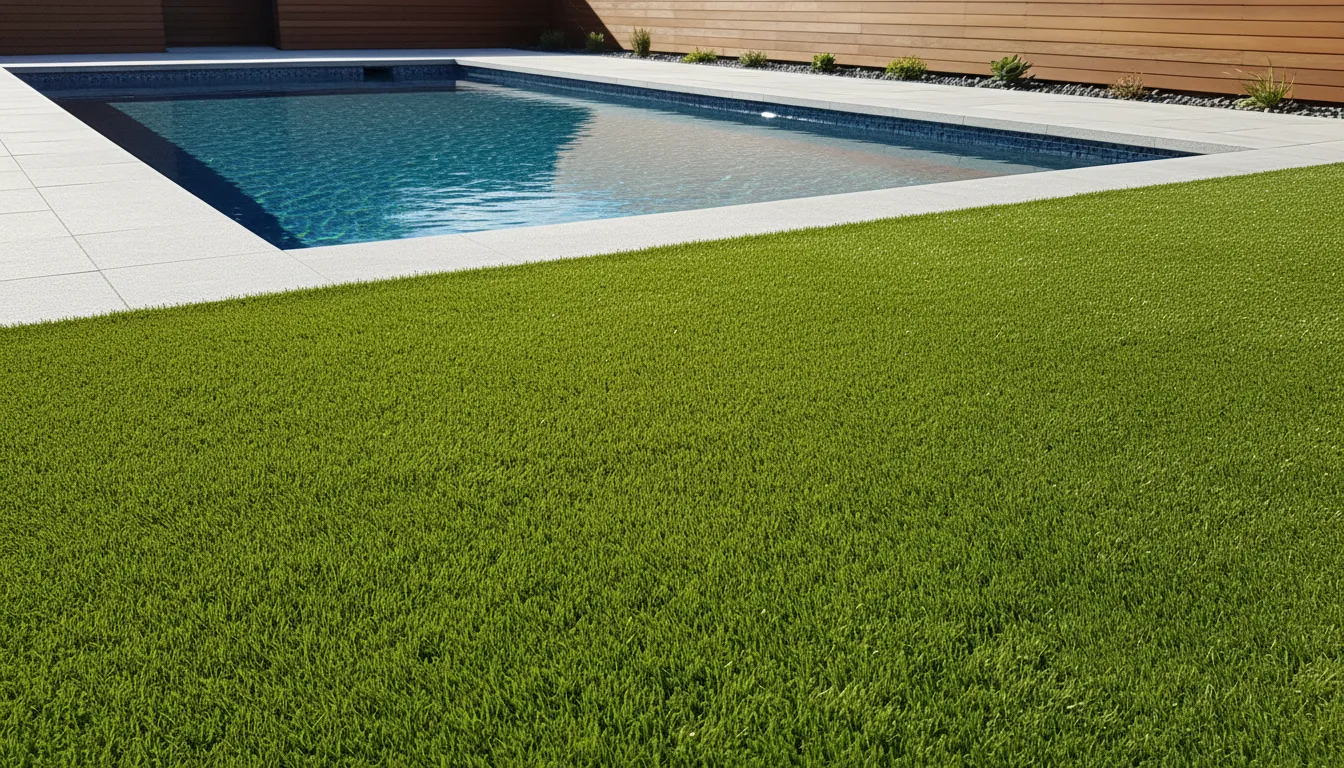
Artificial Turf Around Pool Areas
Artificial Turf Around Pool Areas: Drainage, Heat, and Safety Guide
Artificial turf around pool areas can turn a muddy, slippery, high-maintenance border into a cleaner surface that drains fast, looks finished, and stands up to wet foot traffic. The key is choosing pool area artificial grass as a complete system, not just a green surface. Drainage, base prep, product selection, heat exposure, chlorine, edging, and installer skill all affect how the finished pool surround performs.
Planning a pool surround project? Get connected with a Go Green installation partner to match the right turf, base, and drainage plan to your site.
The best turf for pool areas is usually a fast-draining product with a stable backing, comfortable pile height, strong edge details, and an installation plan that moves water away from the pool deck instead of trapping it below the surface. For many pool surrounds, Go Green’s AQUAMAXX 50 and AQUAMAXX 75 products are built for that kind of wet-use performance.
Why Use Artificial Turf Around a Pool?
A pool surround has to handle more than normal lawn traffic. It gets repeated splash-out, barefoot use, furniture movement, sunscreen, chlorine, heat, and heavy traffic during parties or family weekends. Natural grass often struggles in that environment because soil compacts, shaded areas thin out, and wet spots turn into mud.
Artificial grass can solve several common poolside problems at once:
- Cleaner transitions between the pool, patio, and yard
- Less mud, grass clippings, and debris tracked into the water
- A softer barefoot surface than many hardscape-only designs
- Lower mowing and edging demands near water features
- Better control over drainage when the base is designed correctly
- A finished look around curved pool shapes, spas, and lounge zones
That does not mean every turf product belongs beside a pool. A dense landscape turf with poor backing drainage can hold water, flatten in traffic lanes, or create maintenance problems. Pool area artificial grass should be selected for wet performance first, then matched to the look and feel the customer wants.
What Makes the Best Turf for Pool Areas?
The best turf for pool areas combines drainage, traction, durability, comfort, and cleanability. If one of those pieces is missing, the surface may look good on day one but create callbacks later.
Fast-draining backing
Drainage is the first requirement. Pool splash-out, rain, rinsing, and wet feet all need a path through the turf and into the prepared base below. Go Green’s AQUAMAXX line uses a 100% drainage backing system designed for installs where standing water is a failure condition. AQUAMAXX 50 is rated at more than 600 inches per hour under ASTM F1551, making it a strong option for pool surrounds, pet runs, high-moisture climates, and backyards where fast water movement matters.
Stable, properly prepared base
The turf is only the top layer. Under it, the installer needs a compacted, permeable base that supports the surface and moves water away from the pool. The base design should account for slope, nearby hardscape, soil type, drainage outlets, and any existing concrete. For a deeper explanation of the system below the turf, see Go Green’s guide to how artificial turf drainage works.
Comfortable pile height
Pool surrounds are usually barefoot spaces. A very short, stiff turf may feel harsh around lounge areas, while a very tall, dense turf may trap more debris or feel slower to dry. AQUAMAXX 50 uses a 1-inch pile height for a clean, efficient surface. AQUAMAXX 75 steps up to a fuller 1.5-inch profile for heavier use and a more substantial feel.
Durability under wet traffic
Pool turf should tolerate repeated wet foot traffic, kids running between the pool and patio, furniture legs, and regular rinsing. Look for a product that pairs drainage with structural backing strength and a warranty appropriate for the application. AQUAMAXX 50 and AQUAMAXX 75 are both backed by 15-year prorated warranties.
Clean edging and seam planning
Pool edges, coping, drains, skimmers, steps, and paver borders create many detail points. Seams should be planned away from the heaviest traffic and most visible areas when possible. Edges should be secured so they do not curl, lift, or create trip points.
Artificial Turf Around Pool Areas: Key Product Comparison
For many pool surrounds, the choice comes down to how much traffic the area will see and how much cushion or visual density the customer wants. Here is a simple comparison.
| Product | Best fit around pools | Drainage | Pile profile | When to recommend it |
|---|---|---|---|---|
| AQUAMAXX 50 | Pool surrounds, splash zones, backyards, high-rainfall areas | 100% drainage backing rated at more than 600 inches per hour | 50 oz/sy, 1-inch pile height | Choose it when fast drainage, clean looks, and efficient performance are the top priorities |
| AQUAMAXX 75 | Higher-traffic pool decks, spa surrounds, active family yards, commercial pool areas | 100% drainage backing rated at more than 600 inches per hour | 75 oz/sy, 1.5-inch pile height | Choose it when the site needs the same drainage with more density and durability under heavier use |
| Standard landscape turf | Decorative areas away from heavy splash zones | Varies by backing and installation | Varies | Use caution near pools unless drainage and base design are confirmed |
For a small residential pool border where water clears quickly and the main goal is a clean, low-maintenance surface, AQUAMAXX 50 is often the practical choice. For a busy family pool, rental property, HOA amenity, hotel pool, or backyard where people move furniture and gather often, AQUAMAXX 75 may be the better long-term fit.
How Drainage Should Work Around a Pool
Drainage around a pool is not only about the turf backing. Water has to move through the turf, through the base, and away from areas where it could create pooling, soft spots, odors, or structural issues.
A strong drainage plan usually includes:
- A permeable aggregate base compacted in lifts
- Proper slope away from the pool, house, and hardscape transitions
- Drainage paths that do not send water into trapped low spots
- Secure edging that does not block water movement
- Seam and nail placement that protects the drainage layer
- Inspection of existing deck drains, channel drains, or yard drains
If the turf is installed over concrete, the drainage conversation changes. Existing concrete must have the right slope and outlets, and the system may need a drainage layer that prevents water from sitting between the hard surface and turf. Go Green’s guide on how to install artificial grass on concrete is a useful starting point for projects where a pool deck or patio is already in place.
Have a wet or complex pool surround? Request installation guidance before choosing a turf product so drainage is designed into the project from the start.
Is Artificial Grass Slippery Around a Pool?
Artificial grass can provide a more forgiving barefoot surface than slick tile or wet concrete, but no outdoor pool surface should be treated as slip-proof. Traction depends on the turf texture, pile direction, infill choice, drainage rate, maintenance, and how the pool area is used.
To reduce slip risk, focus on the complete surface design:
- Use fast-draining turf so water does not sit on the surface
- Avoid overly slick or matted products in high-traffic wet zones
- Keep the pile brushed and free of sunscreen buildup, leaves, and algae
- Use secure edging at coping, pavers, and step transitions
- Do not create hidden lips where turf meets concrete, stone, or drains
- Follow pool safety rules and discourage running on any wet surface
For commercial or public pool settings, product selection should be coordinated with local code requirements, accessibility needs, and the facility’s maintenance plan. A dealer or installer can help document the product and system being proposed.
Heat Management for Pool Area Artificial Grass
Pool areas often sit in direct sun. Any surface can get hot, including concrete, pavers, decking, natural grass under drought stress, and artificial turf. The goal is to select the right product, design the area intelligently, and set realistic expectations for barefoot comfort during peak heat.
Helpful heat-management strategies include:
- Adding shade from umbrellas, pergolas, trees, or shade sails
- Using lighter surrounding hardscape where possible
- Rinsing the turf before heavy use during very hot periods
- Choosing the right pile height and density for the exposure
- Paying attention to Low-E window reflection near the pool area
- Combining turf with pavers or stepping zones where surface temperatures are a concern
Low-E window reflection is a separate issue from normal sun heat. Concentrated reflection can damage many polyethylene turf products. If the pool surround is near reflective windows, glass doors, or mirrored surfaces, discuss product options before installation. Go Green’s article on window reflection turf burn explains why this matters and when a heat-resistant solution may be needed.
Will Chlorine Damage Artificial Turf?
Normal pool splash-out is usually manageable when the turf product and installation are suited for wet use, but chlorine should not be ignored. Pool chemicals, saltwater systems, sunscreen, body oils, and organic debris can all collect in a pool surround if the surface is not rinsed and maintained.
A practical poolside maintenance plan should include:
- Rinsing heavy splash zones with clean water after frequent use
- Removing leaves, toys, and debris before they break down
- Brushing traffic lanes so the pile does not stay compressed
- Checking edges and seams each season
- Cleaning sunscreen or food spills promptly
- Keeping pool chemistry within the pool manufacturer’s recommended range
For a broader care plan, see Go Green’s synthetic turf maintenance guide. Around pools, maintenance is less about mowing and more about rinsing, debris control, and keeping water moving through the system.
Design Ideas for Low-Maintenance Pool Surrounds
Artificial turf can be used in several ways around a pool. The best design depends on how the area is used, where water flows, and how much hardscape the customer wants to keep.
Turf between pavers
Turf strips between pavers create a clean resort-style look and reduce the amount of exposed concrete. This design works best when the installer plans narrow cuts carefully and avoids trapping water between hardscape edges.
Full turf lounge border
A wider turf border can soften the space around chaise lounges, umbrellas, and seating areas. Use a durable product and make sure furniture feet will not create long-term depressions in the same spots.
Curved pool edge transition
Artificial turf works well around curved pool shapes because it can be cut to follow coping and landscape borders. Clean edge securing is especially important in curved designs.
Pet and family pool yards
If the pool area doubles as a pet space or family play yard, drainage and odor control deserve extra attention. AQUAMAXX products are strong drainage options for wet areas, while dedicated pet applications may require a broader product conversation that includes PETMAXX systems.
Commercial pool amenity areas
Hotels, apartments, HOAs, and recreation centers may need turf that can handle daily traffic, furniture movement, drainage demands, and scheduled cleaning. AQUAMAXX 75 is often the better fit when durability and drainage have to work together.
For more layout inspiration, see Go Green’s guide to artificial turf landscaping ideas.
Installation Details That Prevent Poolside Problems
The most common pool turf problems are rarely caused by one bad choice. They usually come from a mismatch between product, base, water flow, and finishing details. Before approving an installation, review these details with the installer.
- Base depth and compaction: The base should support traffic and drain properly without settling.
- Water direction: Water should move away from the pool structure and not collect under turf edges.
- Pool coping transition: The edge at the pool must be secure, clean, and comfortable for barefoot use.
- Seam placement: Seams should avoid obvious sightlines and high-stress wet traffic when possible.
- Furniture zones: Lounge chairs and tables may need pads, pavers, or periodic repositioning.
- Cleaning access: The design should allow easy rinsing, brushing, and debris removal.
- Existing concrete: Cracks, slope issues, and drainage outlets should be addressed before turf goes down.
A pool surround is not a good place for shortcut installation. Water exposes weak base prep, loose edges, and poor drainage faster than a dry decorative area would.
When to Recommend AQUAMAXX for Pool Surrounds
Recommend AQUAMAXX when the project needs drainage performance to be a primary selling point. That includes pool borders, spa surrounds, yards with frequent splash-out, high-rainfall regions, and designs where the customer wants a clean synthetic grass look without accepting standing water.
AQUAMAXX 50 is the right conversation when the site needs Go Green’s fastest-draining product profile with an efficient 1-inch pile height and a clean natural look. It is well suited for residential pool surrounds, backyards, splash zones, pet-adjacent areas, and wet climates.
AQUAMAXX 75 is the right conversation when the site needs the same drainage-focused backing with more face weight and a fuller profile for heavier use. It fits active family pools, high-traffic spa areas, commercial pool decks, and backyards where kids, pets, and guests will use the surface often.
Dealers should also look at the whole property. If Low-E reflection is present, if the pool area doubles as a dog run, or if the customer wants a putting surface nearby, another Go Green product may need to be part of the recommendation.
Buyer Checklist: Questions to Ask Before Choosing Pool Turf
Use this checklist before choosing artificial turf around a pool:
- Where does pool splash-out currently go?
- Does the area drain after rain, or does it hold water?
- Will turf be installed over soil, aggregate base, concrete, or pavers?
- How much direct sun hits the area during the hottest part of the day?
- Are there Low-E windows or reflective glass facing the turf?
- Will the area handle kids, pets, parties, rentals, or commercial traffic?
- What furniture will sit on the surface?
- How will leaves, sunscreen, and pool chemicals be rinsed away?
- Are there local code, HOA, or commercial facility requirements?
- Which product balances drainage, comfort, and durability for the job?
Need help matching product to project? Dealers can request wholesale pricing and product support, while homeowners can get connected with an installation partner.
FAQs About Artificial Turf Around Pool Areas
What is the best artificial turf around a pool?
The best artificial turf around a pool is a fast-draining product installed over a properly prepared base. For Go Green projects, AQUAMAXX 50 is a strong choice when drainage is the top priority, while AQUAMAXX 75 is often better for heavier traffic and a fuller feel.
Can artificial turf be installed next to pool coping?
Yes, artificial turf can be installed next to pool coping when the edge is secured properly and the transition is finished cleanly. The installer should prevent lifted edges, trip points, and blocked drainage paths.
Does pool chlorine ruin artificial grass?
Normal splash-out is usually manageable with the right turf and regular rinsing. However, pool chemicals, sunscreen, salt, and debris should not be allowed to build up. Rinse high-use areas with clean water and follow a regular maintenance routine.
Does artificial turf get hot around pools?
Artificial turf can get hot in direct sun, just like concrete, pavers, and decking. Shade, rinsing, lighter surrounding materials, and thoughtful product selection can help manage comfort. Also check for Low-E window reflection, which can create concentrated heat damage.
Is artificial grass around a pool slippery?
No wet pool surface should be considered slip-proof. Fast drainage, a well-maintained pile, clean edges, and debris control can help reduce slip risk. Discourage running and keep the surface rinsed and brushed.
Can turf go over an existing concrete pool deck?
It can, but the concrete must have adequate slope and drainage. If water has no place to go, turf over concrete can trap moisture. An installer should evaluate cracks, drains, low spots, and transition heights before installation.
Final Takeaway
Artificial turf around pool areas works best when drainage leads the decision. Start with the water problem, then match the turf product, base, edging, and maintenance plan to how the pool area will actually be used. For fast-draining pool area artificial grass, AQUAMAXX 50 and AQUAMAXX 75 give dealers and installers two strong options: one focused on efficient drainage and clean performance, the other built for more density and heavier use.
If the project involves a pool surround, spa area, high-rainfall yard, or wet commercial amenity, do not treat product selection as an afterthought. Choose the surface system that keeps water moving, edges secure, and the finished space easy to enjoy.
Leave a Reply