


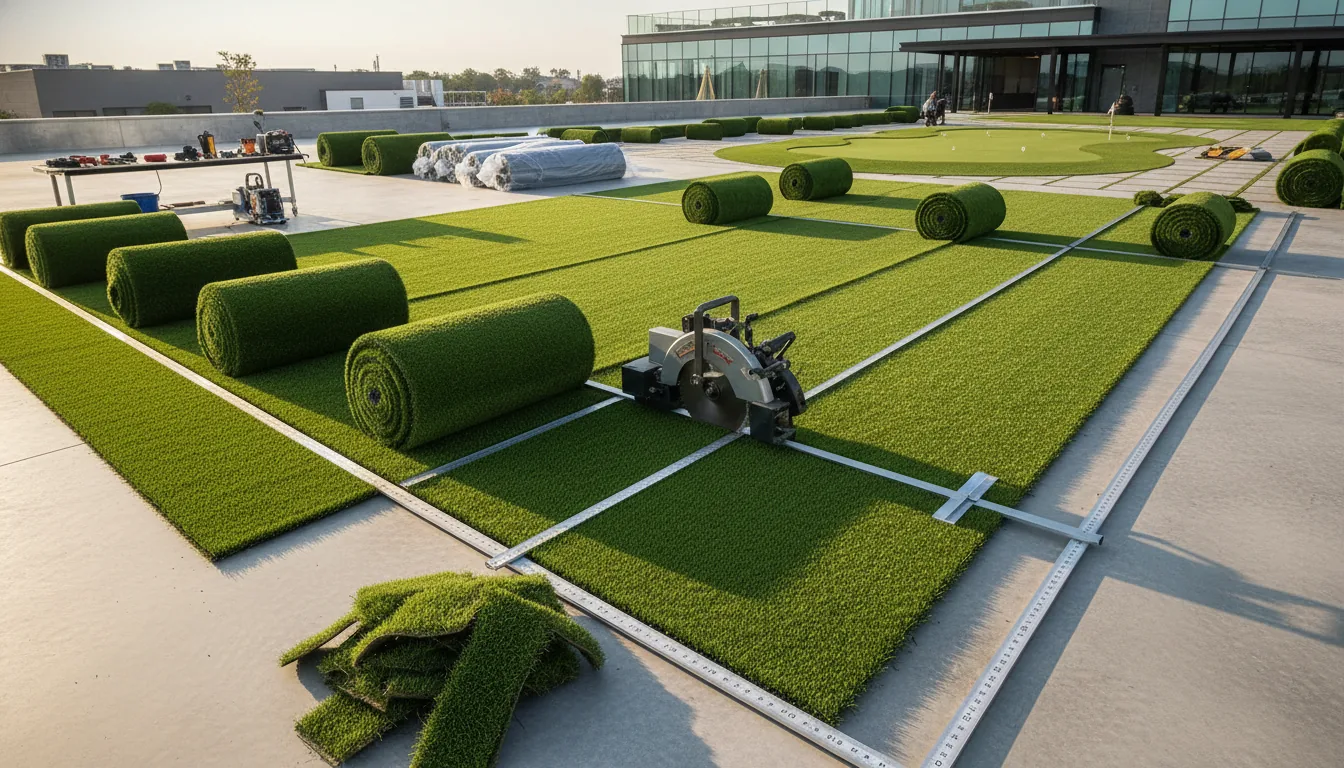
Make-to-Order Artificial Turf: When Custom Fits
Some turf jobs are simple. You measure the site, pick a standard product, schedule the install, and move on. Other jobs are not built that way. A multi-phase property, a retired product, a special color requirement, or a large commercial order can turn a normal purchase into a sourcing problem. That is when make to order artificial turf starts to make sense.
Need a custom or container-size turf order? Start with the Go Green Make To Order program so the product specs, timeline, and quantity are reviewed before production begins.
Make-to-order turf is not the right choice for every project. It usually works best when consistency, volume, and technical fit matter more than fastest possible delivery. If you are a contractor, dealer, distributor, builder, or project manager, the goal is not simply to get grass on the ground. The goal is to avoid product mismatches, callbacks, delays, and client frustration.
What Is Make-to-Order Artificial Turf?
Make-to-order artificial turf is synthetic turf manufactured for a specific order instead of pulled from standard inventory. The product may follow an existing construction with adjusted specifications, recreate a phased-out SKU for project continuity, or be produced in a large quantity for a job that does not fit the normal running line.
In practical terms, make-to-order turf gives qualified buyers a way to lock in important product details before manufacturing begins. Those details may include face weight, pile height, color blend, backing type, drainage requirements, roll dimensions, and application needs. The request is reviewed before production so the buyer knows whether the order is feasible, what the timeline looks like, and how the product will be delivered.
This is different from buying a standard roll off the shelf. Standard inventory is built for speed and broad availability. Make-to-order turf is built for control. It is especially useful when a job has enough volume to justify production planning and enough complexity that a close substitute could create problems later.
When Does Custom Turf Make Sense?
Custom turf makes sense when the cost of using the wrong product is higher than the cost of planning the order correctly. That can happen on commercial properties, phased residential communities, sports and training areas, pet facilities, rooftops, pool surrounds, and dealer accounts that need a consistent product across multiple installs.
The clearest sign is product continuity. If phase one of a project used a specific turf and phase two needs to match it, a substitute product may look different in color, pile direction, density, or finished texture. Even small differences can stand out when two areas sit beside each other. For contractors, that can lead to an uncomfortable conversation with the client even when the installation work is solid.
Another sign is performance. A job near reflective Low-E windows may need a heat-resistant turf rather than a standard polyethylene landscape product. A dog run or pet facility may need fast drainage and odor control. A rooftop or indoor space may need a turf system with different backing, density, or fire performance considerations. If the site has a specific challenge, the turf should be selected around that challenge.
Make-to-order artificial turf is also a fit when the order is large enough that supply reliability matters. A dealer or distributor placing a container-size order does not want partial shipments, surprise substitutions, or inconsistent lots. Planning the order up front helps align product, production, and delivery.
Common Situations That Call for Make-to-Order Turf
Most custom turf requests come from one of a few repeat situations. Knowing which bucket your project falls into makes the conversation faster and cleaner.
Multi-phase commercial projects
Commercial projects often move in stages. A property may install turf around one building first, then expand into courtyards, amenity spaces, common areas, or additional buildings later. If the original product is no longer in regular inventory, the project may need a make-to-order run to keep the finished look consistent.
Dealer restocking for active client accounts
Dealers sometimes build a book of business around products their clients already know. If a popular SKU changes, retires, or becomes unavailable in standard stock, a make-to-order request can help support existing commitments instead of forcing a product switch midstream. For contractors expanding through a dealer partner program, that continuity can protect repeat accounts.
Specialty applications
Not every install is a front lawn. Projects involving pets, drainage, heat, sports, rooftops, indoor spaces, or unique traffic patterns can need a more specific construction. Go Green product families such as HEATMAXX Soft 47, AQUAMAXX 75, and PETMAXX are built around distinct use cases, and custom orders often start with that same application-first thinking.
Large distributor orders
Distributors may need volume outside the standard running line. In that case, the value of make-to-order turf is less about a one-off design and more about predictable supply. The buyer can coordinate quantity, timing, and product specifications before the order enters production, whether the demand is coming from artificial turf in Dallas, artificial turf in Phoenix, or another fast-growing market.
When Is Standard Turf the Better Choice?
Make-to-order is powerful, but it is not always necessary. If your project can be completed with an in-stock product that already matches the application, standard turf is usually the better choice. It is faster, simpler, and often easier to schedule around a near-term install date.
Standard turf is also a better fit for small projects that do not meet minimum quantity requirements. A backyard putting green, a narrow side yard, or a small pet relief area may need a carefully chosen product, but that does not automatically mean it needs custom manufacturing. In many cases, the right answer is to compare existing products in the Go Green product catalog and choose the best available match.
If you are still early in product selection, start with the application. For broad product education, the synthetic turf products guide explains how different turf systems are built for different needs. If cost is the main question, the synthetic turf cost per square foot guide can help frame the budget before you request a custom quote.
Not sure whether your project needs standard inventory or custom production? Review the current product lineup first, then use the MTO request process if your quantity, specs, or continuity needs fall outside available stock.
What Should You Specify Before Requesting MTO?
A strong make-to-order request starts with clear project information. The more complete the request, the easier it is for the sales and production team to confirm feasibility, lead time, and pricing.
At minimum, gather these details before you submit:
- Application: landscape, pet, sports, pool surround, rooftop, indoor, commercial, or another use case.
- Quantity: total square footage, roll needs, and whether the order is container-size.
- Product target: existing Go Green product name, discontinued SKU, or desired construction.
- Performance needs: drainage, heat resistance, traffic level, softness, durability, backing, or fire rating considerations.
- Visual requirements: color blend, thatch tone, pile height, density, and how closely it must match an existing area.
- Timeline: install date, project phase dates, delivery window, and any deadline that cannot move.
- Shipping destination: jobsite, warehouse, dealer location, or distribution point.
Do not treat these details as paperwork. They are the guardrails that keep the order from drifting. A vague request like “custom green turf for a commercial job” leaves too many open questions. A specific request gives the team something real to evaluate.
How the Go Green MTO Process Works
The Go Green Make To Order program is built for contractors, dealers, and distributors who need specialty or phased-out turf products at meaningful volume. The process is straightforward, which is important because custom orders can become complicated when expectations are not set early.
First, the buyer completes the MTO request form with the product specs, quantity, and timeline. Next, the Go Green sales team reviews the request and follows up, typically within one business day, to confirm whether the order is feasible. That conversation covers production timing, pricing, and any specification questions that need to be resolved before the order is accepted.
Once the order is confirmed at container quantity, production is scheduled and the buyer receives a dedicated order timeline. The finished product then ships to the agreed location, whether that is a jobsite, warehouse, dealer facility, or distribution point.
That structure matters. It keeps the buyer from guessing about availability and keeps the manufacturer from producing against incomplete information. For large projects, a real contact and a confirmed timeline can be just as important as the turf itself.
How to Avoid Product Mismatches on Large Turf Projects
Product mismatches usually happen when someone treats turf as a commodity. It is not. Two products can both be green, both be synthetic, and both be labeled for landscape use, yet still perform and look different once installed.
Start by documenting the original product if you are matching an existing install. Save the product name, SKU, face weight, pile height, color information, backing, installation date, and photos in natural light. If the original product came from Go Green, include that information in the MTO request so the team can evaluate whether the same or similar construction can be produced.
Next, match by application before appearance. A turf that looks right but drains poorly will still create problems in a pet area or pool surround. A turf that feels soft but cannot handle heat exposure may be risky near reflective windows. For heat-prone jobs, the nylon artificial turf guide explains why nylon construction can matter in demanding environments.
Finally, confirm timeline early. Make-to-order turf is planned production, not a last-minute substitute. If the project has a firm installation date, submit the request early enough for review, scheduling, manufacturing, and shipping. Waiting until the standard product is already unavailable can reduce your options.
Questions to Ask Before You Commit
Before you approve a make-to-order turf order, ask direct questions. You are trying to remove uncertainty before production begins.
- Does this order meet minimum quantity requirements?
- Can the requested product construction be manufactured as specified?
- What is the estimated production lead time?
- What substitutions, if any, are being recommended?
- Will the product match a prior install closely enough for the client’s expectations?
- Are there special shipping, unloading, or storage requirements?
- Who is the point of contact from quote through delivery?
These questions are especially important for dealers. Your client may only see the finished surface, but you are responsible for the sourcing decision behind it. A clean buying process protects your margin, your schedule, and your reputation.
Should Dealers Use MTO as Part of Their Growth Strategy?
For the right dealer, make-to-order turf can support growth. It gives you a way to handle larger accounts, special projects, and product continuity needs without scrambling for whatever is available in the market. That can be a meaningful advantage when competitors are quoting generic products with limited technical support.
It also pairs naturally with a wholesale relationship. Go Green’s Dealer Partner Program is designed for installers, landscapers, contractors, builders, and retailers who need reliable product access, qualified lead opportunities, and nationwide shipping support. If your business is already selling or installing turf at scale, MTO can become one more tool for serving accounts that do not fit a standard order.
That said, MTO should not be used as a workaround for unclear product selection. It works best when the buyer knows the project, knows the volume, and knows why standard inventory does not solve the problem.
How to Decide If Make-to-Order Is the Right Choice
Use a simple test. If the project is small, flexible, and easy to satisfy with an in-stock product, stay with standard turf. If the project is large, phased, technically demanding, or dependent on matching a specific product, make-to-order deserves a serious look.
The best custom turf orders are not rushed. They start with clear specifications, realistic timelines, and honest conversations about what can be manufactured. That is how you avoid last-minute substitutions and keep the finished project consistent from one phase to the next.
Have a large project, discontinued SKU need, or specialty turf requirement? Submit the details through the Go Green Make To Order page and get a straight answer on feasibility, lead time, and next steps.
Frequently Asked Questions About Make-to-Order Artificial Turf
What is the minimum order for make-to-order artificial turf?
Minimums vary by product construction and production requirements, but Go Green’s MTO program is generally designed for container-size or meaningful-volume orders rather than small one-off projects.
How long does make-to-order turf production take?
Lead time depends on the requested specifications, order quantity, production schedule, and shipping destination. Submit specs early so Go Green can confirm feasibility, timing, and delivery expectations before the project depends on the product.
Can make-to-order turf match a discontinued SKU?
In some cases, a make-to-order run can recreate or closely match a phased-out product, especially when the original product name, SKU, pile height, face weight, color blend, backing, and photos are available for review.
Is make-to-order turf better than standard inventory?
Not always. Standard inventory is usually better for small or urgent projects. Make-to-order turf is best when volume, product continuity, or technical specifications matter more than the fastest possible delivery.
Who should request make-to-order turf?
Contractors, dealers, distributors, builders, and project managers are the best fit when they need consistent turf across large, phased, commercial, or specialty applications.
Bottom Line
Make to order artificial turf is the right choice when standard inventory cannot protect the project outcome. It is built for buyers who need consistency, control, and product fit at meaningful volume. For contractors and dealers, that can mean fewer callbacks. For distributors, it can mean more predictable supply. For project owners, it can mean the surface they approved is the surface that gets installed.
If the job has special specs, a large quantity, or a product continuity problem, do not guess your way through it. Put the details in front of a team that can review the order before production begins. That is the real value of MTO.
Leave a Reply