


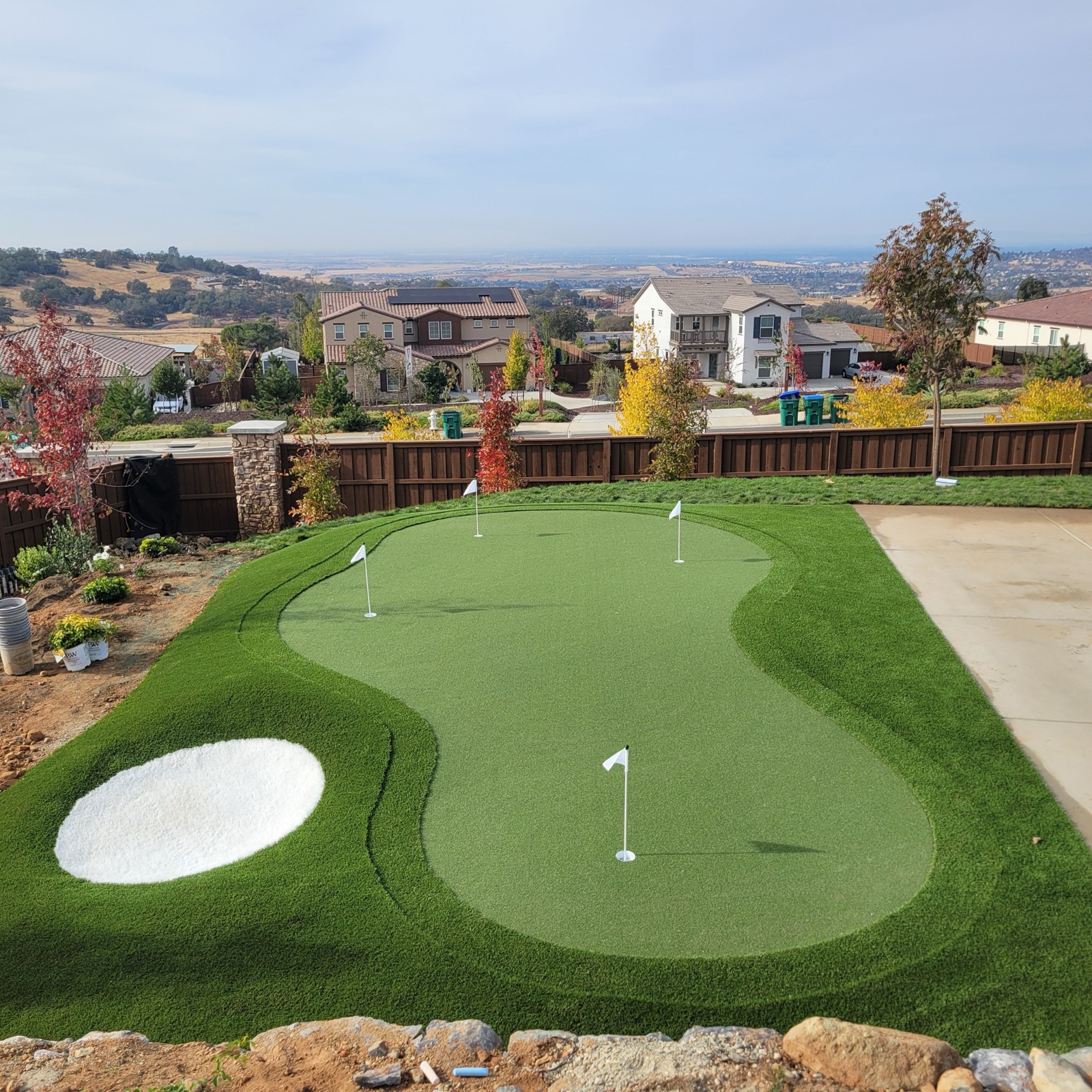
Best Artificial Turf for Putting Green: A Pro’s Guide
A putting green project is more than just another job—it’s a high-stakes installation. Your client isn’t just buying a patch of green; they’re investing in their passion and expect a surface with a truly realistic ball roll. The wrong turf choice leads to inconsistent performance, premature wear, and those dreaded callbacks that can damage your reputation. This guide helps you get it right. We’ll walk through the essential specs and materials so you can confidently choose the best artificial turf for putting green and deliver a flawless result your clients will love.
Key Takeaways
- Performance is in the details: A professional-quality putt depends on specific turf specs. Look for a short pile height, around 1/2″ to 3/4″, and a high face weight of 40-60 ounces to ensure a smooth, consistent ball roll every time.
- Match the material to your goals: Select nylon turf for a fast, durable, and professional-grade playing surface. For a green that offers a realistic look with a slightly softer feel, polyethylene is an excellent choice for most backyards.
- Proper installation is key to longevity: A high-performance green starts from the ground up with a professionally prepared base for stability and drainage. After installation, simple maintenance like regular brushing is all it takes to protect your investment and keep the ball rolling true.
Why Go with an Artificial Putting Green?
If you’re serious about improving your short game, you need a practice surface that’s consistent and reliable. Natural grass greens are beautiful, but they require constant mowing, watering, and treatments to stay in top shape. An artificial turf putting green gives you a pro-level practice area right in your backyard, without the demanding upkeep. The right turf provides a smooth, strong, and weather-resistant surface that plays just like the real thing. This means your golf ball will roll predictably every time, allowing you to focus on your form, not on bumps or bare spots in the lawn.
Whether you’re an installer helping a client build their dream practice space or a homeowner ready to take your game to the next level, synthetic turf is a practical choice. It offers a perfect putt year-round, regardless of the weather. You get a consistently fast and true ball roll that helps you build muscle memory and shave strokes off your score. Plus, you’ll spend less time on maintenance and more time practicing. It’s a long-term investment in your property and your passion for golf, giving you a dependable surface that’s always ready for a practice session.
What Makes a Putting Green Feel Pro-Level?
When selecting turf for a putting green, you’re looking for specific features that create a true and consistent ball roll. Unlike the plush turf you’d install for a lawn, putting green turf needs to be short and dense. Look for a low pile height, typically between 3/8″ and 3/4″, which ensures the ball glides smoothly across the surface without bouncing or skipping. A high face weight, usually between 40 and 60 ounces, indicates a dense construction that can stand up to constant foot traffic and practice. These features work together to mimic the feel of a meticulously maintained bentgrass green.
How Different Turfs Impact Your Ball Roll
The material your turf is made from directly impacts how the ball performs. Nylon is a popular choice for serious golfers because its stiff, durable fibers create a fast and true roll that closely resembles a professional course. It’s incredibly resilient and resists matting down over time. Polyethylene (PE) is another excellent option, offering a slightly softer feel and a realistic appearance. High-quality putting green turf provides a smooth, consistent roll that’s perfect for both dedicated practice and recreational use. Both materials can deliver outstanding performance, so the right choice often comes down to your desired speed and feel.
Common Putting Green Myths, Busted
Let’s clear up a couple of common misconceptions about artificial putting greens. First, this isn’t the same turf you’d use for a regular lawn. Putting green turf is specifically engineered with a much shorter, denser pile to ensure a smooth surface for an accurate ball roll. Second, while there is an upfront cost, the long-term value is significant. When you factor in the money and time saved on watering, fertilizing, and mowing, a synthetic green becomes a smart investment. You get a tour-quality practice surface that lasts for years with minimal maintenance, making it a practical choice for any dedicated golfer.
Understanding Putting Green Costs and Types
Recreational vs. Professional Greens
Not all putting greens are created equal, and the first step in any project is understanding what your client truly needs. The choice between a recreational and a professional green comes down to performance expectations and maintenance commitment. A recreational green is perfect for family fun and casual practice, designed for shorter chip shots and putting. A professional-grade green, on the other hand, is built to withstand more serious practice, including chips from 50 yards or more. Setting the right expectations from the start ensures your client will be happy with the final result and understands the level of care their new green will require.
Key Differences in Performance and Maintenance
The biggest performance difference is how the green receives the ball. Professional greens are engineered to accept chip shots from a distance, allowing the ball to check up much like it would on a natural course. Recreational greens are designed primarily for putting and short chips; a ball chipped from too far away might bounce. Maintenance is another key distinction. Recreational turf often has textured fibers that stand up on their own, making it easier to care for. Professional turf requires more attention, including periodic rolling, brushing, and leveling of the infill to maintain that perfectly smooth, fast surface.
Breaking Down the Costs
When quoting a putting green project, it’s important to break down the costs so your client understands the full investment. The total price isn’t just the turf itself; it includes the base preparation materials, the specific type of turf, the infill, and, of course, the professional installation. Each of these elements plays a critical role in the green’s longevity and performance. A cheaper material might save money upfront, but it could lead to a subpar playing experience and durability issues down the road. Guiding your client through these choices helps them see the value in a high-quality system built to last.
Turf Material Costs
The turf you choose is one of the most significant cost factors. Nylon is the top choice for a true, professional-grade surface. Its stiff, dense fibers provide a fast and consistent ball roll that serious golfers expect. It’s exceptionally durable but comes at a higher price point. For many backyard projects, polyethylene (PE) is an excellent alternative. It’s softer and more flexible, offering a realistic look and feel that’s perfect for home use, and it’s generally more budget-friendly than nylon. Our SPORTMAXX® line offers options engineered specifically for this kind of high-performance application.
Installation Costs
While some homeowners might consider a DIY approach, professional installation is essential for a putting green that performs correctly. The process is far more technical than a standard lawn installation. An experienced installer ensures the base is perfectly compacted and contoured for proper drainage and a smooth, consistent surface. They have the expertise to select the right materials for the local climate and intended use, preventing costly mistakes. Proper installation is what guarantees the green will be durable, playable, and a lasting investment for your client.
Which Turf Specs Create the Perfect Putt?
Getting that perfect, pro-level putt comes down to the details. While the look of your green is important, the technical specifications of the turf system are what truly dictate performance. The right combination of pile height, density, backing, and infill creates a surface where the ball rolls true every single time. Understanding these key specs will help you choose or build a putting green that not only looks fantastic but also plays like one you’d find on a professional course. Let’s break down exactly what to look for.
Understanding Stimp Rating and Ball Speed
When golfers talk about the speed of a putting green, they’re referring to its Stimp rating. This measurement tells you how fast the ball will roll across the surface. For context, recreational greens typically have a ball speed of 8–11, while professional greens are faster, ranging from 10–13, which gives you that true golf course feel. For installers, hitting the right Stimp rating is crucial for client satisfaction. For homeowners, it’s about deciding whether you want a casual practice area or a surface that challenges you like a championship course. While the turf’s pile height and density set the foundation for speed, the real control comes from the infill system, which allows you to fine-tune the green to the perfect pace.
Adjusting Speed with Infill
You can have the best turf on the market, but the performance of your putting green ultimately comes down to the infill. In fact, the quality of the infill and how it’s installed is often more important than the turf fiber itself. Think of infill as the soil for artificial grass; it provides the necessary weight to hold the turf down, keeps the blades standing upright, and dictates how the ball rolls. The amount and type of sand infill you use allow you to dial in the green’s speed. A heavier application of infill will typically slow the ball down, while a lighter layer allows for a faster roll. This is how you can customize the Stimp rating to meet specific performance goals, ensuring a consistent and predictable putting surface.
Choosing the Right Pile Height for a True Roll
For a putting green, you want a short, tight pile. Think of a professionally manicured course; the grass is incredibly low to the ground. To replicate this, look for a pile height between 1/2 and 3/4 of an inch. This low profile is essential for a true ball roll. If the fibers are too long, the ball can sink into the turf, causing it to wobble or slow down unpredictably. A shorter pile height gives you a smooth, consistent surface that allows you to practice your putting with precision. Our SPORTMAXX® series is specifically engineered with these performance characteristics in mind.
What Do Density and Face Weight Mean for Your Green?
Face weight tells you how much yarn is used in a square yard of turf. For putting greens, a higher face weight, typically between 40 and 60 ounces, is ideal. Why? Because a higher face weight means the fibers are packed more densely together. This density creates a firm, stable surface that feels solid underfoot and supports a consistent ball roll. A less dense turf can feel spongy and may cause the ball to bounce or skip, throwing off your game. When you’re comparing turf products, always check the face weight to ensure you’re getting the durability and performance you need.
Professional-Grade Face Weights
When you’re evaluating turf for a putting green, face weight is one of the most important specs to check. It tells you the weight of the yarn in a square yard of turf, and for a high-performance green, more is better. Look for a face weight between 40 and 60 ounces. This higher weight indicates a dense construction, which is exactly what you need to create a firm, stable surface. That density is what allows the golf ball to roll true and consistently, mimicking the feel of a professional course and giving you a reliable surface for practice.
In contrast, turf with a lower face weight will feel soft and spongy underfoot. While that might be nice for a play area, it’s a dealbreaker for a putting green. A less dense surface can cause the ball to bounce or skip, leading to an unpredictable roll that makes practice frustrating. When you’re comparing different turf products, always prioritize a higher face weight. It’s a clear indicator of the quality and durability you need to build a green that performs correctly from day one and stands up to years of use.
Why Turf Backing is Key to Performance
The backing is the unsung hero of any artificial turf system. It’s the foundation that locks the turf fibers in place and provides dimensional stability. For a putting green, you need a high-quality backing that prevents the turf from stretching, shrinking, or wrinkling over time. A strong tuft-bind rating ensures the fibers won’t pull out, even with frequent use. A durable backing also contributes to proper drainage, which is why systems like our AQUAMAXX® turf are built with superior permeability to handle moisture effectively and maintain a consistently playable surface.
How to Pick the Best Infill for Your Green
Infill is the granular material spread between the turf fibers. It’s what helps the blades stand upright, adds weight to keep the turf in place, and fine-tunes the speed of your green. For putting greens, a rounded silica sand is the most common choice. The small, uniform grains create a smooth surface that allows the ball to roll consistently without bouncing. The amount of infill you use will determine your green’s speed, or “stimp rating.” More infill generally leads to a faster putt, so you can customize the performance to match your practice goals.
Types of Infill: Beyond Silica Sand
While rounded silica sand is the industry standard for putting greens, it’s not the only option available. Specialized infills can offer enhanced performance and durability. For example, acrylic-coated sand is designed to resist compaction, which helps maintain a consistent playing surface for longer. Some advanced infill products also come with antimicrobial properties, which is a great feature for greens in damp climates or those that get a lot of use. These premium options can add significant value to an installation by reducing maintenance and extending the life of the green, giving your clients peace of mind and a better long-term experience.
How Much Infill Do You Need?
The amount of infill you use directly controls the speed of your putting green, often measured by its “stimp rating.” A higher stimp rating means a faster green. By adding more infill, you create a firmer, faster surface that allows the ball to roll with less resistance. If you or your client prefer a slower, more receptive green, you would use slightly less infill. This adjustability is one of the biggest advantages of an artificial putting green. It allows you to fine-tune the performance to match a specific playing style or to replicate the conditions of a favorite golf course, giving you complete control over your practice.
Exploring Infill-Free Putting Greens
Infill-free putting greens are another option to consider. These systems are engineered with an extremely dense, texturized thatch layer that supports the turf fibers without the need for sand. The primary advantage is reduced maintenance; you won’t need to periodically brush the green or top off the infill to maintain performance. While they offer a very consistent surface right after installation, they may provide less flexibility for adjusting ball speed compared to a traditional infilled system. For clients who prioritize a low-maintenance solution and a reliable, medium-speed roll, an infill-free green can be an excellent choice.
Advanced Turf Features to Consider
Beyond the basic specs that affect ball roll, modern turf technology offers features that improve the overall safety, comfort, and longevity of a putting green. These advancements address common concerns like surface heat and moisture management, ensuring the green is not only playable but also enjoyable for years to come. For installers, recommending a turf system with these built-in benefits can set your work apart and lead to happier clients with fewer callbacks. For homeowners, choosing a turf with these features means investing in a higher-quality product that delivers a better all-around experience.
Cooling and Antimicrobial Technology
We all know that artificial turf can get warm in direct sunlight. That’s why choosing a product with built-in cooling technology is a smart move. Our HEATMAXX® SOFT series, for example, is designed with heat-reflective fibers that keep the surface temperature significantly cooler, making practice sessions more comfortable on hot days. Additionally, some turf systems incorporate antimicrobial agents into the fibers or backing. This helps prevent the growth of bacteria and mold, keeping your green cleaner and safer, which is especially important if kids or pets will be using the area.
Safety and Drainage Ratings
A high-performance putting green needs to handle the elements effectively. Superior drainage is non-negotiable, as it prevents water from pooling on the surface after rain, allowing for year-round play. Turf systems like our AQUAMAXX® line feature a highly permeable backing that lets water pass through quickly and efficiently. It’s also essential to ensure the turf is made from non-toxic, lead-free materials for the safety of everyone using it. A quality turf system is built on a foundation of safety and stability, ensuring it performs reliably for years.
The Best Artificial Turf for Putting Greens: Our Top Picks
Choosing the right turf is the most important step in creating a putting green that plays well and lasts for years. The best option for your project depends on your priorities, whether that’s tour-level performance, all-weather durability, or a budget-friendly backyard setup. We’ve broken down our top recommendations to help you find the perfect match for any installation, from a professional practice area to a family-friendly green. Each of these options delivers a consistent, reliable surface you can count on.
SPORTMAXX®: For a True Pro-Level Experience
When your client wants a putting green that performs like a professional course, SPORTMAXX® is the answer. This line is engineered for the serious golfer who demands a true, consistent ball roll every time. Its durable construction is designed to withstand constant practice, holding up to heavy foot traffic without showing wear. For installers, recommending SPORTMAXX® means giving your clients a premium, high-performance surface that meets the highest standards. It’s the kind of quality that builds confidence and ensures your customers are thrilled with their investment, knowing they have a green built for serious play.
AQUAMAXX®: The Best Choice for All-Weather Play
A soggy putting green is a useless putting green. For installations in rainy climates, near pools, or in areas with drainage challenges, AQUAMAXX® is the clear winner. This turf features our proprietary backing that allows for the quickest drainage available, so the surface is ready for play shortly after a downpour. What’s great is that this incredible function doesn’t come at the expense of aesthetics or durability. You still get a beautiful, realistic-looking green with a surface that plays true. It’s the perfect solution for ensuring your putting green remains pristine and playable, no matter the weather.
Nylon Turf: Get Maximum Speed and Durability
If you’re building a green for speed and resilience, nylon is the material you want. Nylon turf fibers are incredibly durable and spring back into shape immediately after being compressed. This exceptional memory prevents matting and ensures a fast, smooth ball roll that golfers love. Because of its toughness, nylon is an excellent choice for commercial putting greens, practice facilities, or any residential green that will see a lot of action. Many of our high-performance turf systems use nylon fibers to deliver that pro-level speed and long-lasting performance that keeps a green playing its best for years.
Polyethylene Turf: For the Most Realistic Look and Feel
For many homeowners, a putting green should look as good as it plays. Polyethylene (PE) turf is the go-to choice for achieving a realistic, natural grass appearance. The fibers are softer and less abrasive than nylon, creating a look that blends beautifully into any landscape. But don’t let its good looks fool you; a quality PE turf provides a smooth and consistent ball roll that’s perfect for residential practice. It offers a slightly slower speed than nylon, which many golfers find mimics the feel of a real bentgrass green. Check out our gallery to see how seamlessly these greens fit into backyard designs.
Value Series: A Great Green Without the High Cost
You don’t need to break the bank to add a high-quality putting green to a backyard. Our VALUE SERIES offers an excellent balance of performance and affordability, making it a fantastic option for budget-conscious projects. While more streamlined in its construction, this turf still delivers the core benefits you expect: a consistent surface, minimal maintenance, and a great look all year long. It’s the perfect entry point for homeowners who want to add a fun, recreational feature to their yard without the cost of a professional-grade system. It proves that a great green can be accessible for any budget.
Nylon vs. Polyethylene: Which Turf Material is Best?
The material used for the turf fibers, or the individual blades of grass, is one of the most important factors in how your putting green will play. It directly influences ball speed, roll consistency, and how the surface holds up over time. Think of it as the foundation of your short game performance. Each material has its own unique characteristics, and understanding the differences will help you choose the right surface for your project.
The three main players in the putting green turf world are nylon, polyethylene, and polypropylene. Let’s break down what each one brings to the green so you can make a confident choice.
Nylon: Why It’s Great for Speed and Resilience
If you’re looking for a fast green with tour-level consistency, nylon is your go-to. Nylon turf fibers are incredibly durable and resilient, meaning they hold their shape exceptionally well under foot traffic and the elements. They resist matting down and bounce back quickly, which is essential for a true and predictable ball roll. This resilience makes nylon the top choice for professional-grade putting greens where performance is the number one priority. For golfers who want to practice on a surface that offers a consistent, fast pace, a nylon green delivers reliable play day after day. It’s a premium option built for serious practice and pro-level performance.
Fiber Construction: Slit Film and Cross-Stitched Nylon
Beyond the material itself, the way turf fibers are constructed plays a huge role in performance. High-quality putting greens often use slit film nylon fibers. This design creates a non-directional surface, which is essential for a true and predictable ball roll, no matter which way you’re putting. To take that stability a step further, look for cross-stitched construction. This technique locks the durable nylon fibers into the backing in a tight, crisscross pattern, preventing them from laying down or matting over time. This combination ensures the surface remains firm and the ball rolls true from any angle, delivering the kind of reliability you’d expect from high-performance turf systems.
Polyethylene: The Choice for a Realistic Look and Feel
Polyethylene (PE) turf strikes a fantastic balance between performance and aesthetics. It’s known for having a softer, more realistic feel that closely mimics the texture of natural grass. A quality polyethylene putting turf provides a smooth, consistent ball roll, making it a great all-around choice for residential and commercial projects. While not quite as stiff as nylon, modern PE turfs offer excellent durability and a true putt. Homeowners often prefer polyethylene because it gives them a beautiful, natural-looking green that feels great underfoot and still provides a high-quality surface for practicing their short game. It’s the perfect material when you want a green that looks as good as it plays.
UV Resistance for Outdoor Greens
When you’re installing a putting green outdoors, you have to consider how it will stand up to the sun. Constant UV exposure can cause turf to fade, become brittle, and degrade over time, which is the last thing a client wants to see after making a significant investment. This is a key area where polyethylene excels. It has superior UV resistance built-in, allowing it to hold its color and structural integrity even after years in a sunny backyard. For an installer, recommending a UV-stable turf means fewer callbacks and more satisfied customers. For a homeowner, it means your beautiful green will stay vibrant and playable, protecting your investment and ensuring a great-looking practice surface for the long term.
Polypropylene: A Quality, Budget-Friendly Option
Polypropylene (PP) is a more budget-friendly turf material that can be a good fit for certain applications. As an older turf technology, it’s generally less durable and resilient than nylon or polyethylene. The fibers are softer, which can create a slower ball roll and may be more prone to matting over time in high-traffic areas. Because of this, it isn’t used as often for new, high-performance putting greens. However, for a backyard practice area on a tight budget or a temporary setup, polypropylene can be a practical solution. Our Value Series offers dependable options for projects where cost is a primary consideration.
Understanding PP’s Role in Modern Turf
Polypropylene (PP) is a name you’ll often hear when discussing budget-friendly putting greens. It’s important to understand its role in modern turf. As an older technology, PP is generally less durable than nylon or polyethylene, and its softer fibers can create a slower ball roll. It’s also more likely to mat down in high-traffic areas, so it’s not the right choice for a serious golfer. But for a casual backyard practice area, a temporary setup, or any project where cost is the primary driver, polypropylene can be a great solution. Our Value Series offers dependable options for these specific projects.
Your Step-by-Step Putting Green Installation Guide
A high-performance putting green is more than just great turf; it’s about a flawless installation. The process requires precision from the ground up to ensure your green plays true for years. Whether you’re a seasoned installer or a homeowner planning a project, getting the details right is what separates an average green from a pro-level one. From building a solid base to applying the perfect amount of infill, each step contributes to the final performance. Let’s walk through the key stages of a successful putting green installation.
Pro vs. DIY Installation: Which Is Right for You?
While tackling a project yourself can be rewarding, installing a putting green is a game of precision. For a surface that’s perfectly smooth and durable, it’s important to work with an experienced installer. A professional will help you select the right materials for your climate and yard, ensuring the base is properly compacted and the seams are invisible. They have the specialized tools and expertise to create the subtle breaks and contours that make a green challenging and fun. If you want a green that plays like one at the country club, connecting with a professional through a dealer partner program is the surest path to success.
Questions to Ask a Professional Installer
To ensure you and your installer are on the same page, it’s helpful to ask a few specific questions about the materials and process. This conversation will clarify expectations and give you confidence that you’re getting a green built for performance. Before work begins, make sure you cover these key points:
- What pile height and face weight do you recommend for the turf, and why is that the right choice for my goals?
- Could you explain the performance differences between nylon and polyethylene turf? Which one would you suggest for my project?
- How will you prepare the base to ensure proper drainage and long-term stability?
- What type of infill do you plan to use, and how will it affect the speed and feel of the green?
- Can you share some examples from your portfolio of similar putting greens you’ve installed?
How to Prepare Your Base for Flawless Drainage
The base is the foundation of your putting green, and getting it right is non-negotiable. A properly constructed base provides stability and ensures water drains away efficiently, preventing puddles and protecting your investment. The process starts with excavating the area and creating a sub-base of compacted aggregate. This layer creates a solid, porous foundation for years of reliable play. For areas with heavy rainfall or poor natural drainage, using a turf system like AQUAMAXX® can provide the extra performance you need. A well-built base is the secret to a low-maintenance green that stays smooth and playable in any weather.
Key Steps for a Smooth Turf Installation
A professional putting green installation follows a proven sequence. The process involves removing existing soil and grass, adding and compacting layers of gravel and sand, and then carefully rolling out the turf. Once the turf is in place, it needs to be trimmed to fit the exact contours of your green. The next step is fastening the edges securely to prevent lifting or shifting over time. Finally, the infill is spread evenly across the surface. Each of these steps requires careful attention to detail, but following a clear installation guide ensures nothing is missed and the final result is a perfectly smooth, playable surface.
How to Apply Underlayment and Infill Like a Pro
Infill is the final touch that brings your putting green to life. Think of it as the soil for your artificial grass; it keeps the blades standing upright, which is essential for a true and consistent ball roll. Infill also adds weight to the system, holding the turf securely in place and protecting the backing from the sun. Typically, rounded silica sand is used for putting greens. It should be applied with a drop spreader for even distribution and then worked into the turf fibers with a power broom. Choosing the right infill and accessories and applying them correctly is what gives your green its pro-level speed and performance.
Your Simple Guide to Putting Green Maintenance
One of the best things about an artificial putting green is how little work it takes to keep it in pristine condition. Unlike a natural grass green, you can forget about mowing, watering, and fertilizing. However, a little routine care will protect your investment and ensure your green delivers a consistent, pro-level putt for years to come. Following a few simple steps will keep the surface clean, the blades upright, and the ball rolling true.
Why Regular Brushing is a Must
Think of brushing as the most important part of your maintenance routine. Regular brushing keeps the turf fibers standing tall, which is essential for a consistent and predictable ball roll. When the blades get matted down from foot traffic or play, it can slow your putt and make the surface uneven. Using a stiff, non-metal bristle broom, brush against the grain of the turf to lift the fibers. This also helps redistribute the infill evenly across the surface. How often you brush depends on how much you use the green, but a quick pass once every week or two is a great habit to get into.
How to Keep Your Infill Levels Just Right
Infill is the secret ingredient to a high-performing putting green. It’s the granular material, usually a specialized sand, that sits between the turf blades, giving them stability and support. Proper infill levels are what control ball speed and ensure the turf feels right underfoot. You should periodically check your infill, especially in high-use areas like around the cups, to make sure it hasn’t become compacted or displaced. You can easily top it off as needed to maintain the right depth. We have a great selection of infill and accessories to keep your green in top shape.
Simple Ways to Keep Your Green Debris-Free
Keeping your putting green clean is simple. Use a leaf blower or a flexible rake to remove leaves, twigs, and other organic debris on a weekly basis. This prevents them from breaking down and potentially hindering drainage. If you notice dust, pollen, or dirt building up, a quick rinse with a garden hose is usually all it takes to wash it clean. For homeowners with pets, be sure to remove solid waste and rinse the area to keep it sanitary. Choosing a turf with excellent drainage, like our AQUAMAXX® line, makes this process even easier.
Easy Tips for Long-Lasting Performance
The best way to ensure your putting green lasts is to start with high-quality materials. A durable, UV-stabilized turf with a strong backing can easily last 15 years or more without fading or falling apart. Beyond the turf itself, a professional installation is the single most important factor for long-term performance. A properly prepared base prevents dips and drainage issues down the road. If you’re looking for a qualified professional, our dealer partner program can connect you with experienced installers in your area who know how to get the job done right the first time.
How Long Does a Synthetic Putting Green Last?
A high-quality synthetic putting green is a long-term investment, easily lasting 15 years or more with proper care. This impressive lifespan comes down to two key factors: the quality of the turf itself and the quality of the installation. Turf engineered with UV stabilizers and a durable backing will resist fading and wear from the elements, keeping your green looking and playing great for years. But even the best turf won’t perform without a solid foundation. A professional installation ensures the base is properly constructed for stability and drainage, which is critical for preventing issues down the line. When you factor in the savings on water, fertilizer, and mowing, it becomes a smart investment in your property and your game.
Where to Find the Best Putting Green Turf
Finding the right turf is only half the battle; you also need a reliable supplier. The quality of your source is just as important as the turf itself, especially for a putting green where performance is everything. A great supplier provides consistent products, expert guidance, and support you can count on. This partnership helps installers avoid callbacks and gives homeowners confidence in their investment. A subpar product from an unreliable source can ruin a project. To make sure you get it right, let’s walk through the three key steps for sourcing the best turf for your green.
Why You Should Work with a Trusted Dealer
Think of your turf supplier as a partner. A trusted dealer does more than just take your order; they provide the product knowledge and support you need to succeed. They should be able to explain different turf materials, recommend the right infill for your climate, and stand behind their products with a solid warranty. For installers, this partnership is critical. A reliable supplier means fewer callbacks and more confident clients. At Go Green, our dealer program is built on this idea, giving you the confidence and support to deliver top-tier results on every job. Look for a supplier who is invested in your success.
Always Test Samples Before You Commit
You wouldn’t buy a car without a test drive, and you shouldn’t buy turf without getting your hands on it first. Requesting samples is a non-negotiable step. A sample allows you to see the turf’s true color in your own lighting and feel the texture of the blades. For a putting green, you can test the ball roll and see how the fibers respond. A small swatch reveals a lot about the turf’s density and stiffness. This simple step helps you avoid surprises and ensures the final product meets your performance expectations. You can explore our full range of turf products to find the perfect fit.
How to Get the Best Value for Your Putting Green
While budget is a factor, the cheapest option is rarely the best value, especially for a putting green. True value comes from finding a high-performance turf that is durable, looks great, and is backed by a reliable company at a fair price. When comparing costs, think about the long-term investment. A lower-quality turf might save you money upfront but could cost more later with premature wear or replacement needs. Instead, focus on turf systems like our SPORTMAXX® line, which is engineered for performance and longevity. Getting the best value means investing in a green that will play true for years to come.
Related Articles
- Best Quality Artificial Turf: A Buyer’s Guide
- Top 8 Artificial Turf Manufacturers USA (Buyer’s Guide)
- DIY Synthetic Turf Installation: A 6-Step Guide
Frequently Asked Questions
Is putting green turf really different from regular lawn turf? Yes, it’s completely different. Putting green turf is specifically engineered with a very short, dense pile to create a smooth surface for a predictable ball roll. Regular landscape turf has longer, plusher fibers designed for comfort and a natural lawn appearance, which would cause a golf ball to bounce and wobble.
What’s more important for ball roll: the pile height or the material? Both are critical, but they work together to create the final result. Pile height, which should be low (around 1/2 to 3/4 inch), provides the smooth surface necessary for a true roll. The material, like stiff nylon or softer polyethylene, then determines the speed and feel of that roll. You can’t have a great green without getting both of these specs right.
How do I decide between a nylon or polyethylene green? The choice comes down to your performance goals. If you want a fast, tour-level green that can handle heavy use, nylon is the best option due to its incredible resilience and stiffness. If you prefer a surface with a slightly softer feel and a more natural look that blends into your landscape, a high-quality polyethylene turf will give you a fantastic, realistic putting experience.
Can I adjust the speed of my putting green? Absolutely. The speed of your green, or its stimp rating, is primarily controlled by the amount of infill you use. Infill is the sand-like material spread between the turf fibers. Using more infill will generally create a firmer, faster surface, while using less will result in a slightly softer, slower roll. This allows you to customize the green to match your practice needs.
How much work is it to maintain a synthetic putting green? The maintenance is minimal compared to natural grass. Your main tasks will be to use a leaf blower to keep the surface clear of debris and to occasionally brush the turf fibers with a stiff broom. Brushing keeps the blades standing upright, which is key for a consistent ball roll. This small amount of upkeep ensures your green plays perfectly for years.
Yes, it is completely different. Putting green turf is specifically engineered with a very short, dense pile to create a smooth surface for a predictable ball roll. Regular landscape turf has longer, plusher fibers designed for comfort and a natural lawn appearance, which would cause a golf ball to bounce and wobble.
Both are critical, but they work together to create the final result. Pile height, which should be low (around 1/2 to 3/4 inch), provides the smooth surface necessary for a true roll. The material, like stiff nylon or softer polyethylene, then determines the speed and feel of that roll. You cannot have a great green without getting both of these specs right.
The choice comes down to your performance goals. If you want a fast, tour-level green that can handle heavy use, nylon is the best option due to its incredible resilience and stiffness. If you prefer a surface with a slightly softer feel and a more natural look that blends into your landscape, a high-quality polyethylene turf will give you a fantastic, realistic putting experience.
Absolutely. The speed of your green, or its stimp rating, is primarily controlled by the amount of infill you use. Infill is the sand-like material spread between the turf fibers. Using more infill will generally create a firmer, faster surface, while using less will result in a slightly softer, slower roll. This allows you to customize the green to match your practice needs.
The maintenance is minimal compared to natural grass. Your main tasks will be to use a leaf blower to keep the surface clear of debris and to occasionally brush the turf fibers with a stiff broom. Brushing keeps the blades standing upright, which is key for a consistent ball roll. This small amount of upkeep ensures your green plays perfectly for years.
Leave a Reply